Reviewed · TOURS IN AUCKLAND
Beginner Surf Lesson at Te Arai Beach
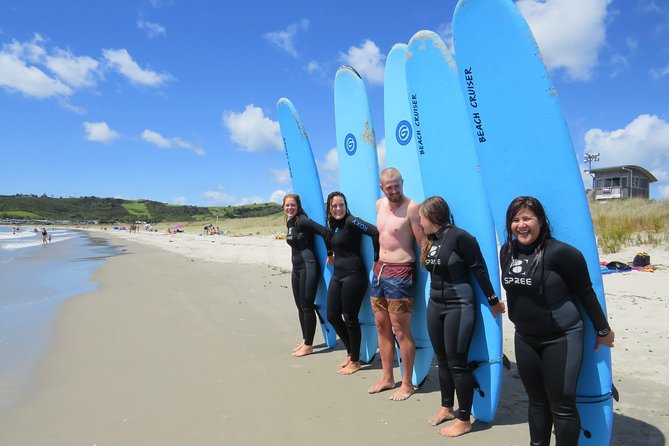
Your first surf lesson is less about looking graceful and more about learning to stay safe, handle the board, and catch one clean beginner wave. Saltwater Eco keeps the group to 12 people, with instructors such as Locke, Lydia, and Kirsty helping beginners find a workable technique rather than forcing everyone into the same mold. The lesson is timed around the tide, which matters when you are still learning how the ocean moves.
I like the included board and wetsuit, since you do not need to rent gear separately, and I like the patient teaching style described by people who worked with Locke and Lydia. The main point to check is location: the meeting point is listed at Te Arai Point Road, while the lesson details repeatedly refer to Omaha Beach. Confirm that before you leave Auckland.
Key points to know before you book
- The lesson lasts about two hours, with beach instruction before you take the board into the water.
- Groups are capped at 12 people, allowing instructors to adjust advice for different ages, confidence levels, and fitness.
- Wetsuits and surfboards are included, but transport to the meeting point is not.
- Safety comes first, with instruction in beach conditions, equipment use, paddling, and standing up.
- Locke, Lydia, and Kirsty are among the instructors associated with the lessons, and their calm, patient approach is a strong reason beginners may feel at ease.
- Photos and videos are provided, giving you a useful record of your first attempt rather than just a wet swimsuit and a fading memory.
Why this is a good first lesson near Auckland
Surfing looks simple from shore. You lie on a board, paddle, stand up, and glide. In practice, each part needs timing, balance, and a basic understanding of the water. This lesson breaks the process into manageable steps, which is exactly what a first-timer needs.
The setting also works well for a day trip from Auckland. Te Arai is outside the city, so you get a beach outing rather than an indoor lesson or a quick tourist activity squeezed between city sights. The description identifies the area as one of the better beginner surf spots around Auckland, and the supplied details also describe Omaha Beach as clean, sandy, clear, and suitable for new surfers.
The lesson is not presented as a private coaching session. You share the beach and instruction with other people, up to a maximum of 12. That keeps the price reasonable, but it also means you will not receive constant one-to-one attention. For a first lesson, the small group limit is a fair compromise.
Other trips people book in Auckland:
- Waiheke Island: Ferry & Hop-On Hop-Off Explorer Bus Tickets
★ 4.6 · 3,311 reviews - Hobbiton & Waitomo Caves Guided Day Trip from Auckland incl lunch
★ 5.0 · 2,677 reviews - From Auckland: Hobbiton & Waitomo Caves Day Trip with Lunch
★ 4.9 · 2,505 reviews
Meeting the instructors at Te Arai Point Road
The listed meeting point is 708 Te Arai Point Road, Te Arai 0975. The activity ends back at the meeting point, and transport to the lesson is not included. You need to arrange your own way there.
There is one practical detail worth clearing up before booking. The title and meeting point refer to Te Arai, while the lesson description and several accounts of the experience refer to Omaha Beach. Those places are not presented consistently in the supplied information. Ask Saltwater Eco where you should actually meet and where the lesson will take place on your chosen date.
The activity is listed near public transportation, but no route or transfer service is provided. I would not assume that public transport will take you directly to the sand. Confirm the final access details, especially if you are staying in central Auckland and do not have a car.
The scheduled session shown is 11 a.m. to 1 p.m., Monday through Sunday, for the stated operating period. Surf times are set around the tides, so the exact time may depend on conditions. Treat the displayed hours as useful planning information, not proof that every date will have identical water conditions.
The beach briefing comes before the surf
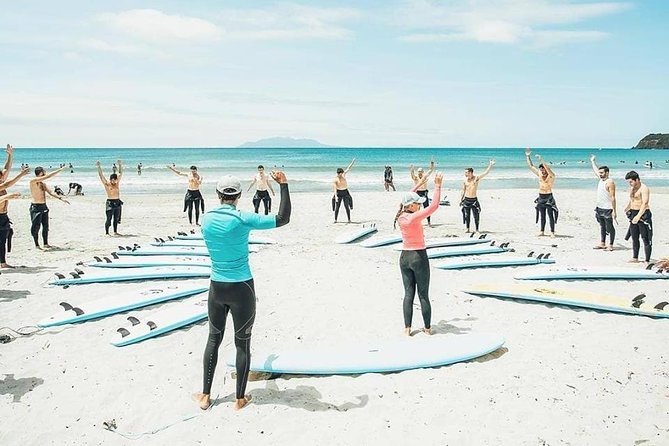
You begin on land. This is more important than it sounds. New surfers often want to rush straight into the water, but a few minutes spent learning the basics can make the rest of the lesson calmer and safer.
The first part covers water and beach safety. You learn what to watch for and how to use the beach and surf equipment properly. The available information does not spell out every safety topic, so you should expect an introductory briefing rather than advanced ocean training.
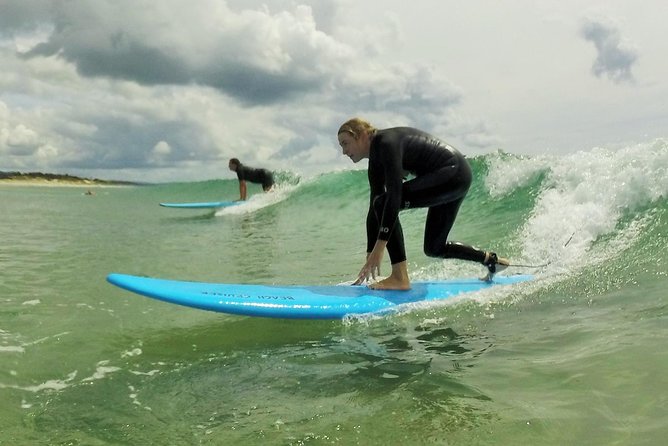
You also learn how to position yourself on the board and how to use the equipment correctly. That can include carrying the board, lying in the right place, and preparing for a wave. These skills may seem ordinary, but poor board handling can make paddling harder and standing up much less likely.
The beach practice gives the instructors a chance to see how you move before you try the real thing. It also gives nervous beginners a low-pressure way to rehearse the motions. If you are bringing children, this early instruction is especially useful because the lesson has already helped them understand what to do before they reach the water.
Paddling and the pop-up
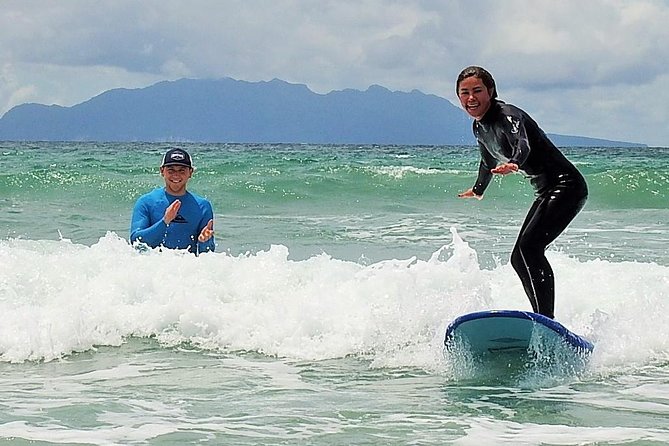
The central skill is the movement from lying on the board to standing on it. Surf schools often call this the pop-up. Saltwater Eco also teaches paddling, since you need enough speed to match the wave before you can stand.
The lesson aims to find a technique that fits your ability and fitness. That wording matters. A tall, strong adult may need different advice from a child or someone who has not exercised recently. You are not simply copying an instructor and hoping for the best. The goal is to adjust the movement so you can repeat it.
The supplied accounts describe Locke as especially patient with beginners, while Lydia is associated with targeted instruction and a friendly atmosphere. Kirsty is also praised for calm, patient teaching. Those details suggest that the human side of the lesson is a major part of its value, especially if you feel awkward or nervous before entering the water.
Do not judge the lesson by how many times you fall. A first session is successful if you understand the basic movement, feel safer around the board, and get a chance to try the technique in real water. Standing up is the memorable prize, but it is not the only useful result.
Same base, a different kind of day:
- Auckland Dolphin and Whale Watching Eco-Safari Cruise
★ 4.5 · 1,790 reviews - Skydive Auckland
★ 5.0 · 1,516 reviews - Auckland: Hobbiton Movie Set Day Trip with Festive Lunch
★ 4.8 · 1,431 reviews - Hobbiton Movie Set Small Group Tour from Auckland
★ 5.0 · 1,380 reviews
Taking the board into the water
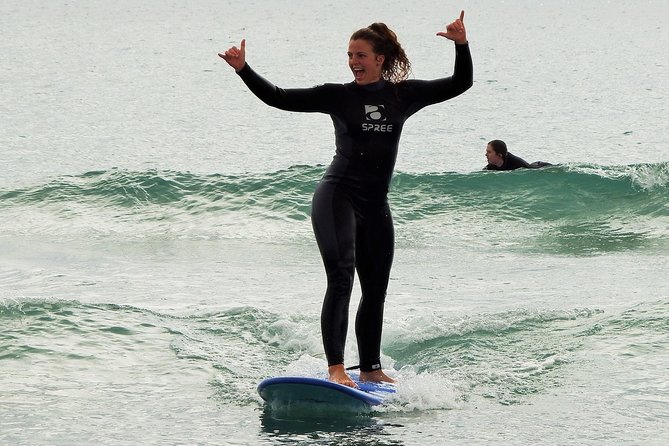
Once the beach work is complete, you head into the ocean with your board. The lesson is aimed at beginners, so the focus is on applying the basics rather than learning advanced turns, fast takeoffs, or performance surfing.
Tide timing is one of the strongest practical features. Waves change with the tide, and a lesson held at a workable point in that cycle gives beginners a better chance to practice. You cannot control the sea, but a tide-aware schedule improves the odds that the session will be useful.
The beach is described as white sand with clear water, and Omaha is repeatedly presented as clean and friendly for first-timers. That makes the setting appealing for families and mixed-age groups. Still, surfing is weather-dependent, and even a beautiful beach can produce a challenging session if conditions shift.
The instructors work to help you catch a wave and stand safely. You may get several attempts, but the supplied information does not promise a specific number of waves or a guaranteed stand-up. Book this as a lesson in building skills, not as a guaranteed photo of a perfect ride.
Gear, photos, and what the price covers
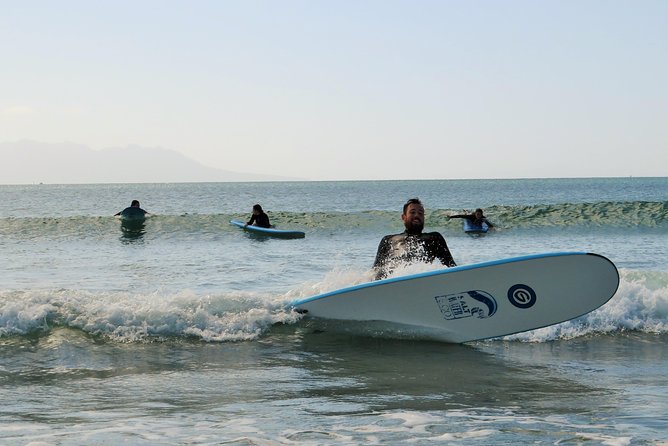
At $49.03 per person, the price includes a surfboard and wetsuit. That is good value for a first lesson because you do not need to find separate equipment hire, and you can try surfing without buying gear for an activity you may only do once.
The wetsuit is also practical in New Zealand water. The supplied details do not specify sizes or thickness, so contact the provider if you have unusual equipment needs. The included board and wetsuit remove two common costs, but transport, food, and any other day-trip expenses remain yours.
Souvenir photos and videos of the lesson are provided. This adds real value for families and first-timers because it lets you see your stance and remember the experience. It may also help you spot what you were doing with your feet or upper body. Do not assume you will receive professional action footage of every wave, since the format and quantity are not specified.
Group discounts are available. If you are booking for a family or a group of friends, check the final price before paying. A shared lesson can be more fun than learning alone, though people who want constant personal correction may prefer to ask about private options separately.
Who will get the most from this experience
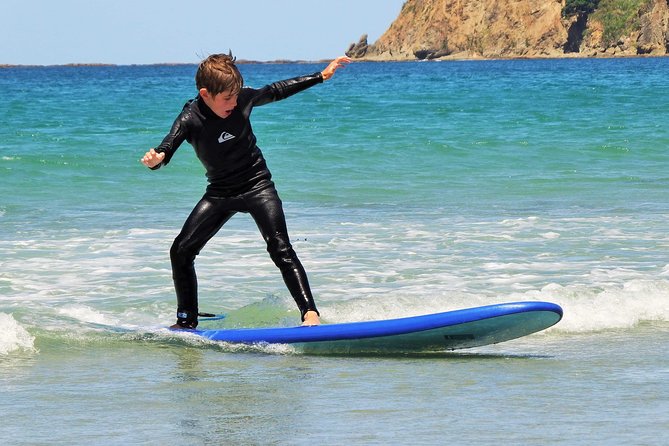
This lesson suits a wide range of beginners. The activity is described as suitable for the whole family, and the supplied accounts include children aged 10 and 12. Most people can participate, according to the practical information provided.
It is a good fit for you if:
- You have never surfed or have only tried once.
- You want a guided introduction rather than hiring a board on your own.
- You are comfortable learning in a group.
- You want a beach outing from Auckland.
- You like the idea of practicing a skill you can use again later.
- You would appreciate calm instruction if you feel nervous in the water.
It may be less suitable if you want advanced coaching, a private instructor, or a tightly structured performance session. The lesson is built around beginner skills. It also requires good weather, and the provider may need to change the date or cancel when conditions are poor.
For children, the lesson has clear appeal, but an adult should still check the exact age and participation rules before booking. The supplied information confirms that children aged 10 and 12 have taken part, but it does not provide a minimum age or detailed supervision policy.
How the two hours are likely to feel

The first part should feel instructional and practical. You learn safety, equipment use, paddling, and the pop-up on the beach. This is where you get the basic sequence into your body before the water adds wind, movement, and pressure.
The middle portion shifts to the ocean. You use the board, practice paddling, and attempt to catch beginner waves. The instructors can offer corrections and adjust the advice to your fitness and ability. With a maximum of 12 people, you should have room for help, although the amount of personal attention depends on the group size and the conditions.
The final part brings the activity back to the meeting point. There is no separate sightseeing stop or extra attraction built into the lesson. Its value comes from the instruction, the beach setting, and the chance to try a real surf skill in a controlled introduction.
Plan to be tired afterward. That is not a warning about the lesson, simply a useful reminder that paddling and balancing use muscles you may not expect. Give yourself time to change and continue your day at an easy pace.
The strongest teaching point: patience
The clearest pattern in the instructor feedback is patience. Locke is singled out for helping a beginner stand up quickly and for making the process feel less intimidating. Lydia is praised for targeted instruction, and Lydia and Kirsty are described as calm and patient with new surfers.
That matters because beginners often struggle with confidence before they struggle with technique. A rushed correction can make you tense. A calm instructor can help you try again, listen to the advice, and treat falling as part of the lesson.
The teaching also appears to have a friendly, welcoming tone. That is particularly useful for solo participants, people attending a women-focused session, and families with different confidence levels. You still need to do the work, but you are not left to work out the basics alone.
The experience is not a substitute for a full surf course. It gives you a foundation. If you enjoy it, the skills are simple enough to practice again later, which gives the $49.03 cost more value than a one-off thrill.
Timing, cancellation, and planning advice
You can cancel for a full refund up to 24 hours before the start time. Changes or cancellations made less than 24 hours before the session are not accepted for a refund, and cut-off times use local time.
Good weather is required. If poor weather causes Saltwater Eco to cancel, you are offered another date or a full refund. This is sensible for a beach lesson, but keep your wider Auckland plans flexible if surfing is the main reason for the trip.
Confirmation is provided when you book. Since the location details refer to both Te Arai and Omaha, use that confirmation as a prompt to verify the exact meeting instructions rather than relying only on the general address.
Should you book the Te Arai beginner surf lesson?
Book it if you want a reasonably priced, family-friendly first step into surfing near Auckland, especially if you value patient instruction and included equipment. The two-hour format is long enough to cover safety and technique, then give you real time on the water without turning the lesson into an all-day commitment.
The best reasons to choose it are the small group limit, tide-aware scheduling, board and wetsuit hire, and the calm teaching style associated with Locke, Lydia, and Kirsty. The photos and videos are a welcome extra.
Pause before booking if you need private instruction, guaranteed waves, or a fully clear location plan. Confirm whether your session meets at Te Arai or goes to Omaha Beach, arrange your own transport, and remember that weather can change the plan. Once those points are clear, this is a sensible introduction for beginners who want to learn a real skill rather than simply pose with a surfboard.
FAQ
Where does the surf lesson start?
The listed meeting point is 708 Te Arai Point Road, Te Arai 0975, New Zealand. The activity ends back at the meeting point.
How long does the lesson last?
The lesson lasts approximately two hours. The listed hours are 11 a.m. to 1 p.m.
Is the lesson held at Te Arai or Omaha Beach?
The meeting point is listed at Te Arai Point Road, while the lesson details refer to Omaha Beach. Confirm the exact surf location with Saltwater Eco before the session.
What equipment is included?
A surfboard and wetsuit are included in the price.
Is transport included?
No. You need to arrange your own transport to the lesson location.
How many people can join the lesson?
The activity has a maximum of 12 participants.
What skills will I learn?
You will learn beach and water safety, correct equipment use, paddling, pop-up skills, and a surfing technique suited to your ability and fitness.
Can I cancel for a refund?
You can cancel at least 24 hours before the start time for a full refund. If poor weather causes the provider to cancel, you are offered another date or a full refund.
Just added in Auckland
- Ex Hamilton: TRIPLE DEAL Wai O Tapu, Redwood Forest & Blue Spring★ 4.5 · 3 reviews
- Zombie Bite Escape Room Experiences★ 5.0 · 54 reviews
- Auckland Airport Private One-Way or Round-Trip Transfer★ 4.5 · 14 reviews
- Auckland’s Wild West Coast & Black Sand Beaches Tour inc Lunch★ 5.0 · 12 reviews
- Wētā Workshop Unleashed – Intro to Scars and Scrapes Workshop★ 5.0 · 5 reviews
- West Coast Discovery Tour★ 5.0 · 37 reviews
- Vineyards Honey and Black Sand Beaches from Auckland★ 5.0 · 93 reviews
- Kumeu Wine Region Shuttle from Auckland★ 4.5 · 19 reviews
Tours in Auckland, compared.


Hobbiton & Waitomo Caves Guided Day Trip from Auckland incl lunch
Read our review →
Auckland Dolphin and Whale Watching Eco-Safari Cruise
Read our review →

Hobbiton Movie Set Day Trip with Festive Lunch
Read our review →
Hobbiton Movie Set Small Group Tour from Auckland
Read our review →
Auckland Explorer: Sightseeing Hop-on Hop-off Tour
Read our review →