
Reviewed · MOUNT COOK & LAKE TEKAPO TOURS
Mount John Observatory Stargazing Experience, Tekapo
Mount John Observatory gives you a rare chance to look at the Southern Hemisphere sky from a working research site, high above Lake Tekapo. The three-telescope viewing and clear explanations make this a good choice even if you cannot tell Orion from a street sign.
I like the short ride up to the 1,029-metre summit, and I like the way the guides combine naked-eye stargazing with laser pointers and serious observatory equipment. The main drawback is simple: clouds can cancel the outdoor session, and the replacement indoor program may feel like a poor substitute.
I also like that warm extreme-weather jackets are supplied. Still, bring layers. The summit can be bitterly cold, even in spring, and darkness makes walking around more awkward than you might expect.
Key points before you book
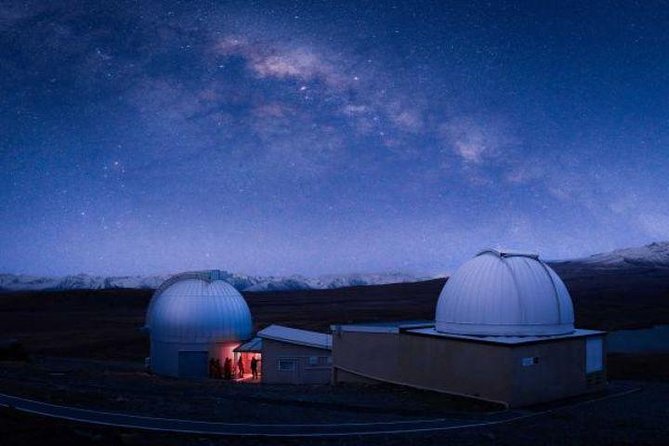
- Mount John summit access: Ride from Lake Tekapo to the University of Canterbury observatory at 1,029 metres.
- Three ways to see the sky: Learn with your own eyes, follow laser-pointer explanations, then use powerful telescopes.
- Southern Hemisphere focus: Expect help finding the Southern Cross, the true southern star, planets, star clusters, and perhaps a distant galaxy.
- Small scheduled groups: Trips are capped at 22 people per departure time, with the overall activity limited to 30 people.
- Cold-weather gear supplied: Large extreme-weather jackets are available, but warm layers and sturdy shoes still make sense.
- Weather matters: A cloudy or unsuitable night may mean a new date, a refund, or an indoor alternative.
Why Mount John is such a good place for stargazing
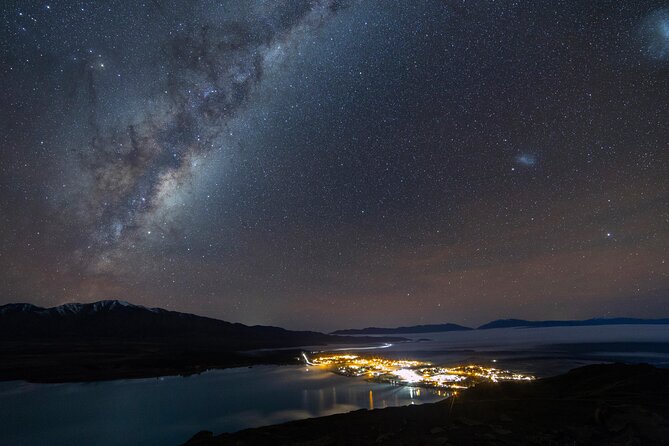
The appeal here begins with location. Mount John rises above Tekapo, far from the glare of a large city, inside the Aoraki McKenzie International Dark Sky Reserve. The summit gives you a darker sky and a wide view over the surrounding mountains and lakes.
That matters because stargazing is not only about owning a strong telescope. Artificial light washes out faint stars, pale parts of the Milky Way, and distant objects. From this high point, the sky has a better chance of showing its full shape.
You are also visiting a genuine astronomy site linked to the University of Canterbury. This is not simply a viewing platform with a telescope placed for tourists. The observatory is an internationally recognised research centre, and the setting gives the evening a useful sense of purpose.
The activity lasts about 1 hour and 45 minutes. That is long enough to cover basic constellations, answer questions, and spend time at the telescopes without turning the evening into an all-night expedition.
Other Mount Cook and Tekapo days from Lake Tekapo:
- Lake Tekapo: Alpine Stargazing Experience with a Guide
★ 4.5 · 626 reviews - Lake Tekapo: Stargazing Experience
★ 4.9 · 607 reviews - Tekapo Shuttle: Mt Cook Day Tour via Pukaki & Tasman Lake
★ 4.8 · 307 reviews
The 15-minute ride from Lake Tekapo to the summit
You begin at the Dark Sky Project base in Lake Tekapo. Check in with the team, then board the transport for the trip up Mount John. The ride is included, as is the return journey to the township.
The transfer takes about 15 minutes. It saves you from arranging your own transport and, more importantly, gets the whole group up and down together. Hotel pickup is not included, so plan to reach the Lake Tekapo meeting point yourself.
As you climb, the setting changes from town to open mountain country. In daylight, the height gives you views across the lakes and surrounding mountains. At night, the important change is the reduction in artificial light.
Take care when you first arrive. Several people have found the summit colder than expected, even during spring. You receive an extreme-weather coat, but I would still wear thermal layers, long trousers, and warm socks. Gloves and a hat are sensible additions if you feel the cold easily.
What happens during the 90-minute summit session
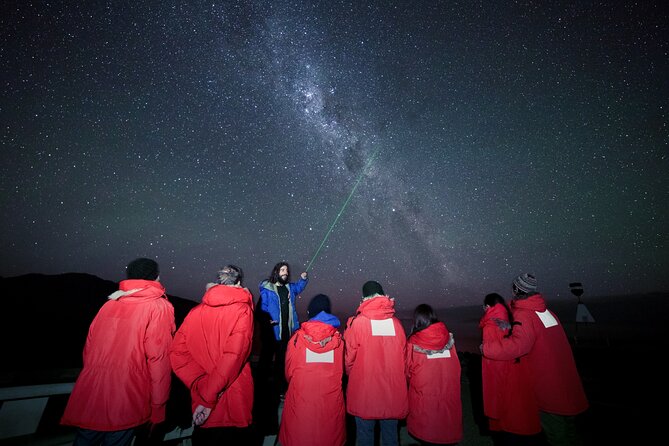
Once at the top, your astronomy guide takes the group outside for a structured look at the sky. The session uses three main tools: your own eyes, laser pointers, and observatory telescopes.
The naked-eye portion is more important than it sounds. You start by learning how to orient yourself under a Southern Hemisphere sky. Guides point out major constellations and explain how to find the Southern Cross and the true southern star. One useful part of the evening is learning that a bright star that looks like the south marker may not be the correct one.
Laser pointers help connect the spoken explanation to the actual sky. Without them, a beginner can easily lose track of the stars being discussed. The guides also explain basic science in a way suited to people with only a passing interest in astronomy, not just experienced stargazers.
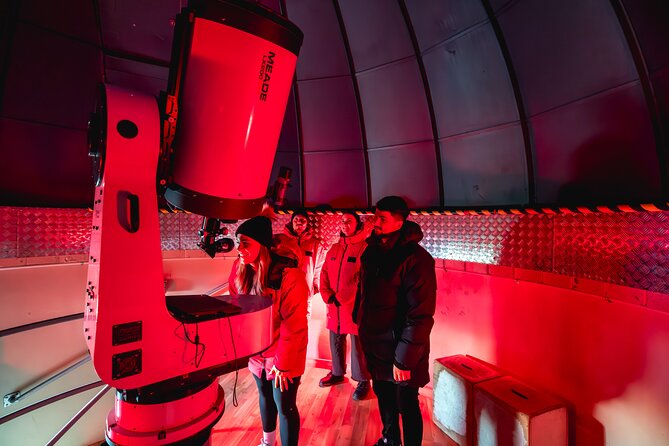
Then comes the telescope viewing. The equipment allows you to see objects that are hard or impossible to pick out with your eyes alone. Depending on the night and the guide’s plan, you might view the moons of Jupiter, star clusters, or other distant objects. You may even get a glimpse of a far-off galaxy.
The exact lineup will change. Astronomy depends on the season, the position of the planets, cloud cover, and the equipment available that night. It is better to think of the telescope portion as a guided selection rather than a fixed checklist.
That flexibility is one reason the experience works well for beginners. You do not need to arrive knowing star names or telescope terms. The guides explain what you are seeing, then give you time to look for yourself.
The guides make the difference
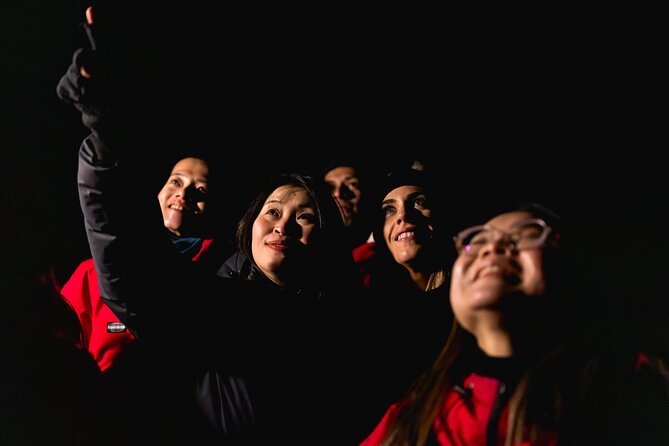
The strongest part of the experience is the staff’s ability to explain complicated ideas without making the evening feel like a classroom lecture. Guides are described as enthusiastic, entertaining, and well informed, with the astronomy presented in a friendly way.
The team offers tours in English and Mandarin. You need to speak the language used on your departure for health and safety reasons. If you cannot do that, you will not be allowed to join the tour, so check the language before booking.
Some visitors have praised guides named Kieran, Alice, and Olive for making the session accessible and lively. Staff have also adjusted their presentation around changing cloud cover, showing stars and constellations through gaps rather than giving up too quickly.
That last point matters. A few clouds do not always ruin an evening. A skilled guide can work around moving cover and still show you several parts of the sky. The tour becomes less predictable, but not necessarily worthless.
The group size is another practical factor. Departures are limited to 22 people, while the activity has a maximum of 30 participants overall. That is not a private tour, and you may need to share telescope time, but it is far more manageable than a large coach group.
Other dark-sky nights around Lake Tekapo:
- Chameleon Stargazing Shared Tour
★ 5.0 · 181 reviews - Lake Tekapo: Mountaintop Stargazing at Mount John Summit
★ 4.5 · 176 reviews - Silver River Stargazing Experience in Lake Tekapo
★ 4.5 · 106 reviews - Stargazing Experience at Cowan’s Private Observatory
★ 4.0 · 85 reviews
Telescopes, dark skies, and realistic expectations
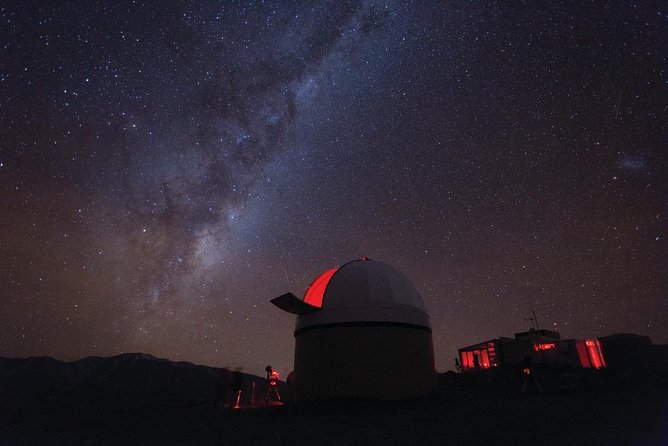
The telescopes are the part many people look forward to most, and they can be impressive. You may see moons, planets, clusters, and other objects in a way that gives the night sky a physical sense of scale.
Still, telescope viewing is not the same as looking at a glossy space photograph. The view depends on conditions and equipment. You may see a small but meaningful point or shape rather than a bright, colourful image filling the eyepiece.
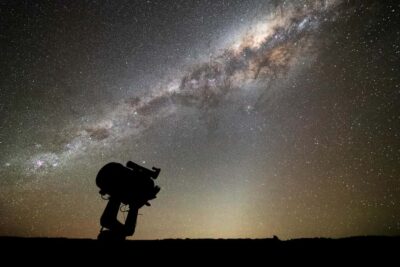
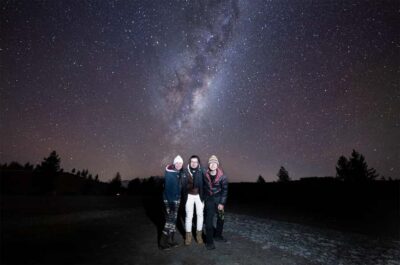
The naked-eye sky is often the real highlight. Under a good night, the Milky Way becomes much more than a faint stripe. A dark site can reveal layers of stars that city residents rarely see. One experienced stargazer found the darkness at Mount John unlike anything they had previously seen.
A full moon can reduce the number of faint stars visible, even when the sky is clear. If you have flexibility, a night without a full moon should give the Milky Way a better chance to show itself. The exact experience will also change with the season, so do not expect the same objects at every departure.
The tour is especially useful if you are new to astronomy. You leave with practical reference points, such as how to identify the Southern Cross and how to separate the true southern star from a misleading bright star nearby.
Cold, darkness, and walking conditions
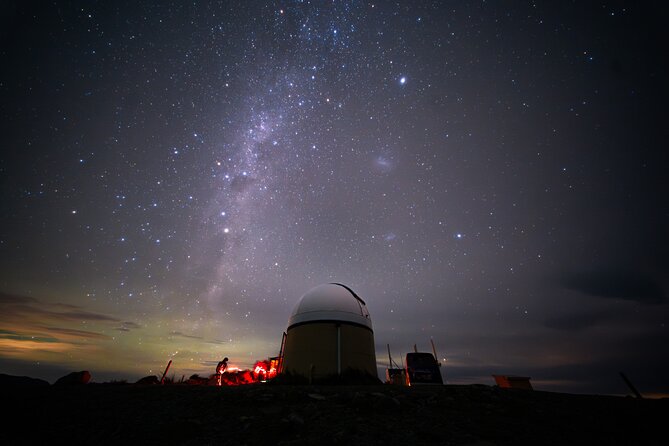
The summit environment is part of the experience, but it also creates a few small challenges. It can be very cold, and the coat supplied by the operator is helpful rather than decorative.
Wear several layers instead of relying only on the provided jacket. The coat is large and warm, but it cannot replace gloves, a hat, or proper footwear. The information says the activity is not recommended for people with mobility issues, so consider the outdoor conditions carefully if walking or standing in the dark is difficult for you.
You are not permitted to use white lights or ordinary torches during the stargazing. That rule protects everyone’s night vision and prevents stray light from spoiling the view.
The trade-off is that paths and equipment can be hard to see. Stay close to your guide and group, and move slowly. This is not a casual stroll where you can wander off to take photos whenever you like.
Photography also has limits. On at least one still evening, visitors could take pictures, but wind may prevent the staff from helping with camera shots. Come for the sky itself, not for a guaranteed portrait under the stars.
What happens if clouds move in
Weather is the main uncertainty. The activity requires suitable conditions, and heavy cloud can lead to cancellation. If that happens, you are offered another date or a full refund.
An indoor alternative may also be offered. That can be useful if you have limited time in Tekapo, but it is not equal to standing beneath a dark sky and using the telescopes. Some people have found the indoor option less informative and less satisfying than the outdoor session.
For that reason, schedule the stargazing early enough in your stay to leave room for a second attempt. If you are in Tekapo for only one night, you must accept a real risk that the central part of the experience will not happen.
Cloud does not always mean immediate failure. Moving cover can leave clear patches, and guides may work around it. But a completely covered sky gives the team little to show, and the cancellation policy is sensible in that situation.
You can cancel for a full refund up to 24 hours before the start time. Cancellations or changes within 24 hours are not refunded or accepted. If you book a departure after midnight, double-check the date, since the booking date can be confusing.
Is the $139.39 price good value?
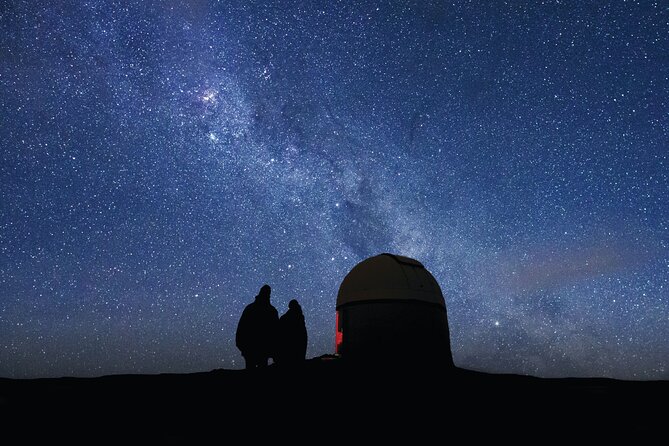
At $139.39 per person, this is not a cheap evening activity. The price includes return transport from Tekapo township, summit access, an astronomy guide, telescope viewing, laser-pointer instruction, and a warm extreme-weather coat.
I think the price is reasonable if you value the setting and the access to the observatory itself. You are not paying only for a generic talk about stars. You are going to the summit of Mount John, entering a working astronomy centre, and using advanced equipment in a major dark-sky reserve.
The value is weaker if you mainly want a quick look at the Milky Way. A clear night outdoors can be wonderful without a paid tour, and the activity does not include food, snacks, or hotel pickup. You will also lose some value if clouds cancel the summit session and the indoor alternative is your only option.
For first-time stargazers, the guided explanations add a lot. You learn where to look, what you are seeing, and why the Southern Hemisphere sky differs from the one familiar to many Northern Hemisphere visitors. That turns a dark sky into something you can understand rather than simply admire.
Who should book this experience?
I would recommend it most strongly to beginners, families with older children, and anyone who wants a clear introduction to astronomy. Children must be accompanied by an adult, and most people can participate, but the cold and darkness may test very young children.
It also suits keen amateur stargazers who want to compare their own experience with a professional observatory setting. Even people who already know the major constellations may find the dark sky and telescope access worthwhile.
You should think twice if you dislike standing outside in the cold, have limited mobility, or need a guaranteed indoor activity. The tour is weather dependent, and the outdoor section is the reason to pay for it.
The language requirement is important too. You need to understand the language of the tour for safety instructions. English and Mandarin options are available, but confirm your selected departure before you commit.
Should you book the Mount John Observatory Stargazing Experience?
Book it if you want a guided introduction to the Southern Hemisphere sky, especially if you have never seen a truly dark sky. The combination of Mount John’s height, the reserve’s low light pollution, expert guides, and three telescope stations gives the evening real substance.
Book early in your Tekapo stay if possible, and keep a spare night available in case clouds interfere. Wear serious winter layers, stay close to the guide in the dark, and expect the sky rather than the itinerary to decide what you see.
Skip it if you want a guaranteed result, dislike cold outdoor conditions, or cannot accept the possibility of an indoor replacement. For everyone else, this is one of the better ways to make sense of the stars above Lake Tekapo, not just look at them.
FAQ
Where does the Mount John Observatory Stargazing Experience begin?
You check in with the Dark Sky Project team in Lake Tekapo township. Return transport to the Mount John summit is included, but hotel pickup and drop-off are not.
How long does the experience last?
The full activity lasts about 1 hour and 45 minutes. This includes around 15 minutes for the transfer to the summit and about 1 hour and 30 minutes at the University of Canterbury Mount John Observatory.
What can I see through the telescopes?
The viewing can include planets, moons, star clusters, solar systems, constellations, and possibly a distant galaxy. The exact objects depend on the sky, season, cloud cover, and conditions on the night.
Are warm clothes provided?
Yes. Extreme-weather jackets are provided for the summit session. You should still bring warm layers because Mount John can be very cold, including during spring.
What languages are available?
Expert guides provide the experience in English and Mandarin. You must speak the language used on your tour for health and safety reasons.
What happens if the weather is bad?
If poor weather prevents the tour from operating, you may be offered another date or a full refund. An indoor alternative may also be offered.
Can I cancel for a refund?
You can cancel for a full refund up to 24 hours before the experience begins. Cancellations and changes made less than 24 hours before the start time are not accepted or refunded.
Just added in Lake Tekapo
- Tekapo Star Gazing Tour – Soak in the Stars★ 4.5 · 109 reviews
- Silver River Stargazing Experience in Lake Tekapo★ 4.5 · 106 reviews
- Scenic 4WD Tour Lake Tekapo Backcountry★ 5.0 · 77 reviews
- Lake Tekapo Scenic Wilderness Cass Valley Tour★ 4.5 · 19 reviews
- Lake Tekapo to Mt Cook One-Way Small Group Tour★ 4.0 · 5 reviews
- Mt Cook Day Tour From Tekapo (Small Group, Carbon Neutral)★ 4.5 · 11 reviews
- Dark Sky Indoor Maori Cultural Astronomy Experience★ 4.5 · 70 reviews
- Lake Tekapo Ultimate Stargazing Experience★ 5.0 · 3 reviews
Mount Cook & Lake Tekapo Tours, compared.
Mt Cook Small Group Scenic Day Tour from Queenstown
Read our review →
Mount Cook, Lake Tekapo and Tasman Glacier Tour from Christchurch
Read our review →
Tekapo Shuttle: Mt Cook Day Tour via Pukaki & Tasman Lake
Read our review →
Mt Cook & Tasman Glacier lookout Small Group Tour from Queenstown
Read our review →Browse the lists this tour appears in