
Reviewed · TOURS IN PAIHIA
Hundertwasser Art Centre Admission Ticket
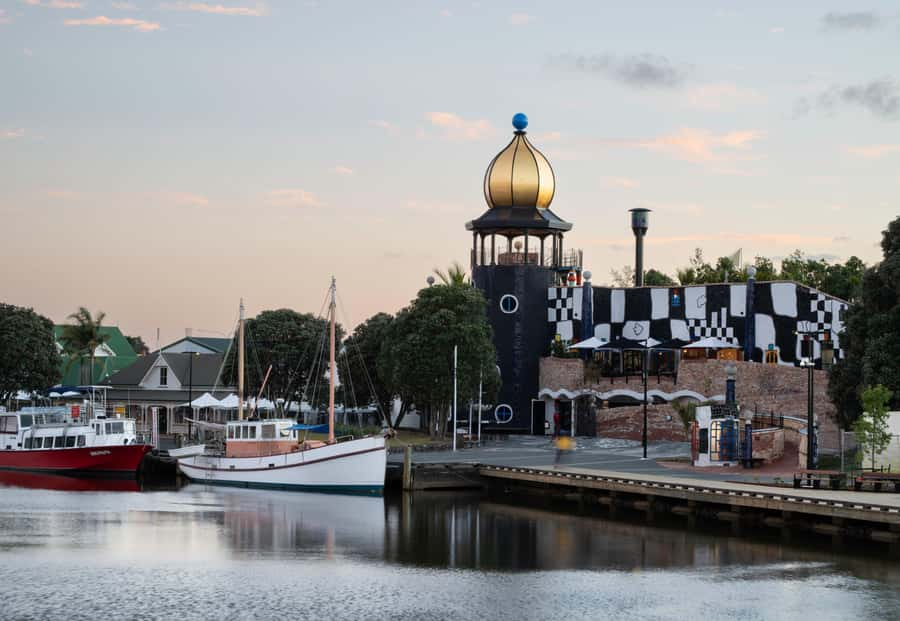
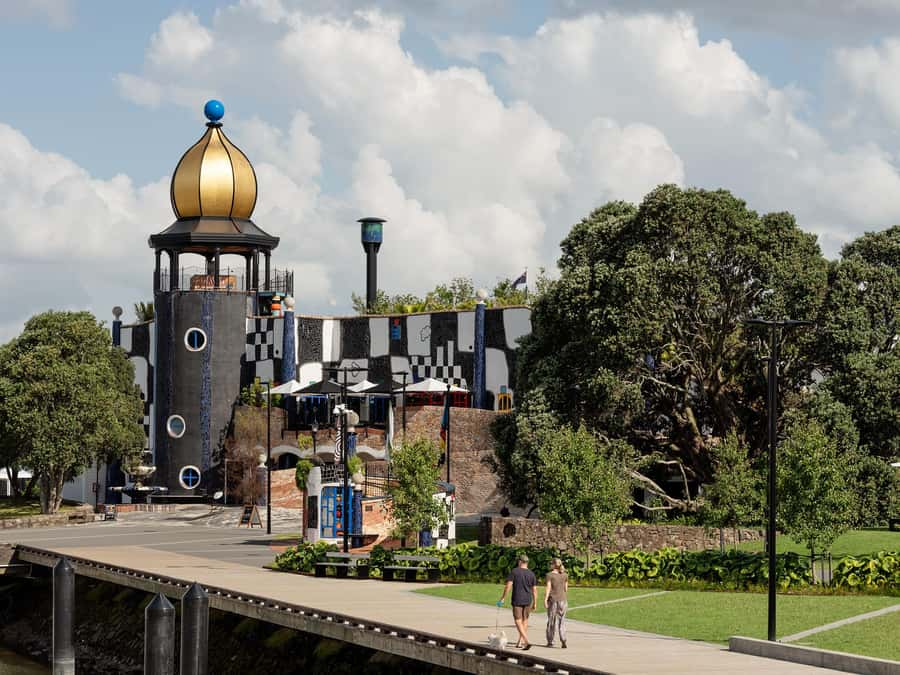
Whangārei’s Hundertwasser Art Centre is not a quiet white-box museum. It is a playful work of art from the moment you enter, with crooked lines, handmade tiles, living walls, bold colour and an afforested roof. The main draw is the largest Hundertwasser collection outside Vienna, paired with a gallery devoted to contemporary Māori art.
I especially like two things here: the way the building itself becomes part of the exhibition, and the chance to move from Hundertwasser’s ecological ideas into changing Māori exhibitions. The rooftop and Golden Cupola add a fine payoff, too. The main consideration is size: at $17, this is good value for art lovers, but visitors expecting a full-day museum may find the centre more compact than the one-day ticket wording suggests.
Key points to know
- Largest collection outside Vienna: See original paintings, tapestries, models and ecological projects connected with Hundertwasser’s work in New Zealand.
- Aotearoa’s first public contemporary Māori gallery: Wairau Māori Art Gallery brings a separate cultural voice and changing exhibitions to the visit.
- The building is part of the experience: Look for irregular floors, mosaics, curved forms, natural materials and living walls.
- Rooftop views come included: Walk across the planted roof, then climb to the Golden Cupola for 360-degree views of Whangārei.
- A guided tour costs extra: Tours run Thursday to Sunday at 11am and last one hour. Admission is $17, while the guided tour is an additional $20 per person.
- Easy to fit into a Whangārei day: The centre is open daily from 10am to 4pm, with lift access to all exhibition levels and the roof.
Entering a Building That Refuses to Behave
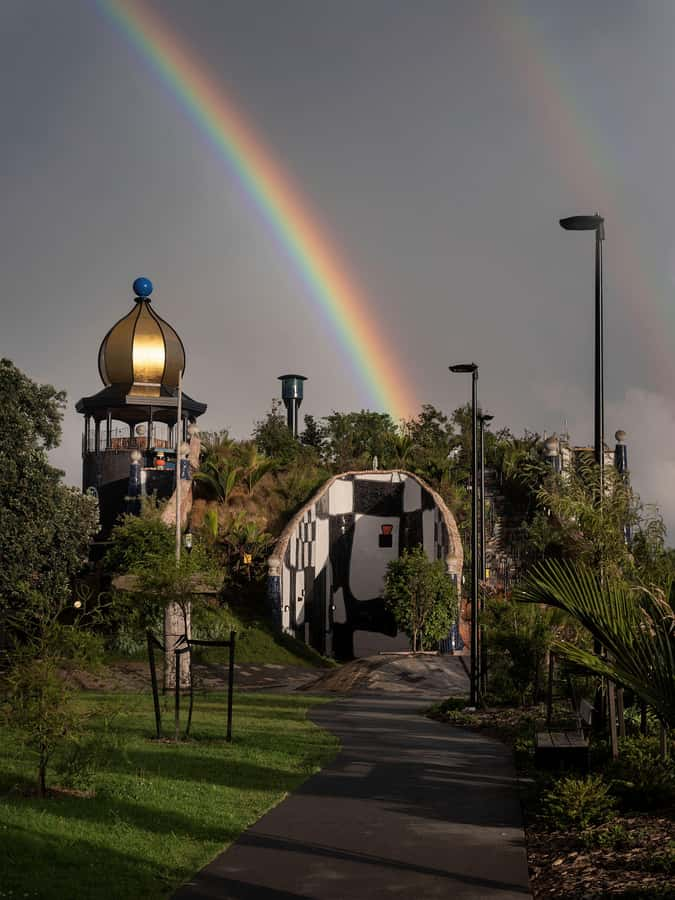
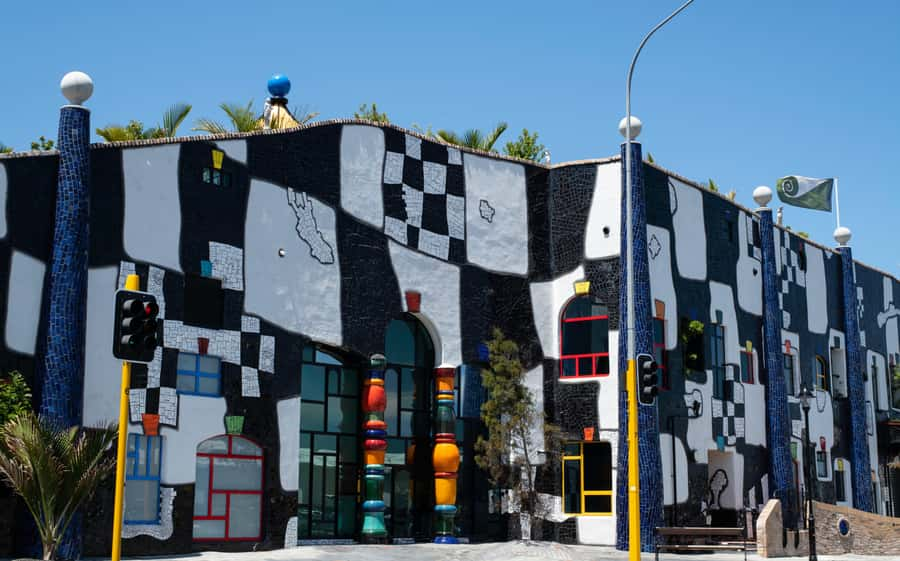
The first few minutes tell you what sort of place this is. You do not simply walk into a neutral room and wait for the art to begin. The architecture starts the conversation, using uneven tiled floors, handmade mosaics, curved lines, natural materials and living walls.
Hundertwasser believed buildings should work with nature rather than push it aside. That idea appears in practical form here. Plants are not decoration added after construction. They are part of the building’s character, just as the unusual surfaces and bright colours are part of its visual language.
I like this approach because it gives you something to notice before you read a label. You can look closely at the floor, walls and ceiling, then ask how the building differs from the straight, polished spaces found in many museums.
The style will not suit everyone. If you prefer restrained galleries where the art carries the entire show, the centre may feel busy. Here, the setting is deliberately playful and sometimes competes for your attention. That is not a flaw, but it is worth knowing before you arrive.
A few more things to do in Paihia worth a look
- Hobbiton Movie Set: Guided Tour Ticket
★ 4.9 · 8,167 reviews - Waiheke Island: Ferry & Hop-On Hop-Off Explorer Bus Tickets
★ 4.6 · 3,311 reviews - Rotorua: Wai-O-Tapu Geothermal Park Entry Ticket
★ 4.6 · 2,601 reviews
Hundertwasser in New Zealand, 1973 to 2000
The main exhibition focuses on Hundertwasser’s work and ideas connected with New Zealand between 1973 and 2000. You will see original paintings, tapestries, architectural models and ecological projects.
This range matters. A display made up only of paintings would give you a narrow picture of the artist. The models show how his ideas worked in three dimensions, while the ecological projects explain his concern with planting, organic forms and a closer relationship between buildings and the natural world.
I find the architectural models especially useful for understanding the gap between an artist’s dream and a finished building. They let you see how curved forms, uneven surfaces, planted roofs and unusual decorative details fit together. The paintings and textiles then provide a more direct look at his use of colour and pattern.
Allow yourself time to look beyond the loudest colours. Hundertwasser’s work can make a quick first impression, but the ecological message deserves a slower read. His view was not simply that buildings should look unusual. He wanted people to have a more personal connection with the places they live and work.
The collection is described as the largest of Hundertwasser’s work outside Vienna. That makes the centre worthwhile for serious followers of his art, but it also helps first-time visitors. You can see several sides of his career in one place rather than trying to piece together the story from a single painting or small display.
Wairau Māori Art Gallery and a Different Artistic Voice
Next, make time for Wairau Māori Art Gallery. It is Aotearoa’s first public gallery devoted to contemporary Māori art, and its exhibitions change over time.
This is more than an extra room added to the Hundertwasser display. The gallery creates a cultural conversation between two different artistic traditions. Hundertwasser’s work asks how architecture and nature might live together. The Māori exhibitions bring contemporary Indigenous perspectives into the same visit, with works by leading Māori artists and subjects that can be thoughtful and challenging.
Because the exhibitions change, the experience will vary from one visit to the next. I would avoid rushing through this section simply because the building and rooftop have already caught your eye. Give the artworks room to speak for themselves, and read the exhibition information so you understand the ideas being presented.
The pairing also makes the centre more useful for visitors who are not already Hundertwasser fans. You receive two reasons to come: a major European artist’s New Zealand connection and a dedicated space for current Māori art. That broader program gives the $17 admission a stronger value than a single-artist display would offer.
The Afforested Roof and Golden Cupola
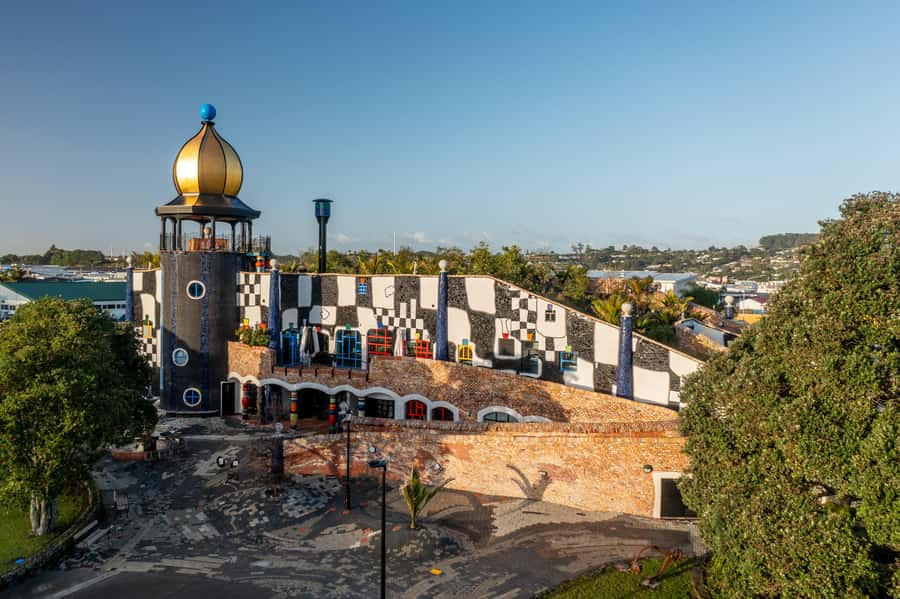
The roof is one of the centre’s most appealing features. The afforested roof is planted with native species, turning the top of the building into a living artwork rather than an unused surface.
You can walk across the roof before climbing to the Golden Cupola. From there, you get 360-degree views over Whangārei’s Town Basin and the surrounding area. The view gives you a useful change of pace after the indoor galleries, and it lets you see how the centre sits within the town.
I would save the rooftop for the end of your visit if the weather is suitable. That way, the art and architecture lead naturally to the outdoor portion, and you finish with an open view rather than returning to another gallery room.
The roof is also where Hundertwasser’s ideas become easiest to grasp. A planted roof is not just a decorative flourish. It reflects his belief that nature should have a place in the built environment. The native planting gives that principle a local New Zealand setting.
Keep your footwear in mind. Comfortable, closed-toe shoes are listed as important, and they make sense for walking through the centre and climbing to the cupola. Bring a camera if you want to record the details or the views, though the building itself is best appreciated by looking carefully rather than trying to photograph every surface.
Same base, a different kind of day:
- Paihia/Russell: Hole in the Rock Cruise with 2 Island Stops
★ 4.8 · 1,002 reviews - Paihia: Cape Reinga and Ninety Mile Beach Trip with Lunch
★ 4.6 · 877 reviews - Paihia/Russell: Hole in the Rock, Dolphins & Island Cruise
★ 4.6 · 821 reviews - Hole in the Rock Cruise & Island Tour – with two island stopovers
★ 5.0 · 701 reviews
How Long to Allow and When to Visit
The ticket is valid for one day, and the centre is open seven days a week from 10am to 4pm. You can plan it as a focused cultural stop in Whangārei or leave enough time to return to parts that interest you.
The stated opening hours make a morning visit easy. Arriving earlier gives you time to see the main Hundertwasser exhibition, visit Wairau Māori Art Gallery and reach the roof without feeling hurried. If you are combining the centre with other plans in town, the compact opening window means you should not leave it until the last minute.
Thursday through Sunday offers an additional option: a guided tour at 11am, lasting from 11am to noon. The tour costs $20 per person on top of standard admission. That is more than the entry ticket itself, so I would choose it only if you want the background stories and architectural ideas explained in detail.
An audio guide is also available daily for an additional cost. The information provided does not state its price, so check before adding it to your booking. The audio option may suit you if your schedule does not line up with the 11am tour or if you prefer to move through the galleries at your own speed.
There is no guide name supplied for the scheduled tour, so you should not book expecting a particular presenter. The useful distinction is between a self-guided admission visit, a daily audio guide and the longer guided option available four days a week.
Is the $17 Ticket Good Value?
At $17 per person, the admission covers several parts of the centre rather than just one room. You get the Hundertwasser in New Zealand exhibition, access to Wairau Māori Art Gallery, the afforested roof, the Golden Cupola and the building’s architectural details.
I see the best value in the combination. If you enjoy art, architecture, Māori culture or design, you have several subjects to explore under one admission. The rooftop views also give the visit a physical highlight that many small museums lack.
The value is less certain for someone who wants a large conventional museum with many galleries and hours of objects to study. This is a focused experience built around a distinct artistic idea. You are paying for quality and character, not a huge number of rooms.
The optional guided tour changes the calculation. At an extra $20, it costs more than admission, but it may be worthwhile if Hundertwasser’s life, architecture and ecological thinking are unfamiliar to you. If you are comfortable reading displays and following your own interests, the $17 ticket is the cleaner choice.
You can also reserve now and pay later, which helps if your North Island plans are still shifting. Free cancellation is available up to 24 hours in advance for a full refund.
Access, Facilities and Practical Details
The centre is wheelchair friendly, with lift access to every exhibition level, the afforested roof and all facilities. That is particularly useful here because the visit includes more than ground-floor galleries and the cupola route.
The building’s curves, uneven visual lines and unusual surfaces are part of its design, but accessible movement through the centre has been planned with lift access. If you need assistance, staff are available to help make the visit comfortable.
Bring comfortable shoes and closed-toe shoes, along with a camera if you want one. Cash is also listed among the recommended items. Babies under one year are not considered suitable for this activity, so families with very young infants should take that restriction seriously when planning the day.
The MuseumShop is included as an area you can browse without paying another admission charge. You will find art prints, books, design pieces, handcrafted items and gifts inspired by Hundertwasser’s work. It is a practical final stop if you want something more lasting than a photograph, though shopping is naturally optional.
Who Will Enjoy the Hundertwasser Art Centre?
I would recommend this visit to anyone interested in unusual architecture, environmental design, contemporary art or Hundertwasser’s work. It also suits people who want a cultural stop in Whangārei that is easy to combine with other plans.
The centre is a good choice for:
- Art lovers who want to see original Hundertwasser works outside Vienna
- Visitors curious about the connection between architecture and nature
- People seeking contemporary Māori art in a dedicated public gallery
- Photographers drawn to tiles, curved forms, colour, planting and rooftop views
- Families with older children who can appreciate a building that looks different from the norm
- Wheelchair users who need lift access throughout the public areas
You may want to skip it if your main aim is a large museum filled with many unrelated collections. The centre has a clear identity, and nearly every part of the visit supports that identity. That focus is its strength, but it also means the experience will not appeal equally to every kind of museum visitor.
Should You Book It?
Book the $17 admission if you want a distinctive Whangārei attraction with more substance than a quick photo stop. The main collection, contemporary Māori gallery, planted roof and Golden Cupola give you four good reasons to visit, and the ticket remains reasonably priced for the range included.
Choose the optional 11am guided tour only if you want extra context and will be visiting Thursday through Sunday. Otherwise, arrive during the 10am to 4pm opening period, take your time with both galleries, and let the building itself guide your attention. For art, design and culture-minded visitors, this is one of the more memorable ways to spend part of a day in Northland.
FAQ
How much does admission to the Hundertwasser Art Centre cost?
Standard admission costs $17 per person. The ticket includes the main Hundertwasser exhibition, Wairau Māori Art Gallery, the afforested roof, Golden Cupola and access to the MuseumShop.
How long is the admission ticket valid?
The ticket is valid for one day. The centre is open seven days a week from 10am to 4pm.
Is a guided tour included with admission?
No. Guided tours cost an additional $20 per person. They run Thursday through Sunday from 11am to 12pm.
Is an audio guide available?
Yes. An audio guide is available daily for an additional cost. The price is not specified in the provided information.
Is the Hundertwasser Art Centre wheelchair accessible?
Yes. The centre has lift access to all exhibition levels, the afforested roof and all facilities.
Can I cancel my booking?
Yes. You can cancel up to 24 hours in advance for a full refund. Reserve now and pay later is also available.
Just added in Paihia
- Full-Day Adventure Cruise with Lunch in Bay of Islands★ 4.5 · 44 reviews
- Thriller Tour – Bay of Islands, 30 mins (min 2)★ 5.0 · 25 reviews
- Bay of islands Waterfall Cruise Kayaking Tour★ 5.0 · 40 reviews
- The Original Full day Bay of Islands Cruise with Dolphins★ 5.0 · 13 reviews
- Shore Excursion: Hole in the Rock Cruise with Island stopover★ 3.5 · 3 reviews
- Scenic Tour – Bay of Islands, 30 mins (min2)★ 5.0 · 75 reviews
- Waitangi Treaty Grounds: Combo Pass (Hāngī + Concert + Admission)★ 5.0 · 122 reviews
- Private Catamaran Full Day Sailing Charter | Bay Of Islands★ 5.0 · 3 reviews
Tours in Paihia, compared.
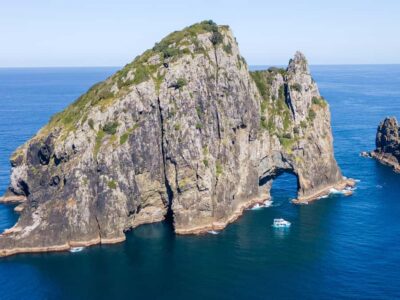
Paihia/Russell: Hole in the Rock Cruise with 2 Island Stops
Read our review →
Cape Reinga and Ninety Mile Beach Trip with Lunch
Read our review →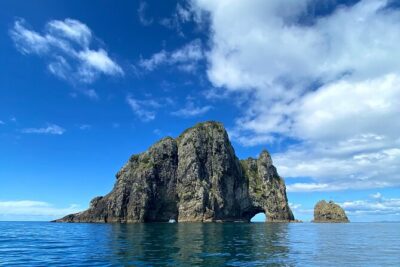
Hole in the Rock Cruise & Island Tour – with two island stopovers
Read our review →
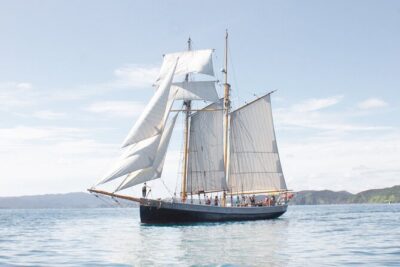
Bay of Islands Tall Ship Sailing on R. Tucker Thompson Including BBQ Lunch
Read our review →
Bay of Islands Glow Worm Caves & Scenic Shore Excursion
Read our review →Browse the lists this tour appears in