
Reviewed · TOURS IN AKAROA
From Akaroa Lighthouse: Sungazing Tour with Two Telescopes
The striking idea here is simple: you visit an historic lighthouse in daylight to study the Sun, our closest star, through a proper solar telescope. Akaroa’s Solar Explorer is a rare daytime stargazing experience, with an astronomy guide explaining what you are seeing rather than leaving you to peer through an instrument on your own.
I like the maximum group size of eight, which gives the guide room to answer questions. I also like the smartphone adapter, since you can take home a picture of the Sun instead of relying only on memory. The main consideration is that this is a short, fully outdoor tour, so its appeal depends on your interest in a focused astronomy lesson rather than a longer sightseeing outing.
Key points
- Look at the Sun safely: Use a Coronado PST solarscope designed for solar observation.
- Meet Luca at Akaroa Lighthouse: The astronomy guide is praised for patient, clear explanations.
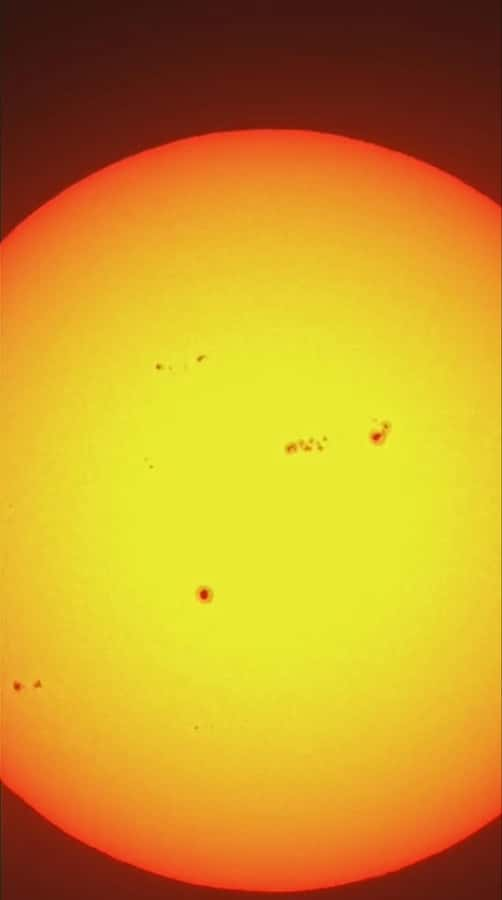
- See solar features: Sunspots may be visible, depending on the Sun’s activity on the day.
- Take your own image: A smartphone adapter lets you photograph the solar view.
- Small and family-friendly: The group is limited to eight people and the tour lasts 30 minutes.
- Simple commitment: The price is $23 per person, with free cancellation up to 24 hours before departure.
Seeing the Sun from Akaroa Lighthouse
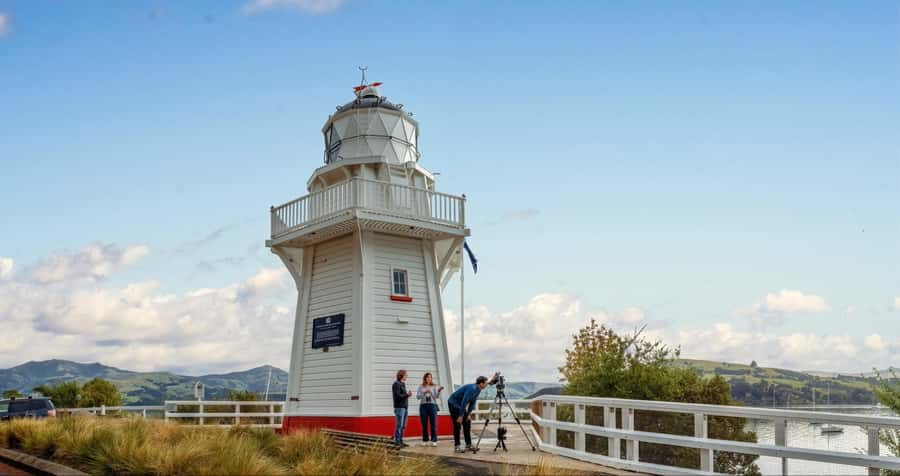
Most stargazing happens after dark. This tour flips the idea around. You meet at Akaroa Lighthouse, point a protected solar telescope skyward, and study the Sun while the town is still going about its day.
That change of setting gives the experience its charm. You do not need to stay up late, drive into the countryside, or plan an entire evening around astronomy. The tour takes only 30 minutes, yet it offers a direct look at an object that usually appears as a bright, featureless disk to the naked eye.
The setting also gives the activity a clear sense of place. You are not in a generic classroom or a dark indoor planetarium. You are at one of Akaroa’s recognizable historic landmarks, with the telescope set up for a short guided session.
The tour is called Solar Explorer, and it is described as Akaroa’s first and only daytime stargazing experience. That makes it a particularly easy add-on to a day in the area. You can fit it around other plans without giving up a large block of time.
Other trips people book in Akaroa:
- Akaroa Dolphins ~ Harbour Nature Cruise
★ 5.0 · 2,143 reviews - Akaroa: Dolphin Nature Cruise
★ 4.9 · 440 reviews - Akaroa Harbour Nature Cruise
★ 5.0 · 332 reviews
What you see through the Coronado PST solarscope
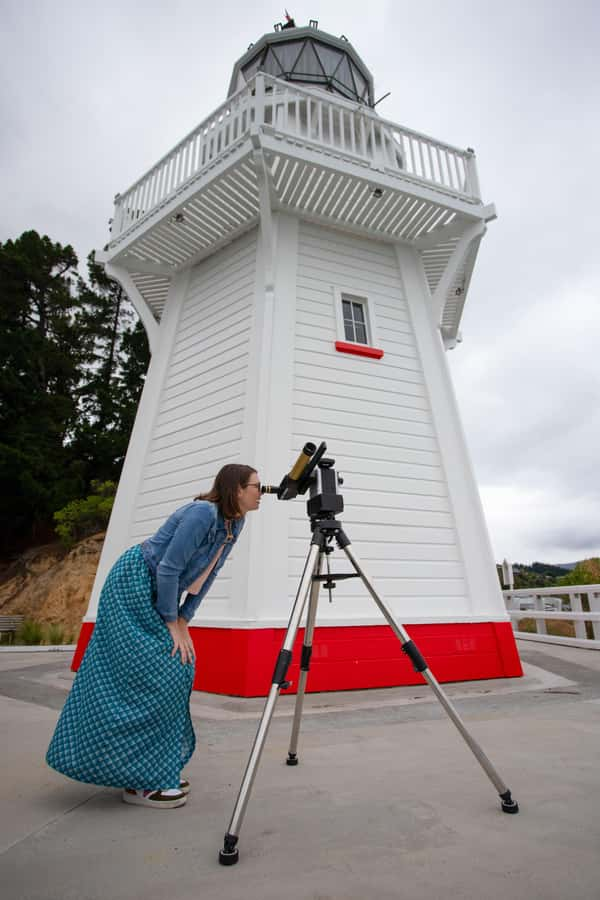
The main piece of equipment is a Coronado PST solarscope. This is the part that makes the experience worthwhile. Looking at the Sun through ordinary binoculars, a camera, or an unprotected telescope is unsafe, but a dedicated solar scope is designed for this kind of observation.
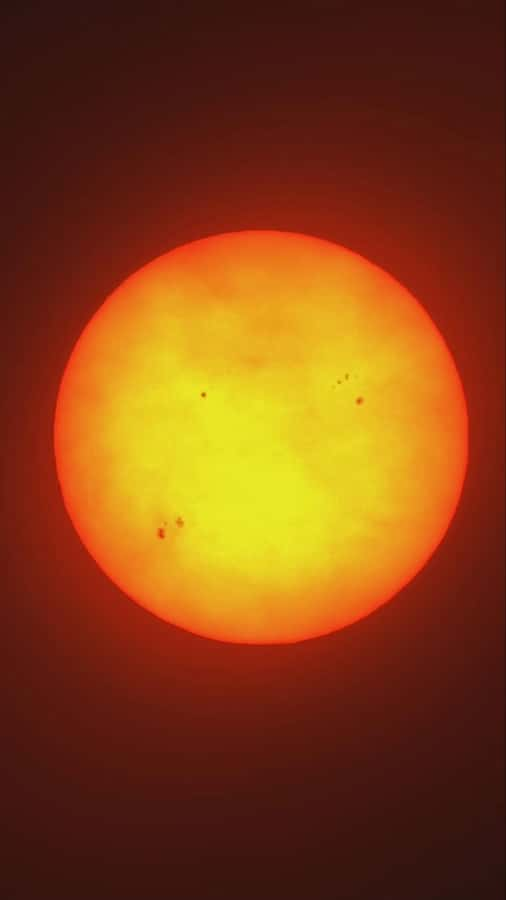
Your guide directs your attention to the solar disk and explains what is happening there. The details you see will depend on the Sun’s activity at the time of your visit. One session included clear views of sunspots, which are among the most satisfying features to spot because they turn the Sun from a plain bright circle into a changing object with visible detail.
I would keep your expectations flexible. The tour promises safe solar observations and expert commentary, but no short session can guarantee a particular number of sunspots or other features. Solar activity changes, and the view can vary from one date to another.
That uncertainty is part of the value of a guided observation. You are not simply checking off a fixed display. You are looking at the Sun as it appears that day, with the guide helping you make sense of what is in the eyepiece.
The supplied details describe the experience as including two telescopes, while the specific solar instrument named is the Coronado PST. If the exact equipment matters to you, you can confirm the second telescope when booking. The important point is that the central solar view comes through a dedicated Coronado instrument rather than an ordinary telescope.
Luca’s clear, patient astronomy guidance
The guide named in the available information is Luca. He is praised for strong astronomy knowledge, patient explanations, and helpful answers, and that matters more here than a long list of technical features.
A solar telescope can be impressive for a few seconds, but the guide is what turns that glimpse into an experience. Luca explains what you are seeing, gives you a way to understand solar features, and makes room for questions. That is especially useful if you know little about astronomy or are introducing children to the subject.
The short format also makes good guiding important. In 30 minutes, there is no time for a slow, unfocused presentation. You want the guide to move the group along while still allowing each person a turn at the instrument. The eight-person limit should help with that balance.
The comments about Luca are consistent: people appreciated his expertise and the amount they learned. I would expect the tour to work best for curious visitors who like asking questions, not only for experienced amateur astronomers.
A small group makes the telescope easier to use
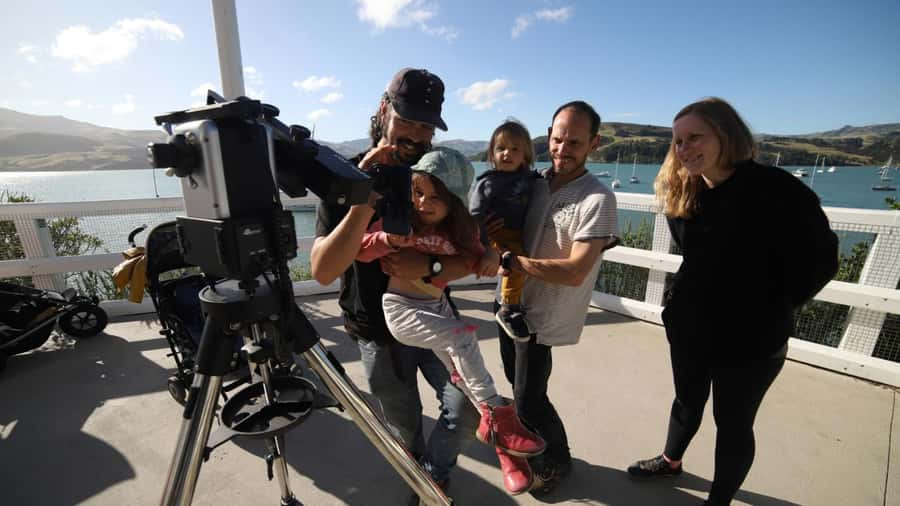
The maximum group size is eight. That is one of the strongest practical features of the tour.
A telescope experience can become frustrating when a large crowd gathers around one eyepiece. You may get only a rushed look before being pushed aside, and children may struggle to see anything at all. With eight people or fewer, the session has a better chance of feeling personal and orderly.
A small group also lets the guide adjust the level of explanation. Beginners can ask basic questions without feeling out of place, while people who already know some astronomy can ask for more detail.
Still, 30 minutes is not a long time. If every person wants to take several smartphone photos, the group may need to share the equipment efficiently. I would arrive ready to look first and photograph second. You will get more from the session if you pay attention to the explanation before trying to create the perfect image.
The tour is described as family-friendly. That is a sensible fit because the subject is visual, the session is short, and you do not need prior astronomy experience. Children who enjoy science or asking how things work should find the Sun more exciting once they can see its surface through the scope.
Same base, a different kind of day:
- Akaroa Harbour 2-Hour Dolphin Nature Cruise
★ 4.7 · 235 reviews - Akaroa Shore Excursion: Banks Peninsula and Christchurch City Sights Tour
★ 4.0 · 228 reviews - Shore Excursion Guided Sea Kayaking through Akaroa Marine Reserve
★ 5.0 · 160 reviews - Akaroa Shore Excursion: Banks Peninsula, Christchurch City Tour and the International Antarctic Centre
★ 4.0 · 135 reviews
Photographing the Sun with your smartphone
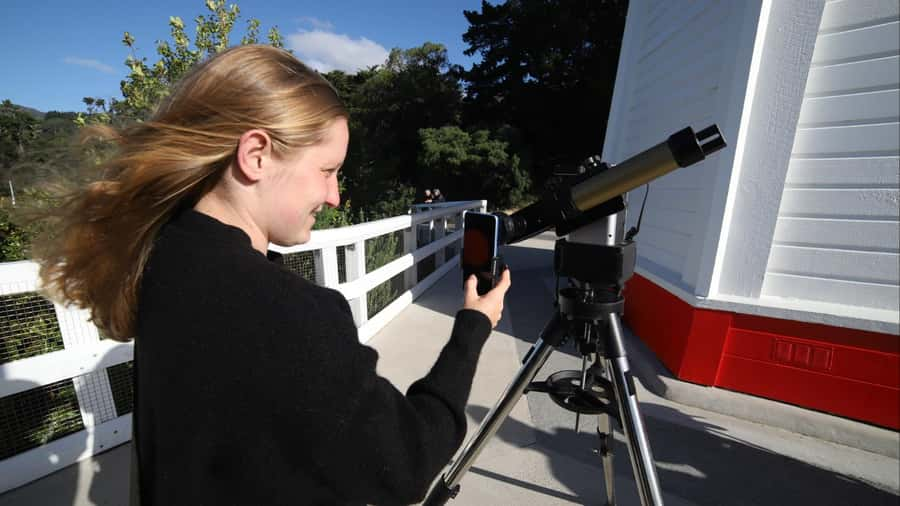
The smartphone adapter is a useful extra rather than a minor gimmick. It allows you to attach your phone to the telescope and capture images of the Sun through the instrument.
That changes the memory you take home. Instead of a general photo of Akaroa Lighthouse, you can leave with a record of the solar view you actually observed. It also gives children a clear project during the session, though you should not let the camera work replace time at the eyepiece.
The adapter does not promise professional-quality astrophotography. Your result will depend on your phone, how the device lines up with the telescope, and what is visible on the day. The useful promise is simpler: you have a chance to make a personal image without bringing specialist camera equipment.
I would make sure your phone has enough battery and storage before arriving. That is general preparation rather than a stated tour requirement, but it makes sense for anyone hoping to use the adapter. The supplied information does not specify which smartphone models are supported, so anyone with an unusual device should check compatibility in advance.
The 30-minute itinerary at 145 Beach Road
The activity begins at 145 Beach Road, at Akaroa Lighthouse. Your guide greets you five minutes before the scheduled departure, so you should avoid arriving at the last second.
The meeting arrangement is simple. There is no separate transfer, coach ride, or long walk listed. You make your own way to the lighthouse and join the guide for the outdoor session.
The full guided portion lasts 30 minutes. During that time, the focus remains on the solar observation and commentary. This is not a broad walking tour of Akaroa, and you should not book it expecting a long lighthouse visit or a full afternoon of local sightseeing.
That focused format is both a strength and a limitation. It is easy to fit into a busy day, and the $23 price does not ask you to commit much time. On the other hand, the experience will feel brief if you want a detailed astronomy workshop or a long historic tour.
The activity is listed as wheelchair accessible. Since the session is outdoors, you may still want to confirm any specific access needs when booking, but the stated accessibility is a useful point for planning.
Why the $23 price can make sense
At $23 per person, this is priced like a short attraction rather than a major guided excursion. I see the value in the combination of three things: specialist equipment, a live astronomy guide, and a small group at a notable Akaroa location.
You are not paying only for a view through a telescope. You are also paying for the safe setup, explanations, and the chance to use the smartphone adapter. If Luca helps you identify sunspots or understand what changes on the Sun, the lesson adds more value than a quick unsupervised look.
The cost is less compelling if you are already a serious solar observer with your own equipment. In that case, the guided introduction may feel basic, and 30 minutes may not offer enough time for extended observation.
For families, couples, and curious first-time astronomy visitors, the price is easier to justify. It is a modest way to add something unusual to an Akaroa day, especially if you like activities that teach you something instead of simply offering another viewpoint.
The booking terms also reduce the risk. You can cancel up to 24 hours before the start for a full refund, and the reserve-now, pay-later option lets you hold a place without paying immediately. Starting times vary, so you need to check availability for your date.
Who should book the Solar Explorer
I would recommend this tour to you if you want a short, hands-on science experience with clear guidance. It suits families, visitors who are curious about astronomy, and anyone who has never looked at the Sun through a solar telescope.
It is also a good choice if you want something different from the usual Akaroa sightseeing circuit. The combination of a daytime astronomy lesson and an historic lighthouse gives the activity a character you will not get from a standard scenic stop.
You may want to skip it if you prefer longer tours, dislike standing outdoors, or want a broad history presentation about the lighthouse. The available information does not give a detailed account of the lighthouse itself, so you should treat the building as the meeting setting and backdrop, not the main subject.
The tour is conducted in English. That is worth considering if you need commentary in another language, since no alternate language option is listed.
Practical tips for a smooth visit
Arrive at least five minutes early at Akaroa Lighthouse. That is the stated meeting time, and a short tour leaves little room for a late start.
Keep the booking confirmation handy so you have the correct address, 145 Beach Road, Akaroa 7520. The activity is fully outdoors, so dress in a way that keeps you comfortable during the session.
Bring your smartphone if you want to try the solar photographs. The adapter is included, but the tour information does not promise a particular phone model or image quality.
Try to look through the scope before taking pictures. The photograph is a nice extra, but the most memorable part is seeing solar detail with your own eye while the guide explains it.
If you are bringing children, prepare them for a quiet, attentive half hour rather than a fast-moving attraction. The activity is family-friendly, but its appeal comes from watching, listening, and asking questions.
Should you book this Akaroa solar tour?
Book it if the idea of seeing the Sun through a specialist scope sounds exciting and you want an affordable activity that fits neatly into a day. The small group, smartphone adapter, safe Coronado PST observation, and clear guidance from Luca give the 30-minute session real substance.
I would not book it as a replacement for a full Akaroa tour or an extended astronomy evening. It is a compact, focused experience. For $23, that focus is exactly what makes it useful: you get a safe look at the Sun, a short lesson, and the chance to take home your own image without giving up half a day.
FAQ
Where does the Solar Explorer tour meet?
The meeting point is Akaroa Lighthouse at 145 Beach Road, Akaroa 7520.
How early should I arrive?
Your guide greets you five minutes before the scheduled departure.
How long does the tour last?
The guided tour lasts 30 minutes.
How many people can join the group?
The group is limited to a maximum of eight participants.
What telescope is used?
The tour includes solar observations with a Coronado PST solarscope.
Can I take a photo of the Sun?
Yes. A smartphone adapter is included so you can capture images of the Sun through the solar scope.
Is the tour available in languages other than English?
The live guide and tour language are English.
Just added in Akaroa
- Night Awe – Stargazing tour in Akaroa★ 5.0 · 61 reviews
- Guided Electric Mountain Bike Tour- Akaroa Explorer★ 5.0 · 4 reviews
- Solar Explorer in Akaroa – Sun-Viewing Tour with Telescopes★ 5.0 · 5 reviews
- Sailing and Wildlife Tour Akaroa Fox II Sailing★ 5.0 · 76 reviews
- Discover Akaroa: Self Guided Audio Tour★ 4.0 · 6 reviews
- Electric Mountain Bike & Sea Kayak Tour in Akaroa★ 4.5 · 3 reviews
- Shamarra Alpaca Farm Tours★ 5.0 · 117 reviews
- Akaroa Shore Excursion: Banks Peninsula, Christchurch City Tour and Willowbank Wildlife Reserve★ 3.5 · 26 reviews
Tours in Akaroa, compared.

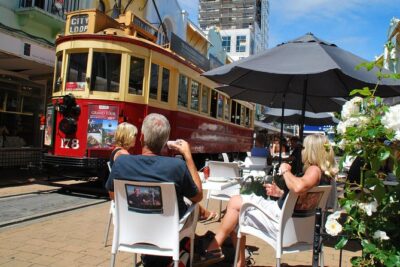
Akaroa Shore Excursion: Banks Peninsula and Christchurch City Sights Tour
Read our review →
Shore Excursion Guided Sea Kayaking through Akaroa Marine Reserve
Read our review →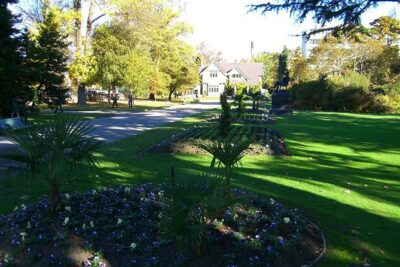
Akaroa Shore Excursion: Banks Peninsula, Christchurch City Tour and the International Antarctic Centre
Read our review →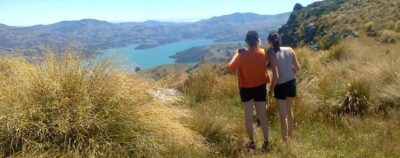
Pohatu Penguins Scenic Nature 2-Hour or 4-Hour Tour
Read our review →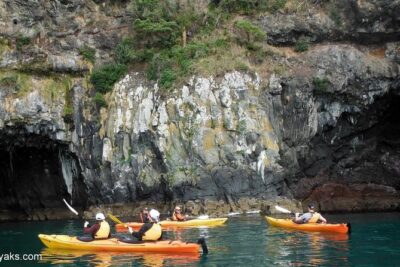
Sunrise wildlife sea kayaking in Akaroa marine reserve
Read our review →Browse the lists this tour appears in