Reviewed · FRANZ JOSEF & FOX GLACIER TOURS
Mount Cook Spectacular Helicopter Flight from Franz Josef
A helicopter ride from Franz Josef to Aoraki / Mount Cook packs a lot into 40 minutes: two glaciers, the Southern Alps, a close view of New Zealand’s highest peak, and a snow landing on the glacier neve. I like the route because it gives you both sweeping views from the air and a few minutes on the snow itself. I also like that the base sits in central Franz Josef, so you can reach it without arranging a separate transfer.
The main catch is weather. Strong winds near Mount Cook can force the operator to replace the full route with a shorter flight over Franz Josef and Fox Glaciers. You may still land on snow, but the Mount Cook portion is not guaranteed, even on a sunny day in town.
Key points before you book
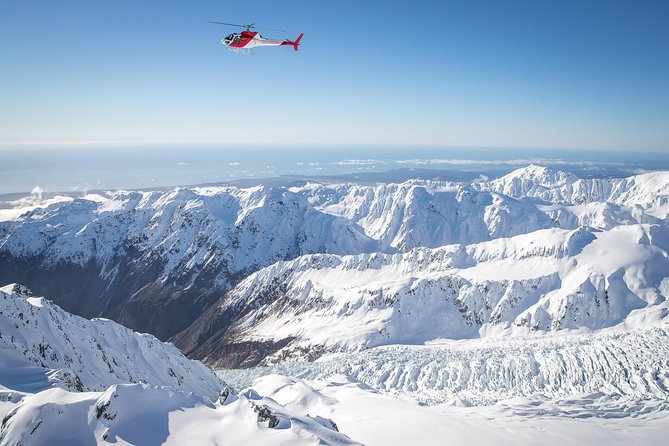
- Mount Cook from the air: Circle New Zealand’s highest peak and see its jagged summits from a rare angle.
- Two West Coast glaciers: Fly over both Franz Josef Glacier and Fox Glacier on the way across the Southern Alps.
- Snow landing included: Step onto the glacier neve, the high snowfield that feeds the ice below, for photos and mountain views.
- Short but full route: The flight lasts about 40 minutes, making it easy to fit into a West Coast road trip.
- Weather controls the itinerary: Wind and cloud can change the route or lead to cancellation.
- Small aircraft capacity: The maximum group size is 12, though passenger weight limits and aircraft loading rules apply.
From Franz Josef township to the glacier neve
You begin at Glacier Helicopters, 30 Main Road, State Highway 6, in the center of Franz Josef. Check in there, receive the flight briefing, and wait for the call to board. Departures run throughout the day, so request a time that fits your plans when you book.
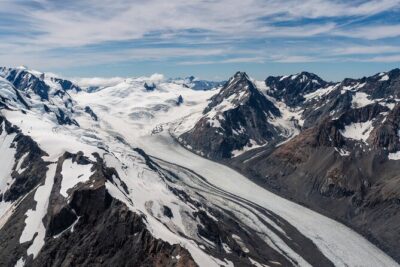
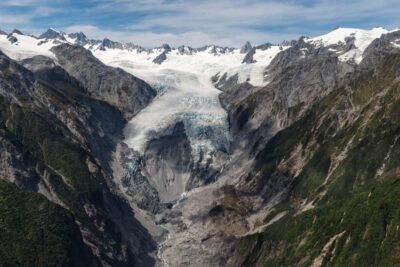
The helicopter lifts from the town and quickly trades streets and forest for ice and rock. This first part gives you a useful sense of scale. From the ground, Franz Josef Glacier can feel like a distant strip of ice between steep mountains. From above, its crevasses, icefalls, and broad upper snowfields make the glacier’s movement easier to understand.
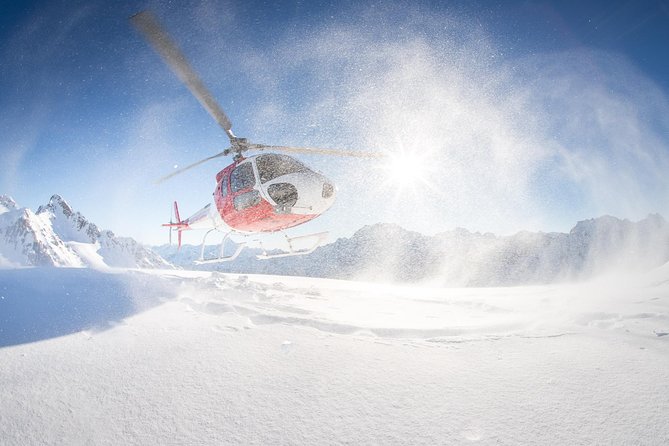
The first landing is on Franz Josef Glacier’s neve. This is the high, compacted snow area where fresh snowfall builds and feeds the glacier below. You get time to stand on the clean snow, take photographs, and look across the frozen upper reaches before returning to the helicopter.
Bring warm clothes even if Franz Josef is mild at street level. The temperature changes quickly once you are at altitude, and the snow landing is the part where you will want to pause rather than rush through a few photographs. Sunglasses are also useful because bright snow can be hard on your eyes.
Seeing Franz Josef and Fox Glacier from above
The route continues across the two major glaciers of Westland Tai Poutini National Park. Franz Josef Glacier and Fox Glacier both run from the Southern Alps toward New Zealand’s West Coast, but the helicopter gives you a view that is impossible from the roadside.
From above, look for the contrast between the smooth white neve and the broken blue-white icefalls lower down. Crevasses cut across the ice in dark lines and deep folds. The pilot’s commentary helps you follow the route and understand what you are seeing, which matters on a short flight where the views change quickly.
Fox Glacier is especially useful as part of this trip because you see both glaciers in one flight rather than choosing only one valley from the ground. The flight also shows how close these frozen valleys are to the surrounding peaks, forests, and coast. You are not simply looking at a single glacier. You are seeing the connected mountain system that feeds them.
The aircraft windows are your main viewing point, so keep your camera ready but do not spend the whole flight looking at a screen. The best moments can pass in seconds as the helicopter turns toward a new ridge or icefall. Bags, iPads, tablets, selfie sticks, drones, lighters, and flammable liquids are not permitted on the flight, so plan to carry only approved personal items.
Crossing the Southern Alps toward Aoraki / Mount Cook
After the glacier views, the helicopter crosses the spine of the Southern Alps toward Mackenzie Country and Aoraki / Mount Cook. The scenery changes from West Coast icefields to higher, more open mountain country and snow-covered summits.
Aoraki / Mount Cook is New Zealand’s highest peak, and the route circles its summit area. You also see the three major summits around the mountain and the high peaks flanking the glaciers. The UNESCO World Heritage protection adds context, but the real value is visual: the helicopter puts you close to a huge, complicated mountain system without requiring a long alpine expedition.
I like this part of the flight because it connects places that seem separate on a road map. Franz Josef and Fox Glacier are on the western side of the Alps, while Mount Cook is associated with the inland Mackenzie region. The flight lets you cross that divide in minutes, with the icefields beneath you and the summit ahead.
Do not assume the Mount Cook view will be perfectly clear. The West Coast often has changing conditions, and the highest peaks may collect cloud or strong winds. One flight was changed from the full 40-minute Mount Cook route to a 30-minute flight over Fox and Franz Josef Glaciers because of wind near Mount Cook, despite sunny conditions at lower elevations. That is an important point when comparing this flight with a fixed sightseeing attraction: the weather decides what you see.
The snow landing and the return to Franz Josef
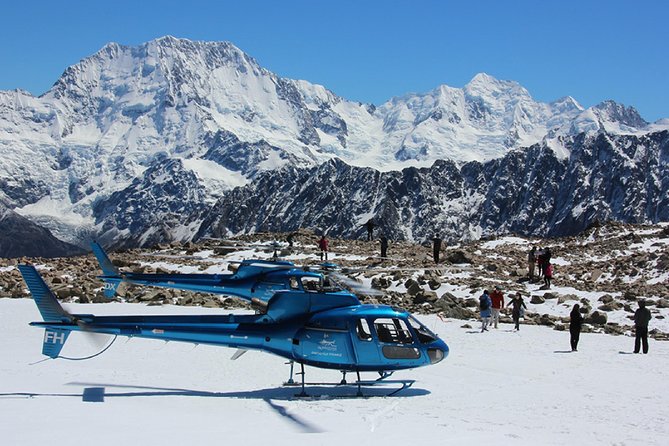
The snow landing is more than a quick technical stop. It gives you a few minutes outside the helicopter, standing on a high glacier snowfield with the peaks around you. This is where sturdy footwear matters most. The operator recommends warm clothing, sunglasses, and solid shoes, and you should take that advice seriously.
Use the landing to look around before reaching for your camera. The snow, ice, and mountain air create the memorable part of the experience, but the time on the ground is limited. Your pilot may also help with photographs. Pilot Andy received particular praise for his energy and enthusiasm, while another pilot helped take memorable pictures and kept passengers updated throughout the flight.
After the landing, you return toward the West Coast and Franz Josef township. The return flight gives you another chance to see the glacier valleys from a different angle. The activity ends back at the same helicopter base, with no hotel pickup or drop-off included.
Since the full experience lasts only about 40 minutes, you do not need to give up an entire day. Still, I would avoid scheduling an important connection immediately afterward. Weather can delay a departure, and flights may need to be rearranged if conditions change.
What the $416.90 price buys you
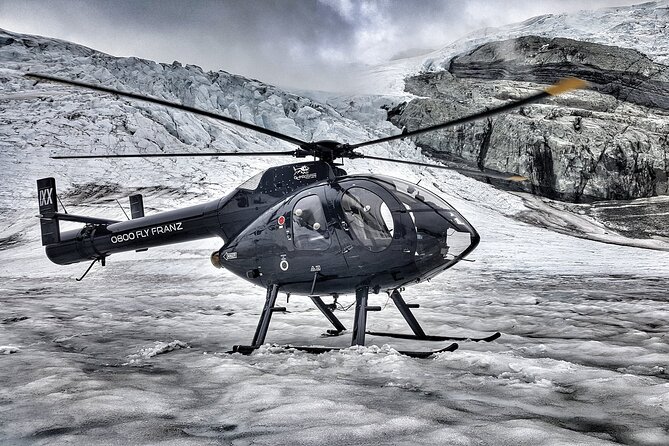
At $416.90 per person, this is an expensive activity, but the price needs to be judged against the route rather than the flight time alone. You are paying for a helicopter flight over two glaciers, a crossing of the Southern Alps, a Mount Cook summit circuit, and a snow landing. Reaching those places independently would require far more time and planning.
The value is strongest if you have limited time on the South Island. A road trip can take you near Franz Josef Glacier, Fox Glacier, or Mount Cook, but it cannot give you this combined view in one short outing. The helicopter also solves the scale problem. Ground viewpoints show pieces of the region. From the air, the glaciers, peaks, and snowfields fit together.
The value is weaker if your budget is tight or if your main goal is simply to walk near a glacier. Ground-based visits cost less and allow more time at one location. This flight is for the bird’s-eye view and the feeling of crossing a major mountain range, not for a long glacier walk.
The maximum group size is 12, which keeps the operation relatively small. Even so, a helicopter cabin is compact, and passenger weights affect aircraft loading. The total passenger weight limit is 331 pounds per person. Check how the operator applies that rule when booking, especially if you are traveling with a group or need specific seating arrangements.
Weather, cancellations, and choosing your departure
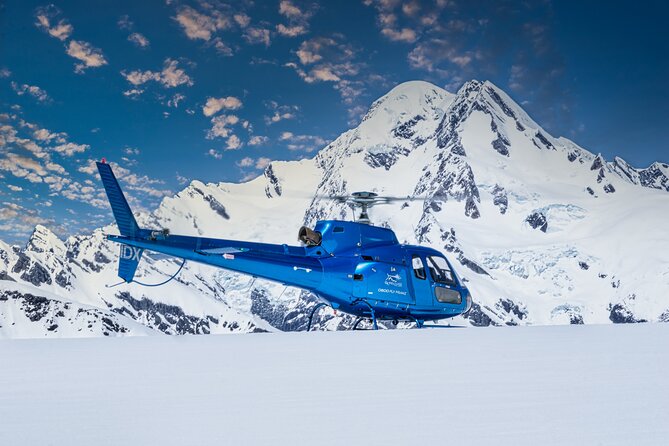
This flight operates year-round, weather permitting. A sunny morning in Franz Josef does not guarantee clear skies or safe wind conditions around Mount Cook. High mountain weather can change the route after you arrive at the base.
If poor weather cancels the flight, you are offered another date or a full refund. The same applies if the minimum number of passengers is not met. You can cancel for a full refund up to 24 hours before the start time, but changes or cancellations made inside that window are not accepted and are not refunded.
I would book this activity early in a West Coast itinerary rather than on the day before a nonrefundable connection. The tour is booked, on average, 76 days ahead, which suggests that popular departure times can fill well before arrival. At the same time, leave some flexibility in your schedule if possible. A spare morning or afternoon gives the operator more room to move you if weather interrupts the first plan.
Christmas has a special schedule: flights operate only from 9 a.m. to noon. Keep that in mind if your visit falls on December 25.
Who will enjoy this helicopter flight most
This is a strong choice for you if you want a major scenic experience without committing to a long hike. Most people can participate, and children must be accompanied by an adult. The short duration also suits couples, families, photographers, and road trippers who are passing through Franz Josef.
First-time helicopter passengers should find the experience easy to follow. The operation includes a safety briefing, and pilots provide commentary during the flight. One passenger described a first helicopter ride on a clear day, with the pilot explaining the views along the way. That combination of guidance and short duration makes the flight less intimidating than a longer aerial trip.
You should think twice if your plans cannot handle weather changes. You should also reconsider if you dislike confined aircraft, are hoping for a guaranteed Mount Cook landing, or want a long amount of time walking on the glacier. The snow stop is memorable, but this remains an aerial sightseeing flight.
For photography, bring a camera or phone that you can use without extra accessories. Selfie sticks and drones are prohibited, and no bags of any description are allowed. Ask about storage at check-in rather than arriving with loose items you cannot take aboard.
Is the 40-minute route worth booking?
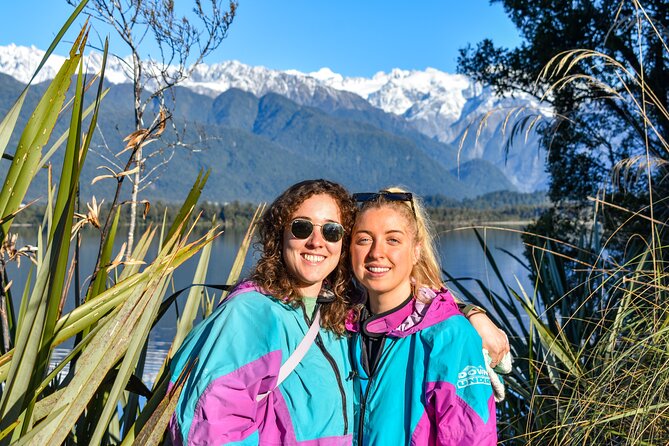
I would book this flight if seeing the West Coast glaciers and Mount Cook from the air is one of the main reasons you are visiting the region. The combination is unusually efficient: you see Franz Josef Glacier, Fox Glacier, the Southern Alps, and Aoraki / Mount Cook, then land on the snow before returning to town.
I would not book it as your only West Coast plan. Weather can alter the route, and the flight does not replace time on the ground at Franz Josef or Fox Glacier. Think of it as the dramatic overview that adds scale to your road trip.
The strongest case for booking is a flexible itinerary, a willingness to pay for a special view, and an interest in the whole mountain system rather than one landmark. If that sounds like you, the snow landing and Mount Cook circuit make the $416.90 fare easier to justify. If the Mount Cook view is essential, keep your schedule flexible and understand that high winds may turn the trip into a shorter glacier flight.
FAQ
How long does the helicopter flight last?
The advertised flight lasts about 40 minutes. A weather-affected alternative may be shorter, such as a 30-minute flight over Fox and Franz Josef Glaciers with a snow landing.
Where does the flight start and finish?
The flight starts and ends at Glacier Helicopters Franz Josef Glacier, 30 Main Road, State Highway 6, Franz Josef / Waiau. Hotel pickup and drop-off are not included.
What will I see during the flight?
You can expect views of Franz Josef Glacier, Fox Glacier, Westland Tai Poutini National Park, the Southern Alps, and Aoraki / Mount Cook. The planned route circles the Mount Cook summit and includes a snow landing.
Is the snow landing included?
Yes. The route includes a landing on the glacier neve, where you can stand on the snow and take photographs before continuing the flight.
What should I bring?
Bring warm clothes, sunglasses, sturdy footwear, a camera, and a sense of adventure. Selfie sticks, drones, flammable liquids, lighters, iPads, tablets, and bags of any description are not allowed on the flights.
What happens if bad weather cancels or changes the flight?
If poor weather cancels the activity, you can choose another date or receive a full refund. Strong winds or other conditions may also lead to a shorter route that does not reach Mount Cook.
More Mount Cook and Tekapo days from Franz Josef
- Lake Tekapo: Alpine Stargazing Experience with a Guide
★ 4.5 · 626 reviews - Lake Tekapo: Stargazing Experience
★ 4.9 · 607 reviews - Mount Cook: Scenic Helicopter Flight with Alpine Landing
★ 4.8 · 442 reviews - Mt Cook Small Group Scenic Day Tour from Queenstown
★ 5.0 · 407 reviews
More scenic helicopter flights in Franz Josef
- Franz Josef Glacier: Helicopter Flight & Alpine Landing
★ 4.8 · 619 reviews - Franz Josef Glacier Heli-Hike
★ 4.5 · 618 reviews - Heli Hike Fox Glacier
★ 5.0 · 563 reviews - Franz Josef: 35min Helicopter Trip over Two Glaciers
★ 4.8 · 451 reviews
Franz Josef & Fox Glacier Tours, compared.
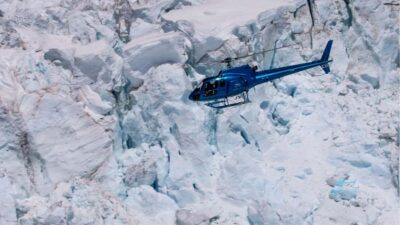
Franz Josef Glacier: Helicopter Flight & Alpine Landing
Read our review →
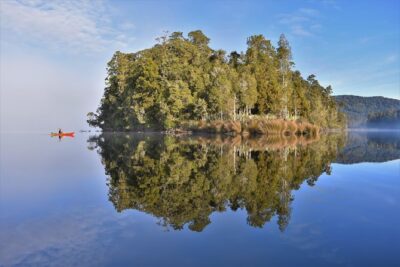
Small-Group Kayak Adventure from Franz Josef Glacier
Read our review →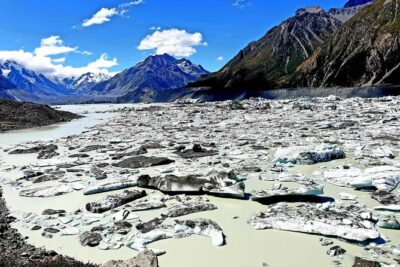
Mount Cook, Lake Tekapo and Tasman Glacier Tour from Christchurch
Read our review →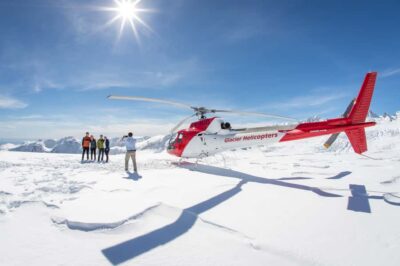
Franz Josef & Fox Glaciers Helicopter Flight & Snow Landing
Read our review →