
Reviewed · NEW ZEALAND
Raglan: Group Surf Lesson
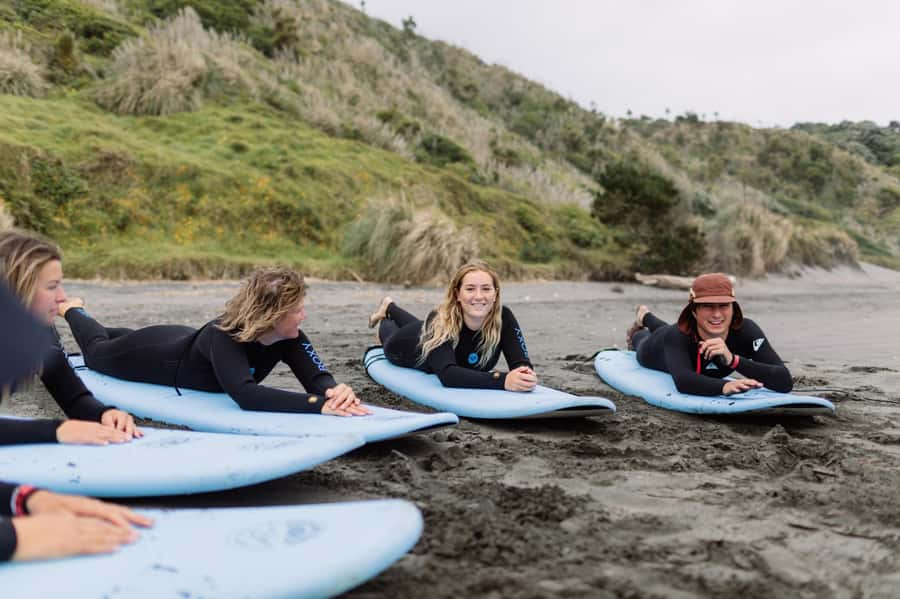
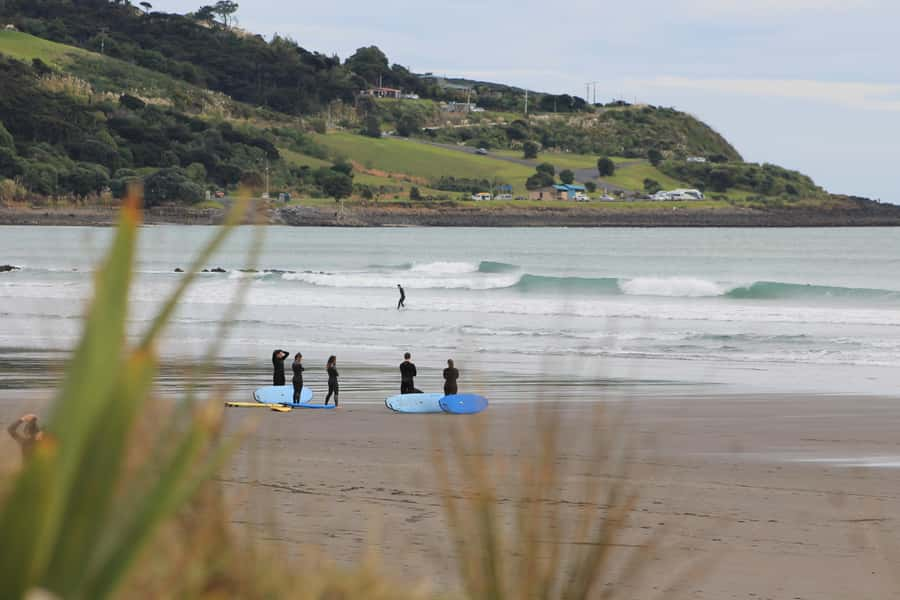
Raglan’s group surf lesson gets you from sand-based practice to real waves in one two-hour session. You’ll learn at Ngarunui Beach with a small group of up to six, using a board and wetsuit supplied by Raglan Surf School.
I like the patient, confidence-building instruction, with teachers such as Holly and Ollie praised for helping first-timers feel supported. I also like that the lesson is run by New Zealand’s first surf school and remains a local whanau business. The main thing to consider is that one participant felt the teacher-to-student ratio was a little high, so personal coaching may vary by group.
Key points for your Raglan surf lesson
- Two hours from beach briefing to wave practice, with time spent in the water rather than only on theory.
- Small groups of no more than six, although the level of individual attention can still depend on the day’s staffing.
- Boards and wetsuits are included, so you only need swimwear, a towel, and sunscreen.
- Ngarunui Beach meeting point, at the main carpark beside the red truck and wooden surf trailer.
- Beginner-friendly coaching, covering paddling, standing up, board handling, and surf safety.
- Flexible booking, with free cancellation up to 24 hours before the lesson and a reserve-now, pay-later option.
Starting at Ngarunui Beach with Raglan Surf School
Your lesson begins at the main Ngarunui Beach carpark, where you look for Raglan Surf School’s red truck and wooden surf trailer. This clear meeting point matters because the beach is the whole setting for the experience. You do not need a hotel transfer, and pickup and drop-off are not included, so plan your own way to the carpark.
Raglan is a fitting place for a first lesson. The school describes itself as New Zealand’s first surf school, and the business is run by a local whanau. That gives the session a strong local connection rather than the feel of a generic beach activity arranged from far away.
The lesson lasts two hours. That is long enough to cover the basics properly and still leave a useful block of time for trying waves. It is not a full-day surf camp, so you should arrive expecting a first taste of surfing, not expert coaching or advanced maneuvers.
Bring swimwear, a towel, and sunscreen. The school provides the wetsuit and surfboard, which keeps the price simple and saves you from renting separate equipment before the lesson.
Other trips people book in New Zealand:
- Hobbiton Movie Set: Guided Tour Ticket
★ 4.9 · 8,167 reviews - Waitomo: Glowworm Caves Guided Tour by Boat
★ 4.5 · 4,908 reviews - Rotorua Canopy Tours: 2.5Hour Native Forest Zipline Adventure
★ 5.0 · 4,563 reviews
What you learn before entering the water
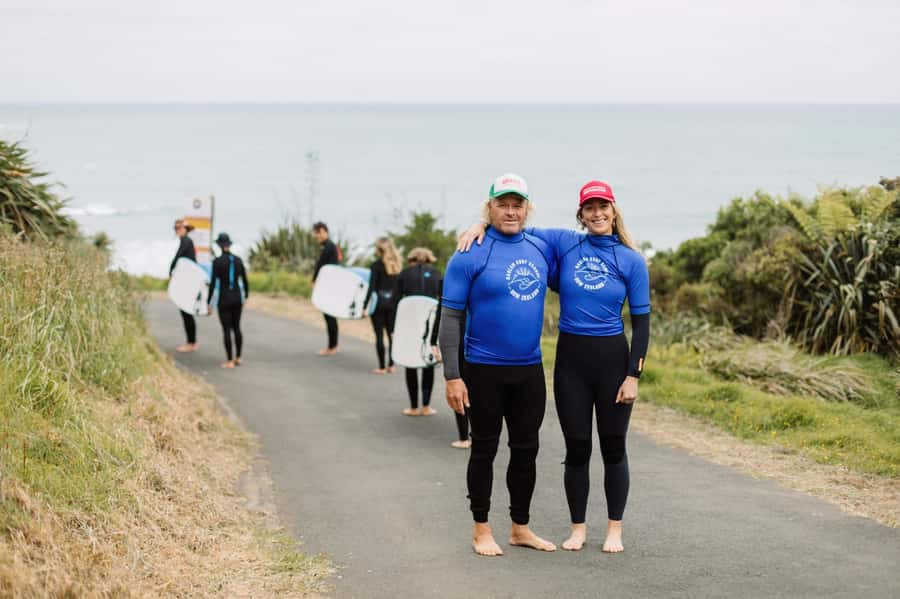
The first part of the session covers the basic relationship between you, the board, and the waves. You learn how to handle your board, how to paddle, and what you need to know about surf safety before attempting to stand.
This early instruction is more important than it may sound. A first surf lesson can feel chaotic if you are handed a board and sent straight toward the water. By learning the movements on land first, you get a chance to understand the sequence before cold water, moving waves, and other surfers enter the picture.
You are taught how to lie on the board, paddle, and work toward standing up. The goal is not simply to get you upright once. The instructors aim to help you build enough understanding to keep practicing after the session.
Surf safety is also part of the lesson. The supplied information does not give a detailed list of safety topics, so you should not expect a formal safety course beyond the guidance built into the session. Still, including a safety briefing is a useful feature for anyone who has never dealt with a breaking wave or a full-size surfboard.
Learning with a board, wetsuit, and nearby instructor
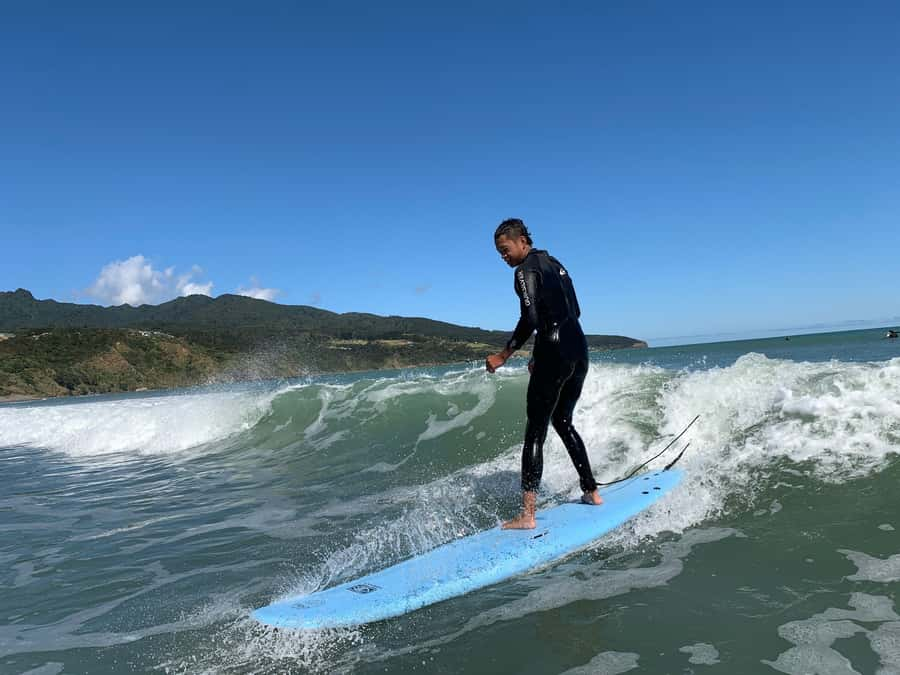
Once you are prepared, you take the board into the water and begin working on the skills for real. The instructor stays beside the group, helps push you into waves, and offers tips as you try.
That hands-on support is the main reason this works well for beginners. You do not have to judge every wave alone on your first attempt. A push at the right moment can help you feel how the board moves, while a quick correction can show you why your feet or body position are not yet working.
The stated aim is for you to paddle and surf on your own by the end of the lesson. That is an ambitious but useful target. Even if you do not reach it fully, you should come away with a clearer sense of what to practice next.
Several first-timers managed to stand for at least a few seconds after one lesson. That is a realistic measure of success here. You may not ride a long wave down the beach, but getting upright, even briefly, can turn the session from a nervous experiment into a sport you want to try again.
The teaching style appears to focus on patience rather than pressure. Holly and Ollie were singled out for helping an entire group feel supported, while another participant praised an instructor for patiently guiding everyone through the steps. Sarah and a colleague called Buddy were also noted for helping beginners stay on the board for a few seconds.
Instructor names can change, so do not book around a promise that a particular person will teach your class. The useful point is that the school’s approach is built around direct help in the water, not simply handing you equipment and watching from the beach.
How much individual attention will you get?
The group limit is six participants. That is small enough to keep the lesson more personal than a large beach class, and it gives the instructor a reasonable chance to watch each person.
Still, six beginners in moving water can be a lot to manage. One participant enjoyed the lesson but felt there were not enough teachers for the group, especially when questions came up. That is the one clear caution in an otherwise very strong set of feedback.
Your experience may depend on the final group size and the number of instructors working that session. If you need constant one-to-one correction, a private lesson would likely suit you better, but no private option is described here. For most people, a group of six offers a sensible balance between support and price.
I would arrive with a few questions ready. Ask how to position your feet, when to start paddling, or how to keep the board straight. The instructors are there to help, but speaking up gives them a better chance to correct the exact problem you are having.
Same base, a different kind of day:
- Hobbiton™ Movie Set Walking Tour from Shires Rest
★ 5.0 · 3,577 reviews - Mitai Maori Village: Cultural Experience and Dinner Buffet
★ 4.7 · 3,575 reviews - Waiheke Island: Ferry & Hop-On Hop-Off Explorer Bus Tickets
★ 4.6 · 3,311 reviews - Kaikoura: Whale Watching Cruise
★ 4.6 · 3,089 reviews
Why the two-hour format works for beginners
Two hours gives you time to make several attempts. Surfing is a sport of repetition, and one successful stand usually comes after a run of wobbly starts, missed waves, and awkward dismounts.
The lesson also avoids the commitment of a full day. If you are unsure how your body will handle paddling or repeated attempts at standing, two hours is a manageable introduction. It is long enough to feel like a real activity, but short enough to leave room in your Raglan day for other plans.
An early start may have practical advantages. One participant found a 9 a.m. lesson worked well because the beach was quieter. That does not guarantee the same conditions every day, but an earlier time may give you more space before the beach becomes busier.
Starting times vary, so check availability when booking. The experience data does not specify tide conditions, wave size, or weather arrangements. Those factors can affect how easy it is to catch a wave, but you should not assume a particular kind of surf on a particular date.
The value of $56 per person
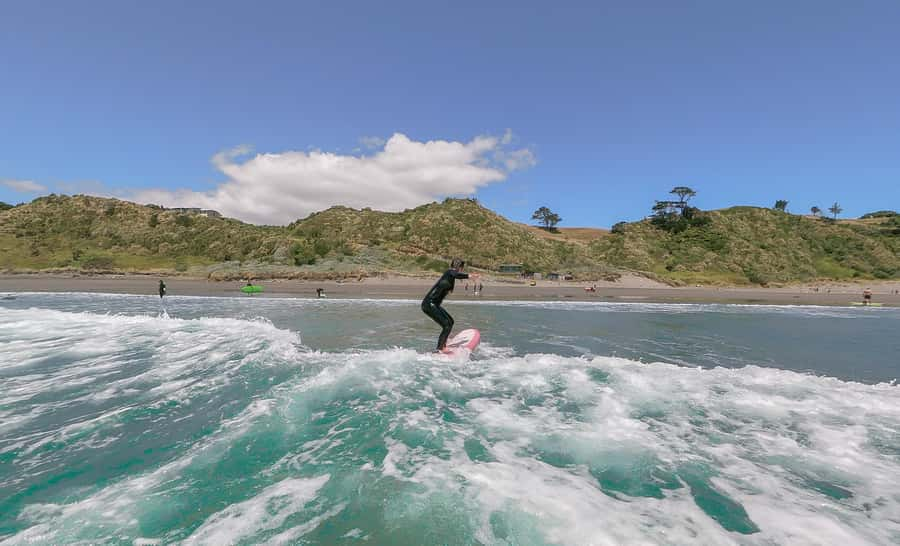
At $56 per person, the lesson includes two hours of instruction, a wetsuit, and a surfboard. That is a fair package for a first attempt because you do not have to arrange equipment hire separately or buy specialist gear before deciding if surfing suits you.
The real value lies in the coaching. A board rental alone does not teach you how to paddle efficiently, read a small wave, stand safely, or avoid common beginner mistakes. Here, an instructor pushes you into waves and gives immediate advice while you practice.
The price is also easier to justify if you want a clear introduction rather than a casual equipment rental. You are paying for structure and support, not just time on the sand.
You should budget for the items not included. Transport to Ngarunui Beach is your responsibility, and you need to bring swimwear, a towel, and sunscreen. There is no mention of hotel pickup, so do not expect a door-to-door service.
Who should book this Raglan surf lesson?
This session is aimed first at beginners. If you have never surfed, the combination of land instruction, safety advice, equipment, and support in the water gives you a sensible way to begin.
It also suits anyone returning to surfing after time away. You may remember the basic idea but need a refresher on timing, balance, or paddling. The instructor’s presence gives you a watchful eye without requiring a full progression course.
You should also consider it if you can already stand occasionally but still want tips. The stated audience includes surfers who want extra support and practical pointers. That makes the lesson useful for a hesitant beginner as well as someone making a second attempt at the sport.
Children under 12 cannot take part. The supplied information does not give a maximum age, fitness requirement, or detailed accessibility guidance, so contact the provider if you have a specific concern that is not answered before booking.
What the strongest feedback tells me
The praise is remarkably consistent. The experience has a perfect 5 rating from 79 reviews, and the most common theme is patient instruction.
That patience matters because first-time surfing can be frustrating. Your body is learning several unfamiliar tasks at once: balancing on a moving board, paddling with purpose, timing a wave, and getting your feet underneath you quickly. A calm instructor can make the difference between laughing at a failed attempt and giving up after it.
Safety and simplicity also receive positive attention. One participant described the lesson as safe, simple, and fun, which is exactly the right standard for a first session. You do not need complicated theory at the start. You need clear instructions that you can remember once you are wet and trying to catch a wave.
The best practical sign is that several people stood on the board during their first lesson. That does not mean every participant will do so. Wave conditions, balance, fitness, and timing all matter. But it suggests the instruction is focused on giving you real chances to succeed rather than keeping the session on dry land.
A few things to know before you book
Bring sunscreen even if the day looks mild. You will be outside for the full activity, and the session includes time on the beach as well as in the water.
Wear swimwear under the supplied wetsuit. A towel is essential for changing and drying off afterward.
Do not expect hotel transportation. Meet at the main Ngarunui Beach carpark, at the red truck and wooden trailer.
The class is taught in English. If you are not comfortable following English instructions in the water, consider that before booking.
The activity offers free cancellation up to 24 hours before the start time for a full refund. You can also reserve your place and pay later, which helps if your Raglan schedule may shift.
Should you book it?
Book this lesson if you want a practical, low-commitment introduction to surfing and like the idea of learning in a small group. The included wetsuit and board, two hours of water time, and instructor support make $56 a reasonable price for a first attempt.
I would be more cautious if you need private coaching or have very specific physical or accessibility needs, since the class can include up to six participants and no private format is described. For most beginners aged 12 and over, though, this is a friendly way to try surfing, get a few real attempts under your belt, and find out if you want to keep going.
FAQ
How long is the Raglan group surf lesson?
The lesson lasts two hours, including the basic instruction and time practicing in the water.
How much does the surf lesson cost?
The price is $56 per person.
What equipment is included?
A wetsuit, surfboard, instruction, and support are included.
Where do I meet the surf school?
Meet at the main Ngarunui Beach carpark, at the red truck and wooden surf trailer.
Is the lesson suitable for complete beginners?
Yes. The lesson covers board handling, waves, paddling, standing up, and surf safety, and it is designed for beginner surfers.
What should I bring?
Bring swimwear, a towel, and sunscreen.
How many people are in the group?
The group is limited to six participants.
Can children take part?
The activity is not suitable for children under 12.
Can I cancel or pay later?
You can cancel up to 24 hours in advance for a full refund. A reserve-now, pay-later option is also available.
Just added in New Zealand
- Queenstown: The Grand Circle Scenic Helicopter Flight★ 5.0 · 30 reviews
- Queenstown Hop-on Hop-off Evening Beer Tour★ 5.0 · 5 reviews
- Milford Extended Helicopter Tour from Queenstown★ 5.0 · 59 reviews
- Glenorchy Kiwi Special Tour★ 4.5 · 60 reviews
- Glow in the Dark Mini Golf in Queenstown★ 4.0 · 5 reviews
- Golden Hills Horse Trek in Central Otago★ 5.0 · 55 reviews
- Gibbston Valley Wines – Winery Tour★ 4.5 · 88 reviews
- Glenorchy Private Day Trip from Queenstown: TravelnGo★ 5.0 · 15 reviews