
Reviewed · SKYDIVING & BUNGY
Skydive Mt. Cook – 45+ Seconds of Freefall from 13,000ft
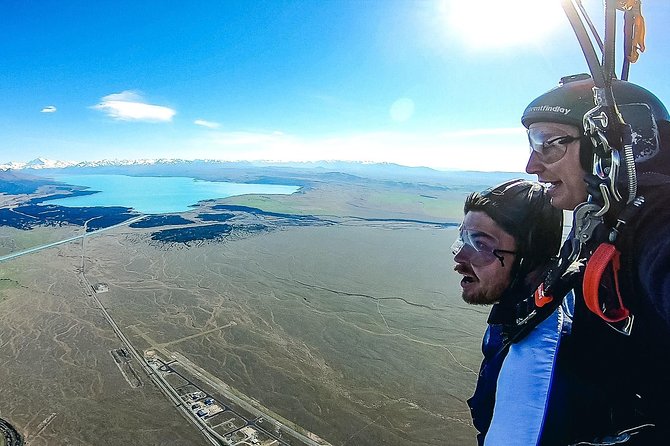
At 13,000 feet, Skydive Mt Cook gives you more than a fast thrill. Your freefall lasts at least 45 seconds, with the snowy peaks, glaciers, lakes, and Aoraki/Mt Cook National Park spread below. The setting is the star here, and it is hard to imagine a more New Zealand-specific backdrop for a tandem jump.
I like two things in particular. First, the small maximum group size of nine people keeps the experience from feeling like a crowd scene. Second, the team takes safety seriously enough to delay or postpone a flight when conditions are not right, while still helping nervous jumpers feel at ease.
The main drawback is practical: the booking is non-refundable unless poor weather cancels the activity. You also need to meet the weight rules, and anyone at 100 kilograms or more pays an added fee.
Key points to know before your jump
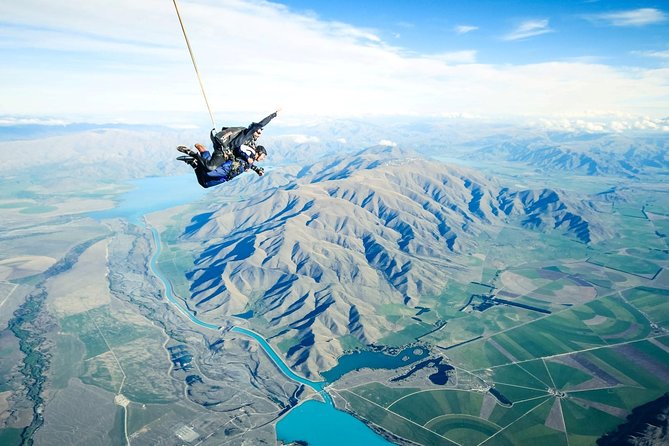
- 45-plus seconds of freefall: The jump begins from 13,000 feet, giving you more airtime than a shorter, lower-altitude option.
- Pukaki Airport setting: You meet at 2 Swallow Drive, Pukaki Airport, near Twizel, with the activity ending back at the same place.
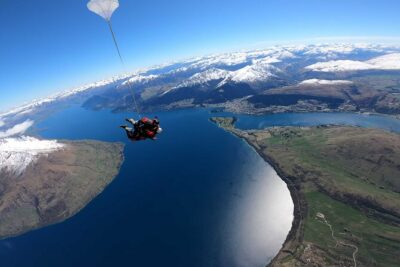
- Aoraki/Mt Cook views: Expect snow-covered mountains, glaciers, lakes, and views toward the national park when weather allows.
- Small group size: The maximum is nine people, a useful detail if you prefer a less crowded operation.
- Weight limits apply: People from 100 to 115 kilograms may be accepted after a harness fitting and assessment by a tandem master.
- Weather matters: The operator may postpone or cancel the jump for safety, offering another date or a full refund when poor weather causes the cancellation.
Why 13,000 feet makes this jump special
The appeal of this experience is simple: you spend longer in freefall while looking down on one of the South Island’s most dramatic corners. From 13,000 feet, you get at least 45 seconds before the parachute phase begins. That extra time matters because it gives you a chance to take in more than the first burst of adrenaline.
I would choose this altitude for the scenery as much as for the sensation. The view can include snow-capped mountains, glaciers, lakes, and Aoraki/Mt Cook National Park. Those are not background decorations. They are the reason to choose this particular jump instead of treating skydiving as a thrill you could do anywhere.
The weather controls the quality of the experience. Clear conditions should give you the best chance of seeing the major peaks and ice-covered areas, while cloud can limit what you see. Since the company may delay or postpone a flight for safety, you need to leave flexibility in your South Island plans.
That can be frustrating if you have a tight itinerary. It is also the right trade-off. The team’s willingness to wait for suitable conditions is one of the strongest practical reasons to trust the operation.
Other ways to jump near Mount Cook:
- Mount Cook: Tandem Skydive Experience
★ 4.6 · 66 reviews - Skydive Mt. Cook – 70+ Seconds of Freefall from 16,500ft
★ 5.0 · 5 reviews - Skydive Mt. Cook – 20+ Seconds of Freefall from 10,000ft
★ 5.0 · 5 reviews
Starting at Pukaki Airport near Twizel
Your meeting point is Skydive Mount Cook, 2 Swallow Drive, Pukaki Airport, Pukaki, Twizel 7999. The activity begins and ends there, so you do not need to figure out a separate return point after the jump.
The airport location suits a scenic adventure. You are not being taken to a generic urban drop zone and then asked to imagine the mountains. You start in the Mackenzie Basin area, with the South Island’s high peaks, open spaces, and lakes close to the action.
The stated duration is about two hours. That does not mean two hours of freefall, of course. It covers the arrival process, preparation, safety instructions, harness fitting, waiting for suitable conditions, the flight, the jump, and your return to the airport.
I would keep the rest of your day reasonably open. The planned duration is short enough to fit into a road trip, but weather can affect the timing. A rushed connection or fixed dinner reservation would add needless pressure.
What happens before the aircraft leaves
The process begins with the practical checks that matter most. You receive your booking confirmation at the time of reservation, then report to the airport for the activity. A tandem master assesses your suitability, and anyone near the upper weight range may need a closer harness check before approval.
The team’s approach is not simply about getting everyone into the air as quickly as possible. Safety remains the first concern, even if that means waiting or rescheduling. That is reassuring for first-time jumpers, especially if your nerves increase once the equipment is in front of you.
You should expect clear preparation rather than a long sightseeing stop. The supplied details do not name individual instructors, so I cannot promise a particular guide. What is clear is that tandem masters handle the safety assessment and can decide whether the harness fit and conditions are suitable.
The maximum group size is nine. That is not a private jump, but it is small enough to feel more manageable than a large commercial operation. It also means the total time at the airport may vary depending on the order of the group and the weather.
The flight and 45-plus seconds in freefall
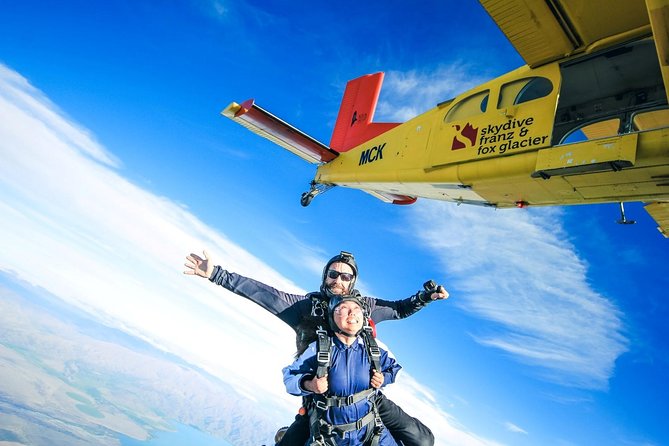
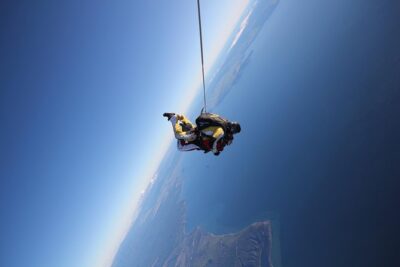
Once you are ready, the aircraft takes you to 13,000 feet. That altitude is the key selling point. It gives you at least 45 seconds of freefall, followed by the parachute portion of the descent.
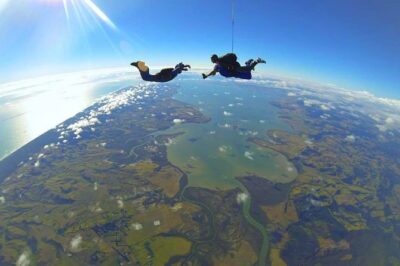
The first seconds are likely to be intense. Your attention may be fixed on the physical sensation, but the height and scenery give you a reason to look outward. With the aircraft high above the Pukaki area, you may see a broad sweep of lakes, glaciers, snowy summits, and the national park.
I would not book this only for the freefall. Plenty of places offer a similar rush. I would book it because the rush happens above a part of New Zealand that is visually distinctive, with Aoraki/Mt Cook and the surrounding peaks forming the natural focus.
The experience is tandem, which makes it accessible to people who have never made a jump before. You do not need to arrive with technical knowledge of parachuting. The team handles the specialized equipment and the jump procedure, while you follow the instructions given before and during the activity.
Most people can participate, according to the supplied information. Service animals are allowed, and the meeting point is near public transportation. Those details help, but you should still confirm your own transport plan and personal requirements before booking.
Same base, a different kind of day:
- Mount Cook: Scenic Helicopter Flight with Alpine Landing
★ 4.8 · 442 reviews - Mt Cook Small Group Scenic Day Tour from Queenstown
★ 5.0 · 407 reviews - Mt Cook & Tasman Glacier lookout Small Group Tour from Queenstown
★ 5.0 · 296 reviews - Mount Cook: Ski Plane and Helicopter Glacier Combo Flight
★ 4.6 · 271 reviews
The view toward Aoraki/Mt Cook National Park
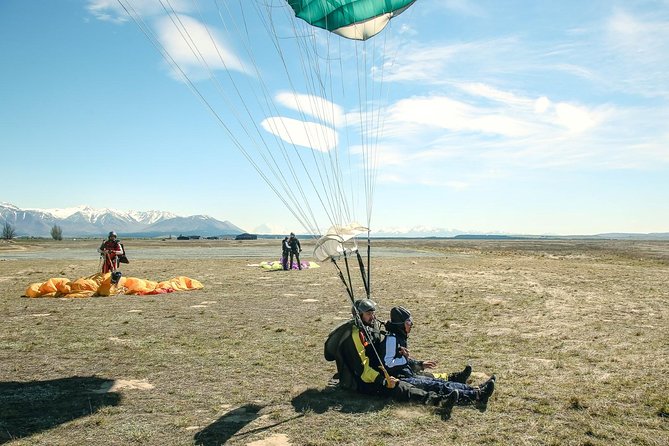
The scenery is the strongest reason to pick this location. The view may include Aoraki/Mt Cook National Park, glaciers, lakes, and high mountain ridges. This is the South Island at its most recognizable: cold, high, open, and sharply marked by snow and ice.
Aoraki/Mt Cook is New Zealand’s highest mountain, and the surrounding park gives the view a scale that a city drop zone cannot match. From above, the relationship between the lakes, ice fields, and peaks becomes easier to understand. You are not just looking at one mountain. You are seeing a whole mountain region from an unusual angle.
Weather remains the deciding factor. If cloud or poor conditions obscure the view, the jump may not deliver the scenic payoff you hoped for. The operator can cancel for poor weather, then offer another date or a full refund, which gives you some protection against paying for an unsafe or disappointing flight.
If the jump is important to your trip, I would place it early enough in your South Island schedule to allow a second attempt. The booking cannot be changed or refunded simply because you change your mind, but weather cancellations are treated differently.
Safety, nerves, and the small group setup
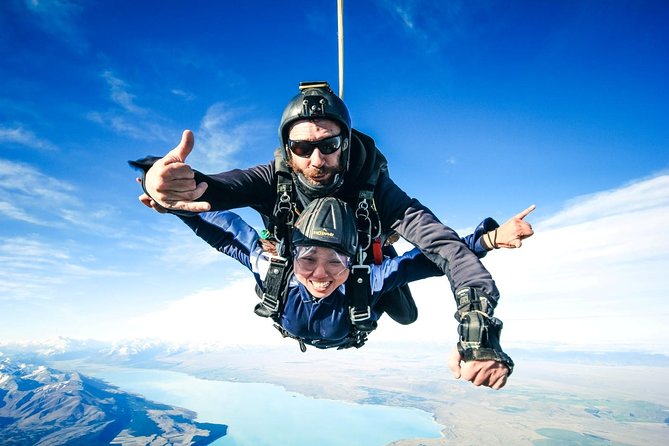
A tandem jump asks you to trust a person, a harness, an aircraft, and a parachute in quick succession. Nervousness is normal, even for people who feel calm while booking. The team’s safety-first attitude matters because it shows in the decisions made before the jump, not just in friendly words at the airport.
The operation may delay or postpone flights when conditions are not suitable. That can test your patience, but it is a positive sign. I would rather lose part of a day than be pushed into a jump because the schedule is tight.
The group cap of nine also helps. You are still sharing the operation with other people, but the number is limited. That should make the check-in and preparation feel less like a mass attraction, though the exact pace depends on the group and the weather.
No personal guide names are provided, so you should not book expecting a particular instructor. The important point is the role of the tandem master, who checks the harness fit and decides whether a participant near the weight limit can jump.
Price, weight rules, and real value
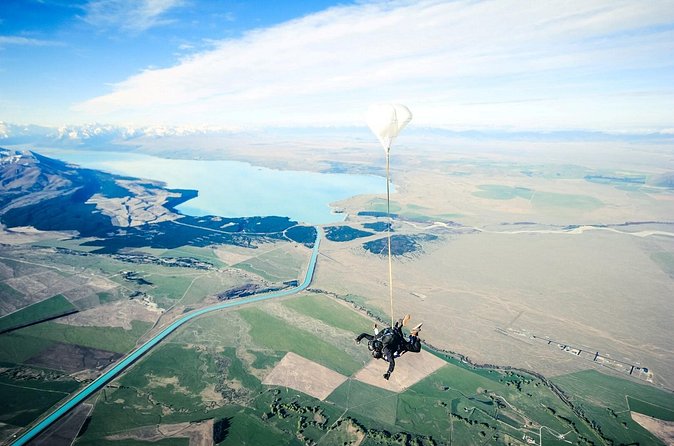
The listed price is $266.23 per person. That is a substantial amount, but the value depends on what you want from the day. You are paying for a high-altitude tandem experience, at least 45 seconds of freefall, and the chance to see Aoraki/Mt Cook country from the air.
For someone seeking a scenic South Island experience rather than a generic adrenaline activity, the price is easier to justify. The setting does much of the work. If you mainly want a short burst of excitement and do not care about the view, a lower-cost activity may suit you better.
Check the weight policy before booking. People weighing 100 to 110 kilograms pay a $40 surcharge. Those from 111 to 115 kilograms pay $60. Anyone between 100 and 115 kilograms may be accepted only after a tandem master assesses them and checks the harness fit on the day.
The published information gives no approval above 115 kilograms. If you are close to that limit, contact the operator before committing money. The activity is non-refundable and cannot be changed for personal reasons, so this is not a detail to leave until arrival.
Fitting the jump into a South Island trip
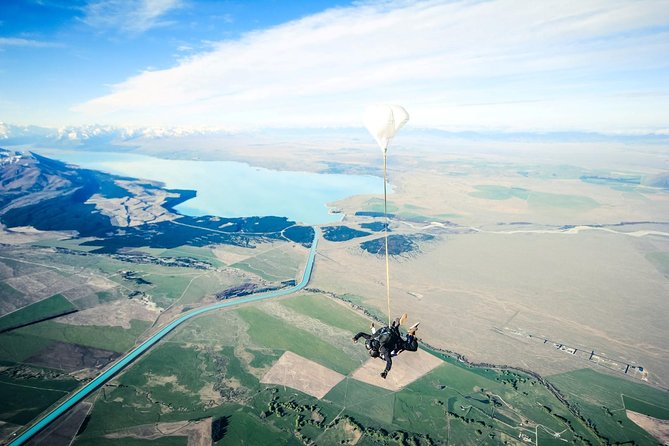
This experience works best as part of a flexible visit around the central South Island. The activity lasts about two hours and returns you to Pukaki Airport, which makes it easier to pair with a driving day or a stay near Twizel.
I would avoid booking it immediately before a major connection. Poor weather may push the start time, and a postponed jump can affect the rest of your plans. A spare half-day or a backup date gives you a far better chance of enjoying the experience without watching the clock.
The airport is near public transportation, but the information does not specify a shuttle, transfer service, or exact bus connection. You should check your route carefully rather than assuming transport will be waiting. The meeting point is precise, so arrive with enough time to locate 2 Swallow Drive and complete the preparation process.
Because the activity ends where it starts, you can continue on from Pukaki Airport after the jump. You may want a calm plan afterward. Even if the physical time in the air is brief, the experience can leave you excited, tired, or simply ready to slow down and take in the mountains from ground level.
Who should book Skydive Mt Cook
I would recommend this to you if you want three things at once: a tandem jump, long freefall, and a strong mountain setting. The 13,000-foot altitude makes it more than a quick novelty, while the South Island views give the experience a clear sense of place.
It also suits first-time jumpers who want a team that does not treat safety as a nuisance. The option to postpone for poor conditions is important, and the small group limit is a welcome feature for anyone who dislikes large activity groups.
I would be more cautious if your itinerary is packed, your budget is tight, or you cannot accept a non-refundable booking. The weather can interfere, and the personal cancellation terms are strict. Weight surcharges and the 115-kilogram upper range also need to be taken seriously.
Should you book this jump?
Book it if you want the view to matter as much as the freefall. A 13,000-foot jump above the Pukaki area, with possible views of glaciers, lakes, snow-covered mountains, and Aoraki/Mt Cook National Park, offers a strong sense of place that few adventure activities can match.
Skip it if you need a fully fixed schedule or an easy refund option. For everyone else, I think the combination of 45-plus seconds in freefall, a maximum group of nine, and a safety-minded approach makes this one of the better big-adventure choices in the South Island.
FAQ
Where does Skydive Mt Cook start?
The activity starts at Skydive Mount Cook, 2 Swallow Drive, Pukaki Airport, Pukaki, Twizel 7999, New Zealand.
Where does the activity end?
The activity ends back at the meeting point at Pukaki Airport.
How long does the experience take?
The full activity lasts approximately two hours.
How high is the jump?
The jump takes place from 13,000 feet.
How long is the freefall?
You receive more than 45 seconds of freefall.
What can I see during the jump?
Depending on conditions, you can see snow-capped mountains, glaciers, lakes, and Aoraki/Mt Cook National Park.
How many people can join the activity?
The maximum group size is nine people.
Is there a weight limit?
Yes. People weighing between 100 and 115 kilograms may be accepted after a tandem master completes an assessment and checks the harness fit.
Are there extra charges for people over 100 kilograms?
Yes. The surcharge is $40 for people weighing 100 to 110 kilograms and $60 for people weighing 111 to 115 kilograms.
What happens if poor weather cancels the jump?
You can choose another date or receive a full refund if the activity is canceled because of poor weather.
Just added in Mount Cook
- Skydive Mt. Cook – 70+ Seconds of Freefall from 16,500ft★ 5.0 · 5 reviews
- Mt Cook to Christchurch One-Way Small Group Tour via Lake Tekapo★ 5.0 · 16 reviews
- Mount Cook: Mountains High 40-Minute Helicopter Flight★ 5.0 · 53 reviews
- Skydive Mt. Cook – 20+ Seconds of Freefall from 10,000ft★ 5.0 · 5 reviews
- Mt Cook & Lake Tekapo 2-Day Small Group Tour from Queenstown★ 5.0 · 15 reviews
- Mount Cook: Alpine Vista Helicopter Flight with Alpine Landing★ 4.5 · 39 reviews
- Mount Cook and The Glaciers 55-Minute Helicopter Flight★ 4.5 · 133 reviews
- Mt Cook to Queenstown Small Group Tour (One-Way)★ 4.5 · 25 reviews
Skydiving & Bungy, compared.
15,000ft Tandem Skydive in Tauranga – Bay of Plenty
Read our review →

Browse the lists this tour appears in