
Reviewed · WILDLIFE
Wellington: Half Day Seal Coast Safari
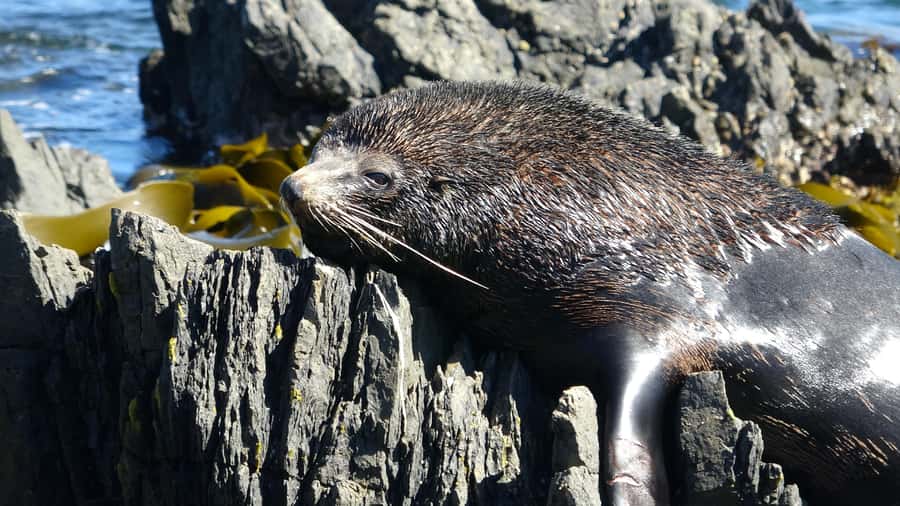
Wellington’s fur seals are only part of the story on this half-day safari. You’ll leave the city in a comfortable 4WD Mercedes van, pass through native bush and working farmland, climb to sweeping Cook Strait viewpoints, then rattle down a rough track to a remote beach where seals nap, swim, and squabble.
I like the private access through Terawhiti Station, which takes you far beyond the usual city sights, and I like the way Otari-Wilton’s Bush adds context about native plants and birds before the coast. The drawback is the price, $116 per person, and the ride can be quite bumpy on farm tracks, especially in wet weather.
Key points at a glance
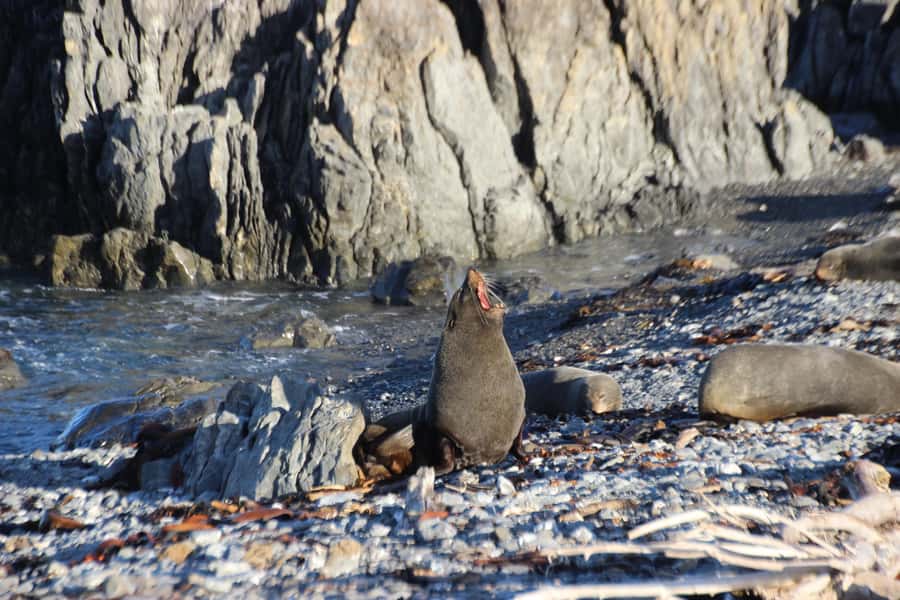
- Seals at Tongue Point: Watch New Zealand fur seals from a safe distance in their natural coastal setting.
- Private farmland access: Cross Terawhiti Station, an area you cannot reach on a standard city outing.
- Native forest introduction: Walk through Otari-Wilton’s Bush and look for tūī, kākā, kākāriki, kererū, and possibly kārearea.
- Big Cook Strait views: On a clear day, you can see the South Island and the snow-capped Kaikōura Ranges.
- Small-group transport: The Mercedes 4WD vans carry no more than 10 people and handle the rough tracks.
- Easy half-day format: The 210-minute tour includes city pick-up, light refreshments, and return transport.
Why this is more than a seal-spotting trip
If all you want is a quick look at seals, this tour takes the scenic route. The seals are the headline, but the experience links several parts of Wellington that are hard to combine without a car: native forest, working farmland, wind power, coastal geology, wildlife, and long views across Cook Strait.
I like that the day begins with an introduction to New Zealand’s plant life rather than rushing straight to the coast. That early stop helps you understand what Wellington looked like before much of the land was cleared and how native species are now returning.
The tour also gives you access to private land. That matters here. Terawhiti Station is one of New Zealand’s oldest and largest stations, and its private roads lead to viewpoints and coastal tracks that are not part of the normal sightseeing circuit.
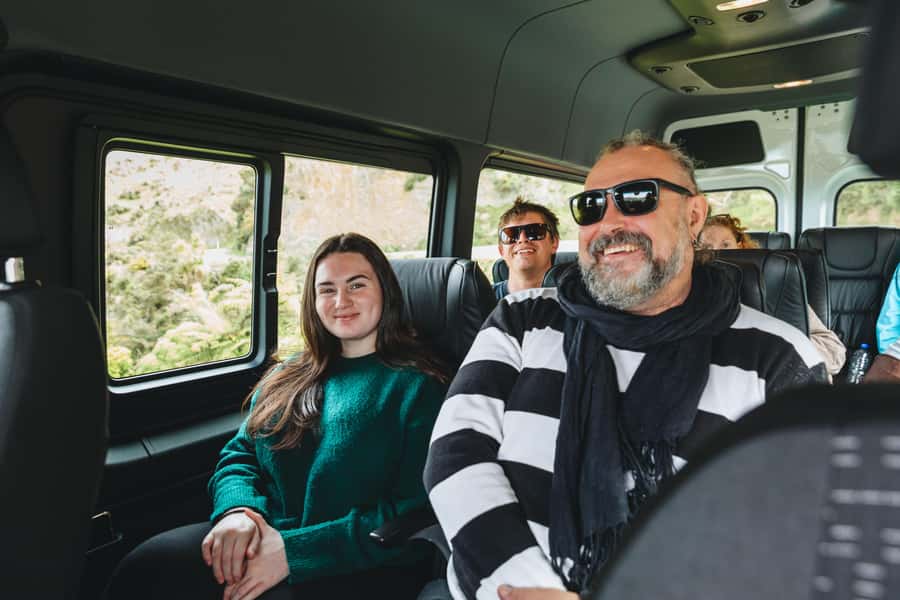
The group limit is 10 people, which keeps the outing personal. Guides such as Sarah, Grant, Marc, Andy, Chewy, Gina, and Blue have been praised for their local stories, careful driving, and ability to answer questions. Your guide may vary, but the format is built around live commentary rather than a simple shuttle ride.
More wildlife in Wellington:
- Seal Coast Safari – Exclusive access to Wellington’s secret coast
★ 5.0 · 294 reviews - Small Group Daytime 2-Hour Eco Wildlife Tour at Zealandia
★ 5.0 · 223 reviews - Gannet Safaris Overland tour to Cape Kidnappers Gannet Colony
★ 5.0 · 942 reviews
Otari-Wilton’s Bush puts Wellington’s plants first
The first stop is Otari-Wilton’s Bush, a 100-hectare area of ancient and regenerating native forest. It is also New Zealand’s only botanical garden devoted solely to native plants.
You’ll walk across a skybridge above the forest canopy. This is a short, manageable stop rather than a strenuous hike, making it suitable for most people who can walk comfortably on uneven ground. The focus is on seeing how native plants fit into New Zealand’s natural story, with your guide explaining the flora and fauna found here.
Look and listen for tūī, kākā, kākāriki, and kererū. Kārearea, the New Zealand falcon, is an occasional possibility. The return of some native birds to the Wellington region is an important part of the story, since several species were absent or in serious trouble only a few decades ago.
This stop is valuable because it gives the rest of the trip some meaning. You are not simply looking at green hills from a van window. You are learning what grows here, which animals depend on it, and how conservation has changed Wellington.
If your main goal is seals, you may find this opening section slightly slower than expected. I think it earns its place, but this is not a nonstop wildlife drive.
The ride through Terawhiti Station
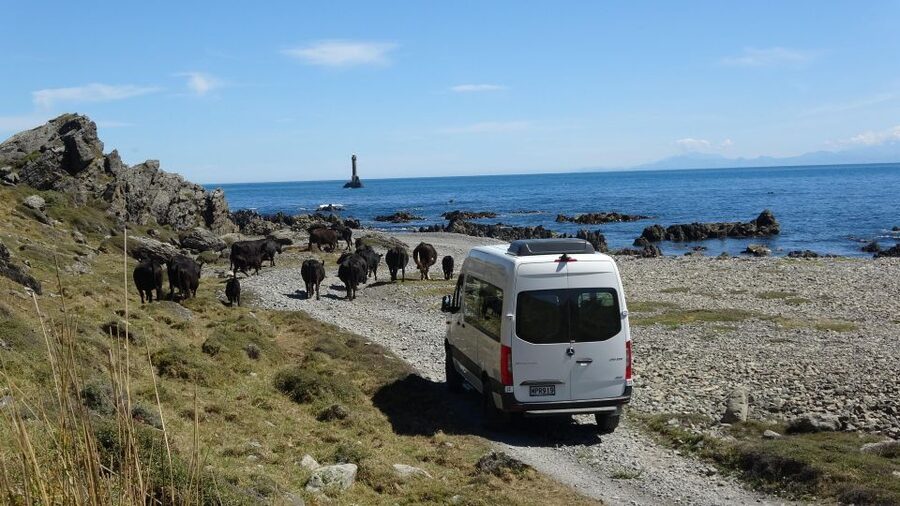
After leaving the city, the van turns off the main road and enters Terawhiti Station through private access. You may see sheep, cows, and goats as the road climbs through the working farm.
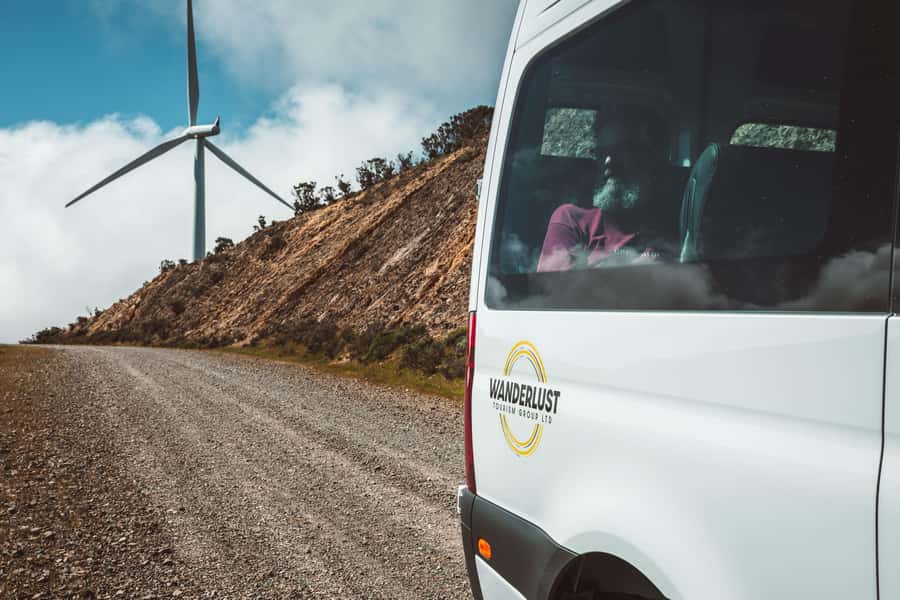
This is where the safari feeling begins. The road is not a polished tourist route. It crosses rough farm tracks, and several people have found the 4WD ride noticeably bumpy. The Mercedes vans are designed for the conditions, but you should not expect a smooth coach journey.
The rough ride is part of the trade-off. You gain access to a remote coastal area, but you give up some comfort along the way. Wear sturdy shoes, keep large bags at home, and bring warm layers. Wellington can be cool and windy even when the city feels mild.
At higher points on the farm, the views open across Cook Strait toward the South Island and the Kaikōura Ranges. On a clear day, snow-capped peaks can appear across the water. In rain, fog, or strong wind, the views may be limited, but the tour still runs in poor weather unless conditions require a route change.
This is also an area connected with the Capital Kiwi project, which has reintroduced wild kiwi to the hills after roughly 100 years without them. You are not promised a kiwi sighting, but the project gives the hills a strong conservation story.
Wind turbines, farming, and Wellington’s famous wind
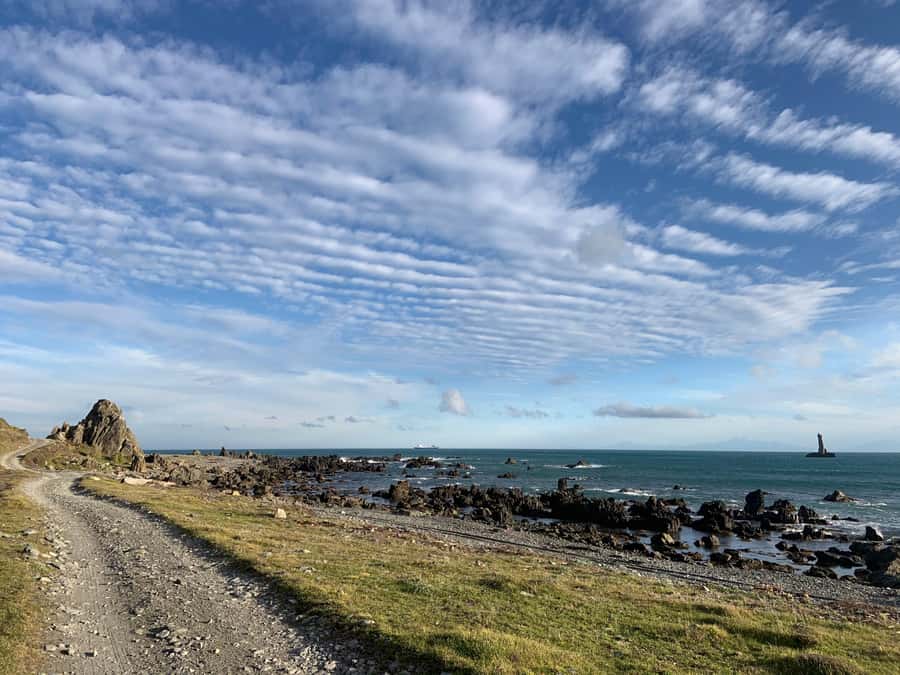
The ridge road was created for Project West Wind, a wind farm that produces enough electricity to power homes across the Wellington region. The turbines are a memorable contrast to the sheep country and rough coastline.
Your guide explains how wind power and farming work alongside each other here. The setting is famously exposed, and Wellington’s nickname, Windy Welly, makes immediate sense once you are on the ridges.
I find this part useful because it adds a working side to the scenery. You see energy production, livestock farming, and conservation sharing the same difficult ground. The trip is not only about pretty views. It shows how people use this harsh, open part of the region.
The road also crosses areas shaped by Wellington’s fault lines. That helps explain the steep hills, broken terrain, and sudden changes between ridges and coast. Keep your camera ready, but also listen to the guide. The stories make the drive far more interesting than a silent transfer to the beach.
Same base, a different kind of day:
- Wellington: Wētā Workshop Guided Tour Ticket
★ 4.7 · 997 reviews - Wētā Workshop Experiences Tour – Wellington
★ 5.0 · 875 reviews - Wellington: Return Cable Car Ticket
★ 4.6 · 714 reviews - Half Day Tour of Wellington
★ 4.5 · 638 reviews
The leaning lighthouse and the descent to Tongue Point
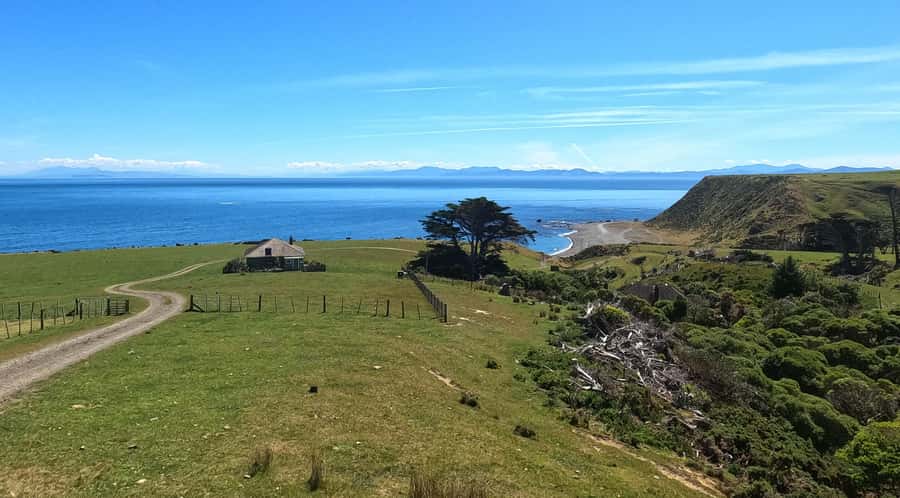
As the van drops toward sea level, you’ll see Karori Rock Lighthouse, commonly called the leaning lighthouse. It was one of New Zealand’s first automated lighthouses, and its tilt is visible when you reach the coast.
The final approach follows a rocky and sandy track toward Tongue Point. This section is rougher than a normal coastal road, so expect the van to move slowly and bounce. That is one reason the small 4WD vehicle matters.
Once you reach the coast, there is some walking along the beach to the seal colony. Minimal walking is required overall, but you still need comfortable shoes and enough steadiness for uneven ground. The tour is not suitable for wheelchair users.
Watching fur seals in their natural setting
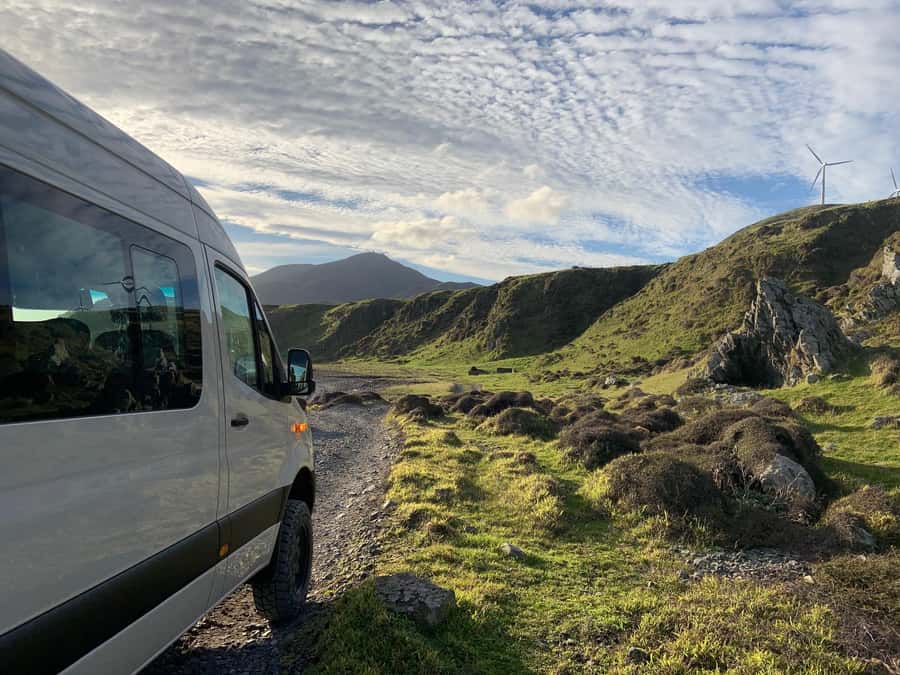
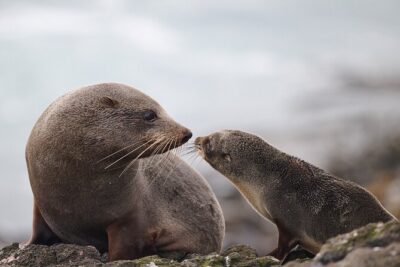
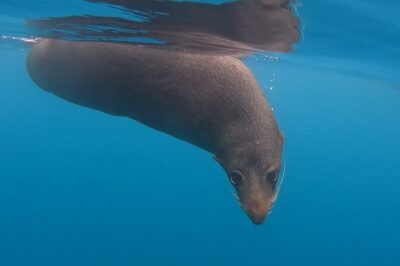
The seals are the clear highlight. New Zealand fur seals gather along the rocks and beach, where they sunbathe, swim, rest, and play. Depending on the day, you may see many of them spread along the shore.
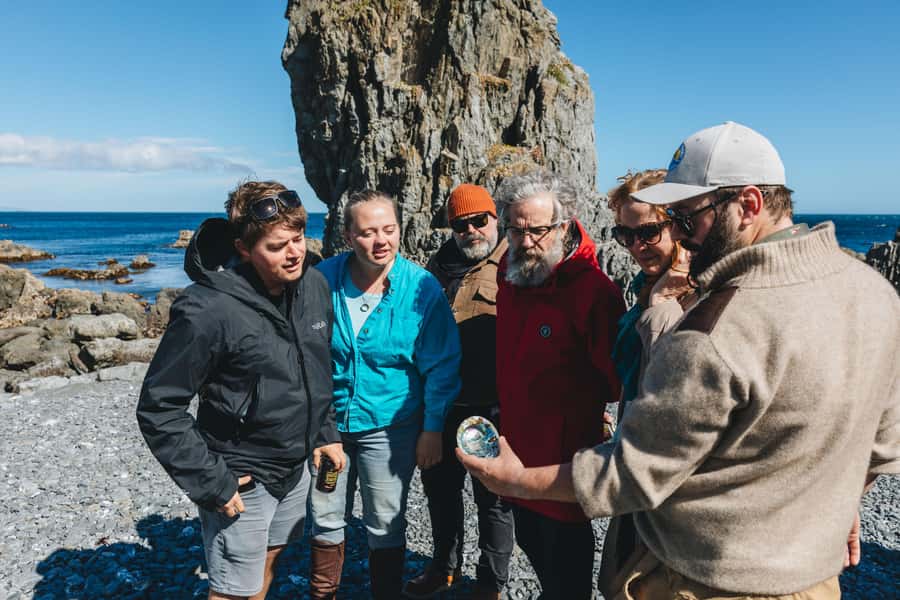
Your guide keeps the group at a safe distance for both people and animals. The seal viewing is close enough for good photographs, but you should not expect to stand beside the animals or touch them. Bring a camera with a useful zoom if you have one.
The setting is what makes this different from a quick wildlife stop. You are beside a rugged, remote coast with the sound of the sea, ferries crossing between the North and South Islands, and seals behaving as they choose. There are no performances and no feeding session.
Your guide explains the colony’s ecology, history, and conservation. That background helps you understand why the population has returned and why distance matters. I especially like the chance to watch the animals doing ordinary seal things rather than being rushed through a crowded viewing area.
The operators provide light refreshments at the coast. Past visitors have specifically appreciated tea or coffee on the beach, especially when the weather turns cold or wet. It is a small touch, but welcome after the 4WD ride.
Weather matters more than you might expect
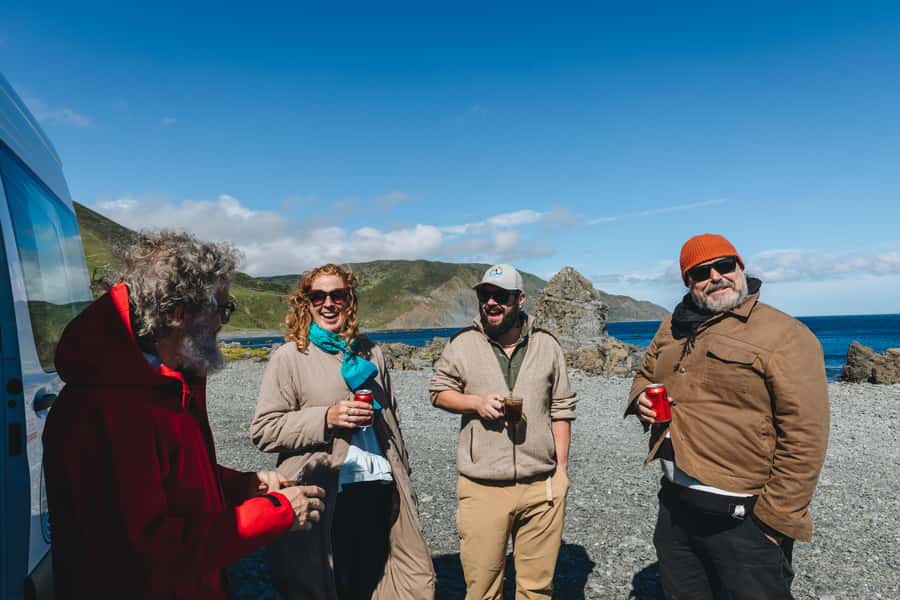
This safari runs in all weather, and Wellington weather can change quickly. Rain, fog, and wind may reduce the views or alter the route. They do not necessarily ruin the outing, though. Several guides have been praised for keeping the trip pleasant and informative in heavy rain, fog, and poor visibility.
Still, you should dress for exposure. Bring warm clothing, sunglasses, sunscreen, and comfortable shoes. A waterproof outer layer is sensible even if the forecast looks promising.
Clear weather gives you the best chance of seeing the South Island and Kaikōura Ranges. Windy or rainy weather can make the coastal section feel more dramatic, but it also makes the beach stop less comfortable. If the weather is poor, ask your guide about the conditions before leaving the vehicle.
The supplier may change the route if weather or other conditions make the planned track unsafe. That flexibility is sensible, but it means no two departures are guaranteed to look exactly alike.
Is $116 good value?
At $116, this is not the cheapest way to spend half a day in Wellington. You are paying for a 210-minute outing, hotel or cruise-terminal pick-up, a small group, a specialist 4WD vehicle, private farmland access, a live guide, and refreshments.
The value depends on how much of the day you would otherwise see independently. You can visit many Wellington museums and public gardens without paying for a tour, but you cannot simply drive yourself through Terawhiti Station’s private tracks or reach this seal colony by ordinary city transport.
I think the cost is easier to justify if you do not have a car, are arriving by cruise ship, or want a guided nature outing without committing to a full-day excursion. It is also good value for anyone who enjoys local stories and conservation details, not just photographs.
If you only want a short seal encounter and dislike bumpy roads, the price may feel high. One part of the experience is essentially the farm drive needed to reach the coast. That journey is scenic and informative, but it is still transport rather than a separate activity.
Pick-up points and planning the morning
Pick-up is available from central Wellington locations and the cruise terminal. Cruise passengers should select Wellington Cruise Ship Port when booking so the van comes directly to the ship.
City meeting points include Bunny Street near Hotel Waterloo, Wakefield Street near the former Amora Hotel, the Grey Street and Featherston Street corner, Mercure Abel Tasman, Naumi Studio on Cuba Street, Te Papa, and TRYP by Wyndham. If you are driving into Wellington, the suggested meeting place is the main entrance to Te Papa, with parking on Barnett Street nearby.
The exact departure time depends on your pick-up point, so provide that location when booking. The tour returns to central Wellington after the coastal visit, which makes it practical before an evening meal or another city activity.
Do not bring luggage or large bags. A small camera bag and personal essentials are the sensible limit. The 4WD has limited room, and the tour is not designed to carry suitcases.
You can cancel up to 24 hours before departure for a full refund, or transfer a confirmed booking to another day at no charge if you give the supplier at least 24 hours notice. That is useful when Wellington’s forecast looks especially rough.
Who will enjoy this most?
I would choose this for people who want to see a less familiar side of Wellington. It suits nature lovers, photographers, cruise passengers, couples, and anyone who likes a mix of wildlife, history, farming, and scenery.
It is also a good choice if you have only half a day. The tour gives you forest, hills, coast, and seals without requiring a long hike or a rental car.
Families and older visitors may appreciate the limited walking, but the rough ride is worth considering. Anyone with mobility limitations should note that the experience is not suitable for wheelchair users.
The trip is less suited to people who need a smooth road journey, dislike changeable weather, or want guaranteed clear views. Seal sightings are the purpose of the visit, but exact numbers and viewing conditions depend on nature.
Should you book the Seal Coast Safari?
Yes, if you want private access, strong scenery, and real wildlife in one compact outing. The seals are memorable, but the Otari forest, Terawhiti farm, wind turbines, fault lines, and views toward the South Island give the trip its character.
I would book it early if you are visiting by cruise ship or have only one open afternoon. Tell the operator your exact pick-up point, leave your luggage behind, and dress for wind and rain. If you can accept a bumpy ride and a price above a basic city tour, this is one of Wellington’s most distinctive half-day experiences.
FAQ
How long does the Wellington Seal Coast Safari last?
The tour lasts 210 minutes, or three and a half hours.
What animals might I see besides fur seals?
At Otari-Wilton’s Bush, you may see native birds such as tūī, kākā, kākāriki, kererū, and occasionally kārearea. On the farm drive, you may see sheep, cows, and goats.
How close can I get to the seals?
You watch the seals from a safe distance chosen for the protection of both people and animals. The supplied information does not give one fixed viewing distance.
Is walking required?
Only minimal walking is required, including walking through the bush area and along the beach at Tongue Point. Comfortable shoes are recommended.
Does the tour operate in bad weather?
Yes. The safari runs in all weather, but weather and other conditions may lead to route changes.
Is the tour suitable for wheelchair users?
No. The tour is not suitable for wheelchair users.
Can cruise ship passengers join the tour?
Yes. Cruise passengers should choose Wellington Cruise Ship Port as their pick-up location when booking.
What should I bring?
Bring comfortable shoes, a camera, sunscreen, sunglasses, and warm clothing. Large bags and luggage are not allowed.
Just added in Wellington
- Private Martinborough Foodie Delights Tour from Wellington★ 5.0 · 23 reviews
- Remutaka Rail Trail Mountain Bike Explorer Cycle Tour★ 5.0 · 30 reviews
- Wellington Remutaka Rail Trail eBike Cycle Tour★ 5.0 · 23 reviews
- From Wellington: Remutaka Rail Trail eBike Tour★ 4.9 · 54 reviews
- Remutaka Rail Trail Mountain Bike Explorer Cycle Tour★ 5.0 · 49 reviews
- Martinborough Winery and Foodie Day Tour with vineyard lunch★ 5.0 · 39 reviews
- Wellington Self-Guided Electric Bike Tour★ 5.0 · 68 reviews
- Martinborough Foodie Half Day Tour from Wellington★ 4.5 · 104 reviews
Wildlife, compared.
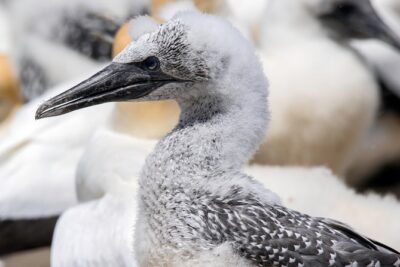
Gannet Safaris Overland tour to Cape Kidnappers Gannet Colony
Read our review →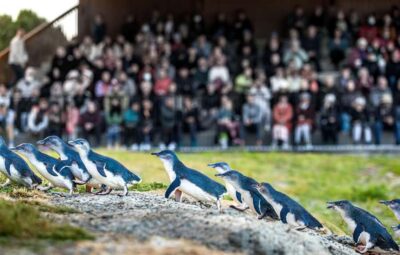
Clearwater Wildlife Tours (small group 10max) Otago Peninsula
Read our review →
Guided Evening Penguin Viewing Otago Peninsula, Dunedin, New Zealand
Read our review →
Browse the lists this tour appears in