
Reviewed · WALKING TOURS
Nelson: Brook Waimārama Sanctuary Guided Night Walk
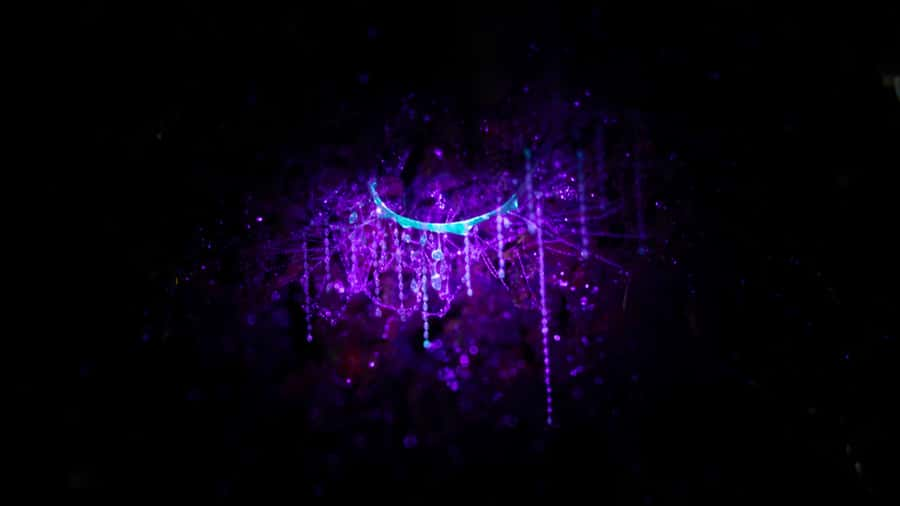
The best part of this 105-minute night walk is the change in the forest after sunset. Glowworms begin to shine, owl calls carry through the trees, and every rustle becomes worth listening to. It is a gentle way to meet New Zealand’s native wildlife without leaving Nelson for a full day.
I like the small-group format, which gives your guide time to stop for insects, sounds, and questions. I also like the practical conservation story: predator control, habitat restoration, and wildlife translocations explain why this fenced sanctuary matters. The main drawback is simple: kiwi sightings are never promised. You may hear one, as some people did, but spend much of the walk with glowworms, geckos, wētā, and tuatara instead.
Key points
- Glowworms after sunset: Look for tiny points of bioluminescent light on the forest floor and vegetation.
- Kiwi and ruru calls: You may hear kiwi pukupuku or the haunting call of a ruru, though wildlife remains unpredictable.
- Only 10 minutes from Nelson: The sanctuary is easy to reach for an evening in nature.
- A real conservation setting: Learn how fencing, predator management, restoration, and translocations protect rare species.
- Hot drink included: Finish the outing with a warm beverage and biscuit.
- Bring warm clothes: Closed-toe shoes are required, and the walk is not suitable for people with low fitness or mobility impairments.
Brook Waimārama after dark
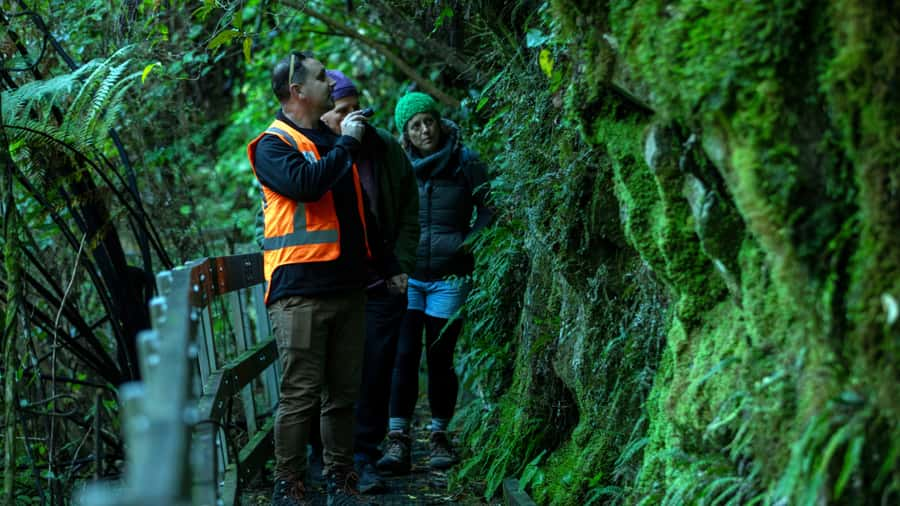
Brook Waimārama Sanctuary covers 690 hectares of protected native forest in the hills near Nelson. By day, it is a place for quiet walking and native bush. At night, it becomes a listening experience first and a sightseeing experience second.
That distinction matters. You are not entering a wildlife park where animals appear on cue. You are walking through a protected forest and waiting for signs of life. A call from a ruru, a flicker of movement near the track, or a small glowworm display can become the evening’s main event.
The sanctuary is New Zealand’s largest fully fenced eco-sanctuary. The fence and predator control work help create safer conditions for native species that struggle with introduced predators. The protected area is home to species such as tuatara, kākāriki karaka, and kiwi pukupuku, also called little spotted kiwi.
You will not see all of these animals on every walk. That is part of the bargain. The value lies in learning what makes the sanctuary important, then experiencing a small piece of its night life with a guide who knows where to pause.
More walking tours in Nelson:
- Abel Tasman: Sea Shuttle Cruise and Walking Tour Combo
★ 4.6 · 704 reviews - Abel Tasman National Park: Sailing and Self-Guided Walk
★ 4.8 · 238 reviews - Kayak & Walk
★ 5.0 · 161 reviews
Meeting your guide at the Visitor Centre
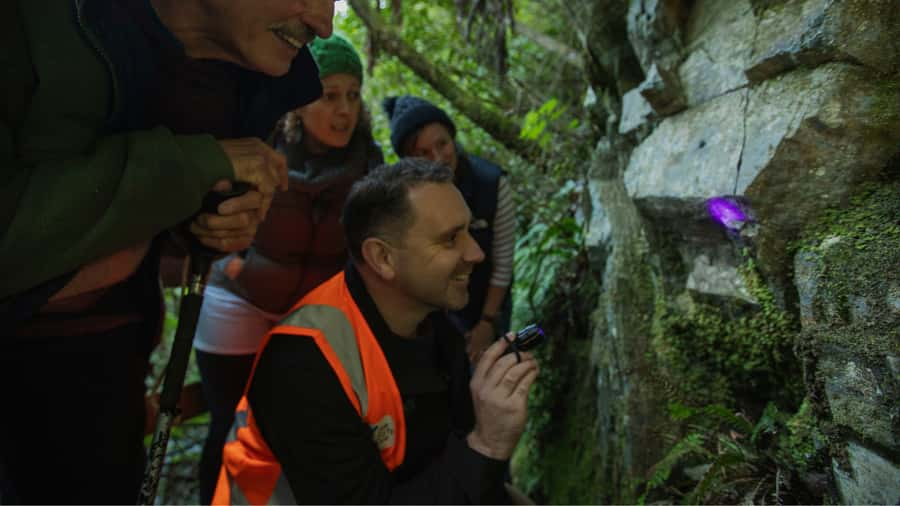
Your evening begins inside the Brook Waimārama Sanctuary Visitor Centre. This short introduction sets up the walk and gives you useful context before you head into the bush.
Your guide explains the sanctuary’s conservation work, including habitat restoration, animal translocations, and predator management. These details make the later wildlife sightings more meaningful. A glowworm is lovely on its own, but it becomes more interesting when you understand that the surrounding forest is being managed as a refuge for species found nowhere else.
The guides bring warmth and energy to this opening. Emma has been praised for making the walk exciting while explaining the setting clearly. Bo has also been singled out for being friendly and well informed. The exact guide depends on the date, but the experience is designed around live English commentary rather than a recorded explanation.
This is a good time to ask questions. Once the group enters the forest, speaking less and listening more becomes important. If you want to know how the fence works, why certain species are being protected, or what sounds to listen for, ask early.
Following the forest as daylight fades
The walk moves from the Visitor Centre into the ngahere, the Māori word for forest. The timing lets you experience the shift from evening light into full darkness, although the exact start time changes with the season.
Red head torches are supplied. They help you find your footing without flooding the forest with harsh white light. You should still bring warm clothing and closed-toe shoes. Temperatures can feel lower once you stop moving, and the forest floor may require careful attention.
The walk is not designed as a fast hike. Your guide may stop for a sound, a small creature, or a patch of glowworms. That pace is a strength if you enjoy close observation. It can feel slow if you want a steady march or a guaranteed animal sighting.
The experience is best for people who are comfortable being patient in the dark. You may spend several minutes standing quietly while the guide points out a call or waits for movement. That patience is what gives the forest a chance to reveal itself.
Glowworms, wētā, geckos, and tuatara
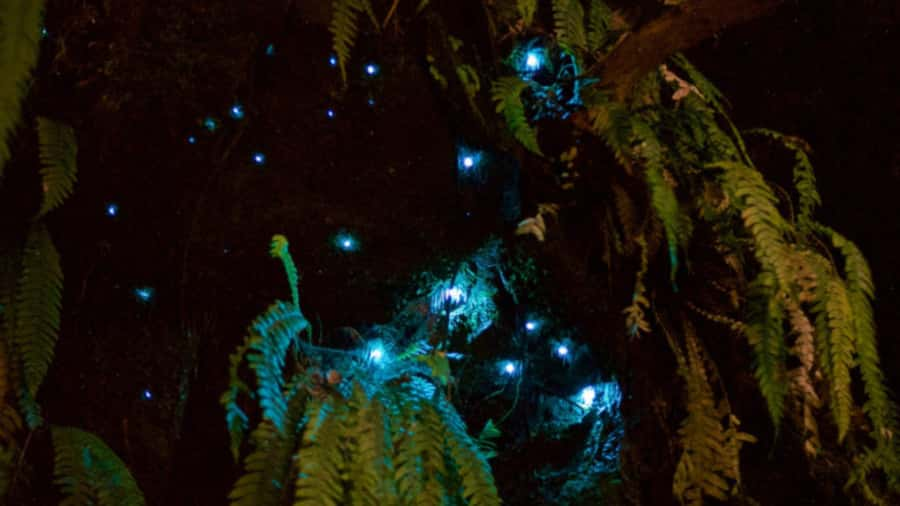
Glowworms are the most reliable visual highlight described for this walk. Their small lights can appear on the forest floor and vegetation, creating a delicate pattern in the darkness. They are not a huge theatrical display, so do not expect a cave full of bright lights. The appeal is quieter: you notice a few points of light, then more appear as your eyes adjust.
The red head torches also help your guide show you small creatures without turning the walk into a bright inspection. Wētā, insects, and geckos may become the focus of a stop. One evening included particular attention to a wētā, while tuatara were also a highlight.
This is where the guide adds real value. In daylight, you might walk past a small animal without seeing it. At night, the guide can help you slow down and look in the right place. You may not remember every species name, but you will leave with a better sense of how much activity sits just beyond the main path.
Tuatara are especially significant. They are ancient reptiles found only in New Zealand, and seeing one in a protected sanctuary gives the conservation story a physical presence. Still, sightings are not guaranteed, so keep your expectations sensible.
Same base, a different kind of day:
- Abel Tasman National Full Park Scenic Cruise
★ 4.4 · 855 reviews - Abel Tasman Vista Cruise
★ 4.5 · 414 reviews - The Family Cruiser
★ 5.0 · 244 reviews - Best Abel Tasman Day trip
★ 5.0 · 229 reviews
Listening for ruru and kiwi pukupuku
The strongest part of the tour may be sound. Ruru, or morepork owls, produce a distinctive call that can seem close one moment and far away the next. In a dark forest, even a single call changes the mood of the walk.
Kiwi pukupuku are another important possibility. You may hear rustling in the undergrowth or a kiwi call without seeing the bird. One outing included a kiwi call, while another group heard movement and some people briefly spotted a young kiwi disappearing from view.
That is a useful way to think about kiwi on this activity. Hearing one is a success. Seeing one is a bonus. The birds are nocturnal and naturally cautious, so the guide cannot arrange a close encounter.
This uncertainty is not a flaw, but it should shape your decision. If your main goal is a guaranteed kiwi sighting, choose an experience built around controlled viewing. If you want to listen for wild birds in a protected forest, this walk offers a more natural setting.
The guide will encourage safe and respectful wildlife spotting. That means keeping noise down, following instructions, and allowing animals to move away. Your group’s behavior matters, especially when the forest is quiet.
Why the conservation story matters
The sanctuary is more than a pleasant place for an evening walk. Its fence creates a protected zone, while predator management reduces threats to native wildlife. Habitat restoration helps rebuild the conditions these species need to feed, shelter, and breed.
Translocations are another part of the work. Moving animals into safer habitat can help strengthen populations, but it only works when the surrounding forest is managed over time. The guide connects these larger efforts with what you see on the track.
I value this context because it prevents the walk from becoming a simple search for cute animals. You learn why a rare bird or tuatara needs protection, and why a fenced sanctuary can make a practical difference.
The kākāriki karaka, tuatara, and kiwi pukupuku represent different parts of New Zealand’s natural heritage. You may not encounter each one, but knowing they live within the sanctuary gives the forest a greater sense of purpose.
Group size and the feel of the walk
The activity is described as a small-group tour. The booking information lists a limit of eight participants, while the wider description refers to groups of up to ten. Check the current number when you book if the size of the group matters to you.
Either way, this is far more personal than a large evening procession. A small group makes it easier to hear the guide, share the red head torches, and stop without blocking a busy track. It also helps everyone stay quiet when the guide is listening for wildlife.
A compact group does not guarantee more animals. It does improve the experience of waiting. You are less likely to feel rushed, and the guide can answer questions or point out details that would be easy to miss in a crowd.
If you are visiting with children, note that the activity is not suitable for anyone under 10. The quiet pace and darkness also require a reasonable level of fitness. The tour is not suitable for people with mobility impairments, diabetes, visual impairments, or low fitness.
Is $34 a fair price?
At $34 per person, the outing is reasonably priced for a guided experience that includes entry into a protected sanctuary, a live English-speaking guide, red head torches, and a hot beverage with a biscuit.
The price makes most sense if you value interpretation and conservation access, not just animal sightings. You are paying for the guide’s ability to explain the sanctuary, help you listen for wildlife, and identify small creatures in poor light.
It is less compelling if you expect a long hike or a guaranteed kiwi encounter. The total duration is 105 minutes, and much of that time may involve standing quietly, looking closely, or listening. That is exactly what makes the evening work, but it will not suit every style of sightseeing.
The included hot drink is a modest touch, yet it matters after time outside at night. You do not need to bring a backpack, and backpacks are not allowed. Alcohol and drugs are also prohibited, as are baby strollers, baby carriages, electric wheelchairs, and bare feet.
Getting there from Nelson
Brook Waimārama Sanctuary is about a 10-minute drive from Nelson city centre. Transportation is not included, so you need to arrange your own way to the Visitor Centre.
That short distance is one of the strongest practical reasons to choose this walk. You can spend the day elsewhere around Nelson, then add a night activity without committing to a distant excursion. The setting feels removed from the city while remaining close enough for an easy evening plan.
Allow time to reach the Visitor Centre before the stated start. The meeting point is inside the sanctuary’s Visitor Centre, not at a separate downtown office.
The sanctuary’s evening setting also means you should dress for conditions rather than for the drive. Warm layers and closed-toe shoes are specifically required. A comfortable pair of shoes is more useful than anything stylish.
Who should book this night walk?
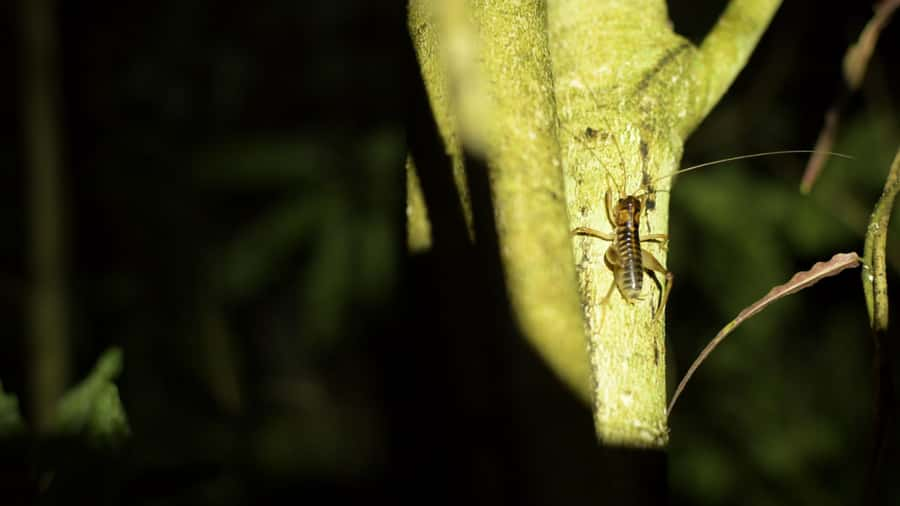
I would choose this activity if you enjoy wildlife, quiet forest walks, and conservation stories. It suits nature photographers too, although darkness and moving animals make photography difficult. The best camera for this outing may be your ears and your patience.
It is also a good choice if you have only one evening in Nelson and want something different from a restaurant or city walk. The short drive and 105-minute duration make it easy to fit into a wider itinerary.
You should think twice if you need a firm schedule of animal sightings. You should also skip it if you have low fitness, limited mobility, a visual impairment, or one of the listed medical restrictions. The sanctuary is not presenting a fully accessible sightseeing route for this activity.
Free cancellation is available up to 24 hours before the start, and you can reserve now and pay later. Those terms make it easier to fit the walk into a changing New Zealand itinerary, but you still need to check the available start time for your date.
My booking advice
Book the Brook Waimārama night walk if you want a calm, close-to-Nelson encounter with native forest and are happy to let the wildlife set the pace. The glowworms, ruru calls, tuatara, wētā, and careful guide commentary give the evening plenty of substance even if a kiwi stays out of sight.
Do not book it solely for a guaranteed kiwi photo. Book it for the chance to hear one, to understand the work protecting it, and to experience a forest that changes completely after dark. At $34, that is a fair trade for a well-guided evening in a rare protected setting.
FAQ
How long is the Brook Waimārama night walk?
The guided walk lasts 105 minutes.
How much does the experience cost?
The listed price is $34 per person.
Where does the tour meet?
You should check in inside the Brook Waimārama Sanctuary Visitor Centre.
How far is the sanctuary from Nelson city centre?
The sanctuary is about a 10-minute drive from Nelson city centre.
Is transportation included?
No. Transportation to and from the sanctuary is not included.
What wildlife might I hear or see?
You may hear ruru and kiwi pukupuku, and you might see glowworms, tuatara, wētā, geckos, insects, or other nocturnal creatures. Wildlife sightings are not guaranteed.
What should I bring?
Bring warm clothing and closed-toe shoes. Red head torches are provided.
Is the tour suitable for children?
No. The activity is not suitable for children under 10 years old.
Can I cancel the booking?
Yes. You can cancel up to 24 hours in advance for a full refund. You can also reserve now and pay later.
Just added in Nelson
- Wine Exposed Nelson Winery Tour★ 5.0 · 10 reviews
- Nelson to Mapua: Full-Day Self-Guided Cycling Adventure★ 4.5 · 63 reviews
- Te Tau Ihu West Coast Wilderness★ 5.0 · 3 reviews
- 18,000ft Tandem Skydive over Abel Tasman★ 5.0 · 60 reviews
- The Ultimate Lord of the Rings Combo Tour★ 5.0 · 6 reviews
- Quad Bike – Bayview Circuit★ 5.0 · 57 reviews
- Private boat charter in Abel Tasman National Park★ 5.0 · 31 reviews
- Golden Bay in a Day★ 5.0 · 22 reviews
Walking Tours, compared.
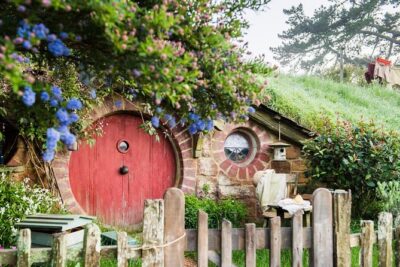
Hobbiton™ Movie Set Walking Tour from Shires Rest
Read our review →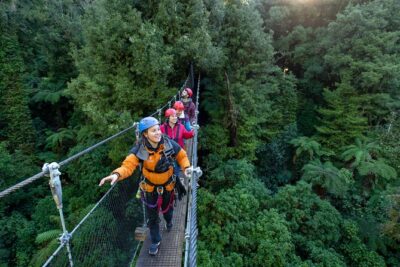
Rotorua’s Ultimate Zipline: 6 ziplines, 400 m Tandem, Cliff Walk
Read our review →
Waitomo Caves: Ruakuri Glowworm Cave Guided Walking Tour
Read our review →
Full-Day Milford Sound Tour with Cruise and Walks from Te Anau
Read our review →
Abel Tasman: Sea Shuttle Cruise and Walking Tour Combo
Read our review →
Browse the lists this tour appears in