
Reviewed · WILDLIFE
Clearwater Wildlife Tours (small group 10max) Otago Peninsula
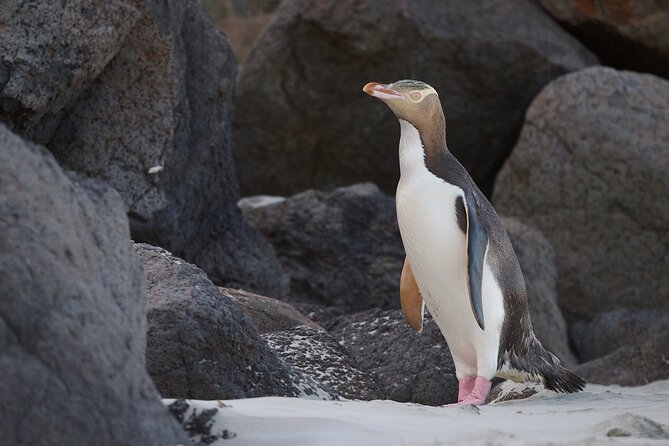
The rarest sight here may be the yellow-eyed penguin, a shy bird that can appear far down a beach rather than posing beside the path. The real treat is reaching private wildlife areas near Cape Saunders, where fur seals, sea lions, seabirds, and wetland birds live in open, rugged country.
I like the maximum of 10 people, which keeps the outing personal and makes it easy to ask questions. I also like the practical gear: good binoculars, wind and rainproof jackets, a clean air-conditioned van, water, and cookies. The main catch is simple: wildlife follows its own schedule. You may miss the penguins, and the walking includes hills, stairs, sand, and uneven ground.
Key points to know before booking
- Small-group format: The van holds no more than 10 people, so guides can point out animals and answer questions without shouting across a crowd.
- Private access: The tour visits a private farm and conservation reserve near Cape Saunders, areas not generally open to the public.
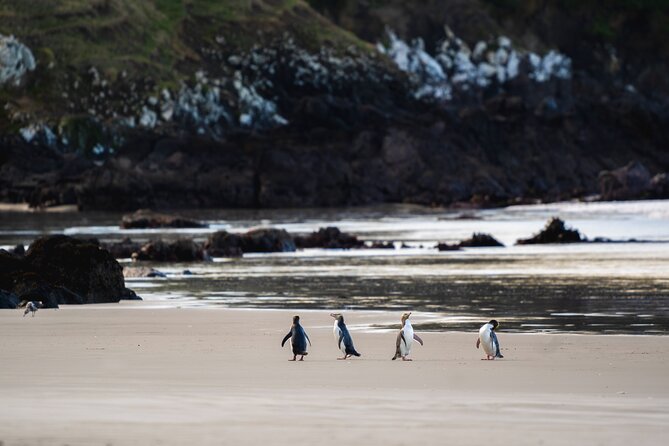
- Penguins are possible, not guaranteed: Yellow-eyed penguins are rare and may be seen at a distance through binoculars.
- Strong wildlife variety: You might see New Zealand fur seals, sea lions, albatross, wetland birds, waders, and other native species.
- Moderate walking required: Expect hills, steps, stairs, sand, and uneven trails. This is not suitable for people with walking disabilities.
- Bring food and layers: There are no food stops during the four-hour outing. Pack snacks, wear sturdy shoes, and prepare for quick weather changes.
From Dunedin’s Octagon to Cape Saunders
The tour begins at 50 The Octagon in central Dunedin and returns there after roughly four hours. That central meeting point is handy if you are staying in town, arriving by public transport, or fitting the outing into a day in Dunedin.
The drive is part of the experience, not just a transfer. As you leave the city, the road heads through the Otago Peninsula’s backcountry and along its inlets. You may see wetland and wading birds before reaching the coast, while the views open toward farmland, water, and the Pacific.
I appreciate this gradual change of pace. You do not simply arrive at a wildlife park and walk from enclosure to enclosure. The animals live in the same coastal country that gives the peninsula its character, and your guide can connect the birds, beaches, farm country, and ocean as the journey unfolds.
The van is air-conditioned and limited to 10 people. That matters on narrow roads and during wildlife stops, when a smaller group can get out, gather around a viewing point, and move on without a long line of people.
Guides named in the feedback include Adrian, Ben, Quinn, Paula, Ferg, Kelly, and Tom. Their strengths vary by personality, but the consistent theme is strong field knowledge and a real concern for conservation. Adrian, for example, is praised for explaining both local ecology and New Zealand history. Ferg is especially focused on yellow-eyed penguin conservation, while several guides are noted for spotting animals that are easy to miss.
More wildlife in Dunedin:
- Dunedin: Wildlife and Penguin Tour
★ 4.6 · 239 reviews - Oamaru: Penguins Evening Viewing Ticket
★ 4.5 · 682 reviews
Cape Saunders farm and the fur seal colony
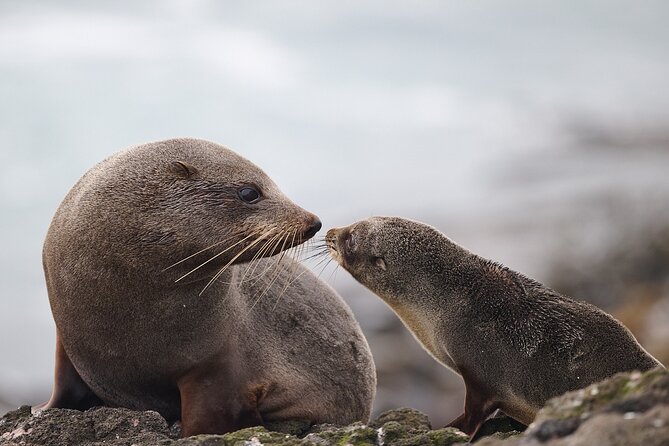
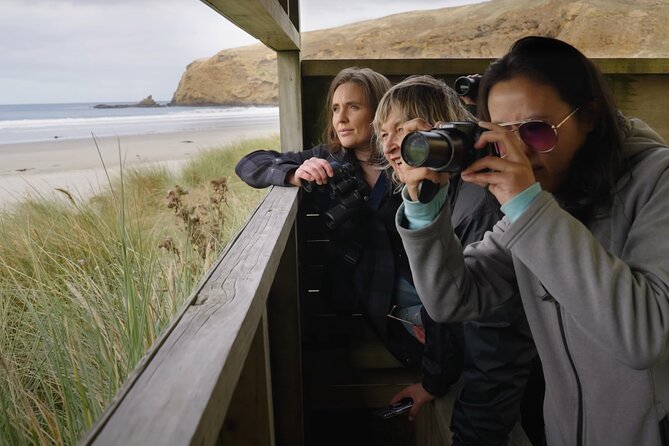
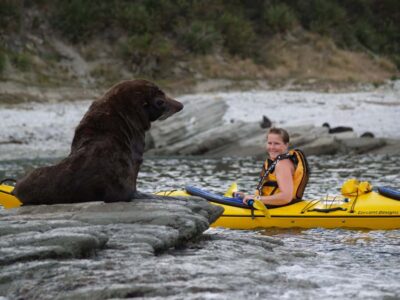
At Cape Saunders, the tour enters a private farm with views over the wild Pacific coast. Two viewing locations overlook a secluded breeding colony of New Zealand fur seals and nearby seabird habitat.
This is where binoculars become important. Fur seals may be close enough for clear views, while birds and animals farther along the coast require careful scanning. The supplied binoculars are a useful inclusion, especially if you did not bring your own.
The setting is intentionally untamed. You are not walking a paved zoo path with signs every few steps. Weather, distance, and the animals’ behavior shape what you see. That can mean a more rewarding sighting when your guide picks out a seal pup, an albatross, or a bird resting in the coastal scrub.
Several outings have included baby fur seals, and one guide was praised for using a hide to view the seal colony. You should still keep your expectations realistic. The exact animals and viewing distance change from day to day, and you will be asked to watch without disturbing them.
The coastal outlooks are also a major part of the stop. Even during a day when a penguin stays hidden, you still have rugged ocean scenery, seabirds, seals, and a sense of being well away from town. The tradeoff is exposure. Wind can be strong, rain can arrive quickly, and the ground may be wet or muddy.
Clearwater provides wind and rainproof jackets if you need them. I would still wear warm layers underneath and bring waterproof outer clothing if you have it. Good walking shoes or boots with solid tread are necessary in wet conditions.
The private conservation reserve and yellow-eyed penguins
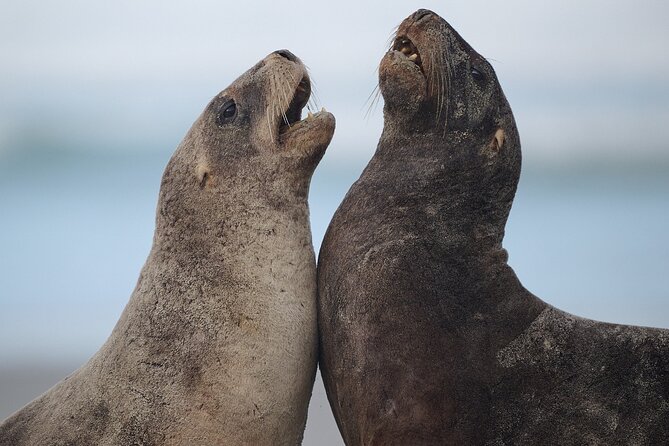
The second major part of the tour takes place in a native conservation reserve. Here, your guide leads you toward breeding areas used by yellow-eyed penguins and New Zealand sea lions.
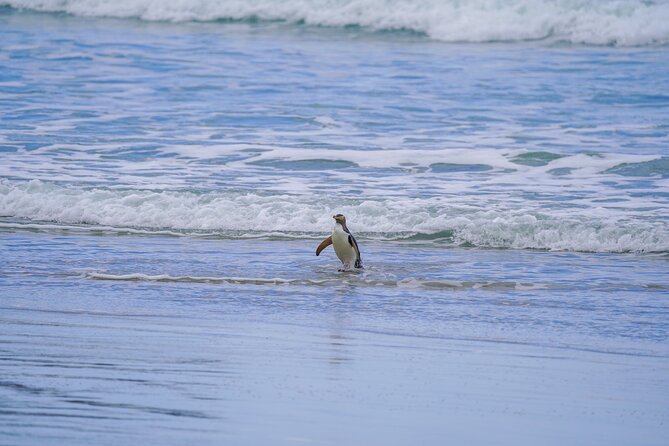
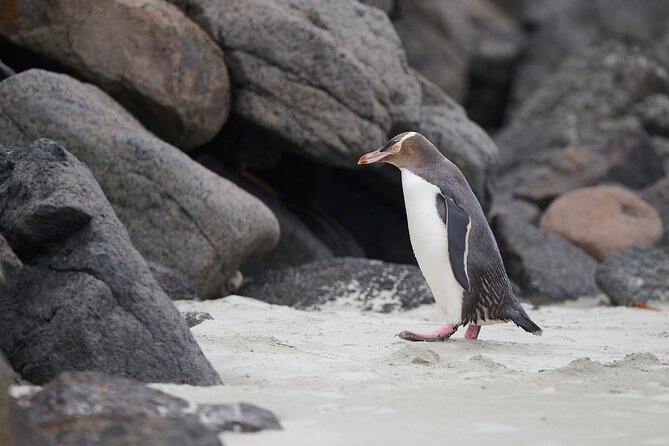
The yellow-eyed penguin, also called hoiho, is the headline sight for many people. It is also the animal most likely to test your patience. These penguins are rare, and sightings can involve a single bird far down the beach or returning from the water. You may see one through binoculars, but you should not expect a close encounter.
That distance is a positive feature, not a failure. The tour is built around observing wildlife without pushing into breeding areas or changing animal behavior. If you want a photograph, bring your best camera, but understand that a distant penguin may be better seen than photographed.
Some outings have produced the full set of hoped-for sightings: yellow-eyed penguins, seals, sea lions, and many birds. Other times, the penguins have remained out of view. Clearwater’s own explanation is sensible: these are wild animals, not performers. If seeing a penguin is the only reason you are booking, you need to accept the risk.
The reserve also gives you a chance to see New Zealand sea lions in their natural setting. They may be resting on the beach or moving near the water. The beach walk adds a more immediate feeling than viewing from a road, but it also brings the most demanding footing of the tour.
The trail includes some hills, steps, stairs, sand, and uneven ground. You need a moderate level of fitness and enough balance for changing surfaces. This is not suitable for people with walking disabilities, and it is not a good choice if you need a fully level route.
There may be better viewing options for someone with limited stamina, but the tour information clearly says it is not recommended for people with mobility issues. Ask before booking if stairs or sand are a serious concern.
What the guides add to the experience
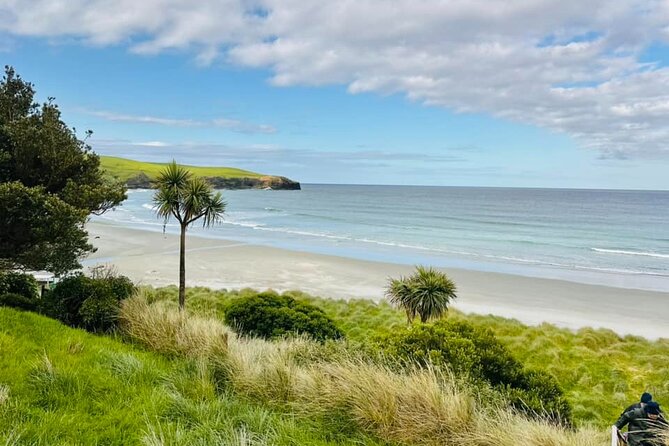
A wildlife tour is only as good as the person who can find the animals. Here, guides such as Paula and Quinn are praised for spotting wildlife as it appears, while Ben and Adrian are singled out for explaining what you are seeing rather than simply naming it.
That difference matters. A guide can point out a distant albatross, a small pūkeko, or a seal blending into the rocks. Then the experience becomes more than a quick photograph. You learn how the animals use the coast and why the conservation reserve matters.
The guides also talk about local ecology, history, and conservation work. Yellow-eyed penguins receive special attention because their population is vulnerable and their breeding areas need protection. You will hear why the animals must be viewed from a respectful distance and why a quiet approach matters.
The small group gives you room to ask questions. If you are interested in birds, marine mammals, farming, or conservation, you can steer part of the conversation. A 10-person limit also helps when the guide needs everyone to gather around binoculars or a particular viewing point.
Guide quality can never be guaranteed in advance, since assignments change. Still, the range of named guides praised for passion and clear explanations suggests that guiding is a central part of the company’s approach, rather than an afterthought.
What is included, and what you need to pack
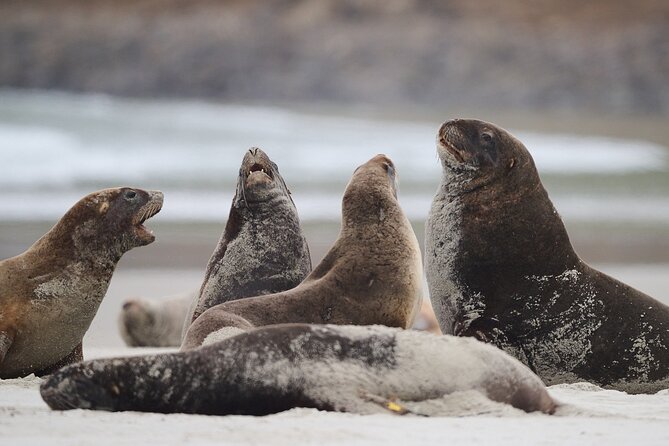
The price is listed at $139.63 per person. That is not the cheapest way to see the peninsula, but the cost includes transport from central Dunedin, private farm and conservation access, a four-hour guided outing, binoculars, rain jackets, water, and cookies.
The private access is the key value. You are not paying only for a drive past public viewpoints. You are paying for transport into areas that are not normally open to the public, plus someone who can locate and explain wildlife that you might otherwise miss.
There are no meal stops. Bring a packed lunch, snacks, and any drink beyond the complimentary water. Four hours is long enough for hunger to become a distraction, especially if you are walking in cold or windy conditions.
Pack:
- Warm layers
- Waterproof clothing
- Walking shoes or boots with good tread
- Snacks or a packed lunch
- Personal medicines
- A camera with a useful zoom, if you have one
The company provides wind and rainproof jackets, but you should not treat that as a replacement for proper clothing. Otago’s maritime weather can change quickly in any season.
Who will enjoy this tour most
I would choose this tour if you want wildlife in open country rather than a standard sightseeing loop. It suits people who enjoy birdwatching, coastal scenery, conservation, and the chance of seeing animals behave naturally.
It also works well for cruise ship passengers, provided the timing is checked carefully. The company asks cruise passengers to give the ship name, which helps with planning. You return to the Octagon, so allow enough time to get back to your ship after the tour.
Families can take part, but the minimum age is five. Younger children may struggle to keep up on the trails, and small children cannot sit on an adult’s lap for safety reasons. If you bring children, explain in advance that there may be waiting, walking, wind, and distant wildlife rather than constant close action.
This is a good choice for photographers, but not necessarily for someone expecting close-up animal portraits. The best sighting may be far away. Binoculars are included, and a camera with a long lens will help.
It is less suitable for anyone who dislikes unpredictable weather or needs a flat, paved route. The tour is outdoors, and the scenery is part of its appeal precisely because the coast is wild and exposed.
How it compares with a more ordinary peninsula tour
A typical Otago Peninsula drive can give you beautiful coastal views and a look at Dunedin’s wider setting. Clearwater adds private land, conservation access, and a stronger focus on finding animals.
That extra access does not guarantee more sightings every time. Wildlife remains unpredictable, and public viewpoints can also be rewarding. The difference is that Clearwater’s guides know the reserve, carry binoculars, watch the habitat closely, and explain what is happening around you.
I also like the lack of a crowded coach atmosphere. With no more than 10 people, you spend less time waiting for a large group and more time listening, walking, and looking. That smaller scale is especially useful when one person spots a penguin or an albatross at a distance.
The main compromise is physical effort. A bus-based sightseeing tour may be easier if you have mobility limits. Clearwater gives you more direct contact with the coast, but you must be ready for steps, slopes, sand, and uneven ground.
Weather, cancellations, and practical details
You receive confirmation when booking, and the meeting point is near public transportation. The tour ends back at 50 The Octagon.
Free cancellation is available up to 24 hours before the start time in the local time zone. Cancellations inside that window are not refunded, and changes made inside 24 hours are not accepted.
The tour requires suitable weather. If poor conditions force cancellation, you are offered another date or a full refund. That policy is useful, but you should still keep a little flexibility in your Dunedin plans if possible.
Bring any required personal medicine and tell your guide at the start about a medical condition that could cause trouble during the walk. The staff can provide jackets, but they cannot remove the need for sensible clothing and footwear.
Should you book Clearwater Wildlife Tours?
Book it if you want a small, conservation-minded wildlife outing with access to private parts of the Otago Peninsula. The combination of fur seals, sea lions, seabirds, dramatic coastal views, and a possible yellow-eyed penguin gives the tour plenty of substance even when one species stays hidden.
I would not book it if you need guaranteed penguin sightings, close animal contact, or an easy paved walk. The best reason to go is not a promise of a perfect checklist. It is the chance to spend four hours in a wild setting with a capable guide, good viewing equipment, and a group small enough to keep the experience personal.
FAQ
How long is Clearwater Wildlife Tours?
The tour lasts approximately four hours, including the journey from central Dunedin to the Otago Peninsula and the return to the Octagon.
Where does the tour begin and end?
It begins at 50 The Octagon in central Dunedin and ends back at the same meeting point.
How many people can join the tour?
The maximum group size is 10 people.
Will I definitely see a yellow-eyed penguin?
No. Yellow-eyed penguins are rare wild animals, so sightings are possible but not guaranteed. If seen, they may be far away and viewed with binoculars.
What wildlife might I see?
Possible sightings include yellow-eyed penguins, New Zealand fur seals, New Zealand sea lions, albatross, wetland birds, wading birds, and other seabirds.
Is the tour suitable for children?
Children under five cannot join. Children aged five and older may take part, but younger children could have difficulty keeping up on the trails. Children cannot sit on an adult’s lap for safety reasons.
What should I wear?
Wear warm, waterproof clothing and walking shoes or boots with good tread. Weather can change quickly, and the route may be wet, muddy, sandy, or uneven. Wind and rainproof jackets are supplied when needed.
Can I cancel for a refund?
You can cancel at least 24 hours before the start time for a full refund. Cancellations or changes made within 24 hours are not refunded. If poor weather cancels the tour, you are offered another date or a full refund.
Just added in Dunedin
- Dunedin: Speight’s Brewery Guided Tour with Tasting★ 4.8 · 170 reviews
- Dunedin: Wildlife and Penguin Tour★ 4.6 · 239 reviews
Wildlife, compared.
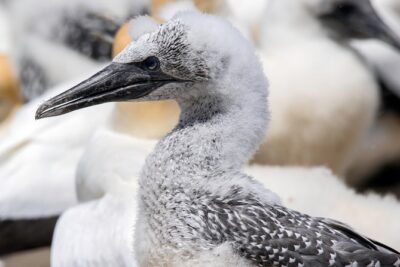
Gannet Safaris Overland tour to Cape Kidnappers Gannet Colony
Read our review →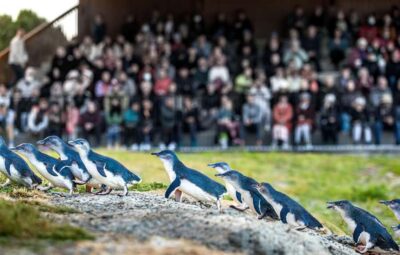
Guided Evening Penguin Viewing Otago Peninsula, Dunedin, New Zealand
Read our review →
Browse the lists this tour appears in