
Reviewed · ZIP LINES
Adventurous Zipline Tour in Coromandel
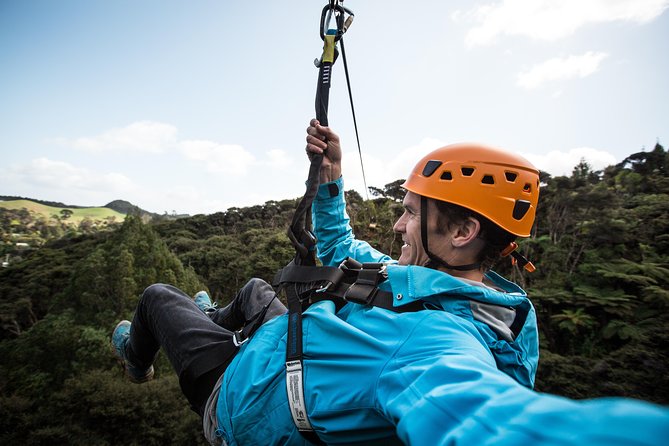
The best part of this Coromandel adventure begins before the first zipline. You ride a charming 18-minute mountain railway up to the course, then return through native forest on eight ziplines covering 705 meters. Along the way, your guides explain how Driving Creek changed from a logged and mined site into a forest planted by hand.
I like the mix of adventure and conservation. I also like the small group, capped at 10 people, and the fact that safety equipment and wet-weather clothing are included. The main caution is simple: this is weather-dependent, and the forest course includes walking between the platforms, so it is not just a quick ride through the trees.
Key points to know before booking
- The train ride is part of the experience: An 18-minute trip on New Zealand’s only mountain railway takes you to the start of the course.
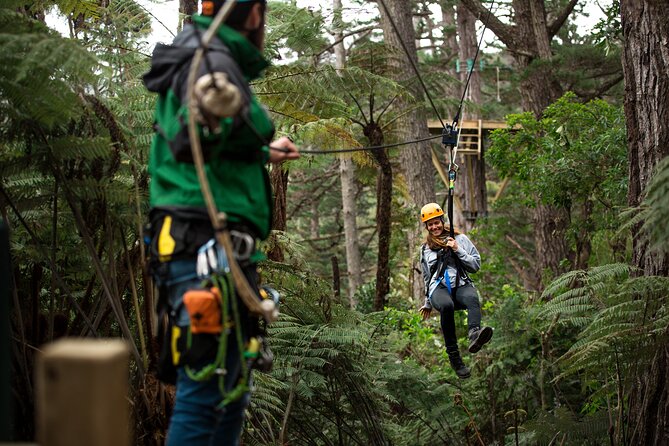
- Eight ziplines cross the forest: The lines stretch about 705 meters through trees, gullies, and streams.
- The setting carries a strong conservation story: Guides explain kauri regeneration, native birds, and Driving Creek’s change from logging and mining.
- Small groups keep the tour personal: The maximum group size is 10, with two guides leading the activity.
- Gear is supplied: Safety equipment and wet-weather clothing are included, useful in Coromandel’s changeable conditions.
- Your money supports the site: Tour profits help native forest restoration and clay arts at Driving Creek.
A railway ride before the ziplines
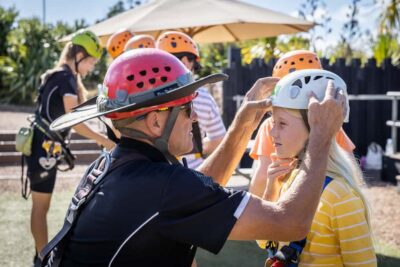
The trip starts at 380 Driving Creek Road in Coromandel. You meet the guides, receive your safety equipment and wet-weather clothing, then board the mountain railway for an 18-minute ride.
This opening ride gives the tour a character that many zipline parks lack. You are not simply walking up a hill to a launch platform. The railway is part of the story of Driving Creek, a creative and unusual project shaped by potter Barry Brickell. It also gives you time to settle in before the more active part of the outing.
The railway climbs through the forest toward the zipline course. You get a sense of how the site was built and how the hills were put to use. For me, this makes the experience feel connected to the place rather than dropped into it as a separate amusement.
The train ride is also practical. It carries you to the higher starting point, so the main zipline route can work downhill through the trees and gullies. You still walk between platforms, but the railway handles the biggest climb.
A few more things to do in New Zealand worth a look
- Rotorua Canopy Tours: 2.5Hour Native Forest Zipline Adventure
★ 5.0 · 4,563 reviews - Rotorua’s Ultimate Zipline: 6 ziplines, 400 m Tandem, Cliff Walk
★ 5.0 · 2,557 reviews - Small-Group Zipline Adventure in Queenstown
★ 5.0 · 933 reviews
Eight lines through trees, gullies, and streams
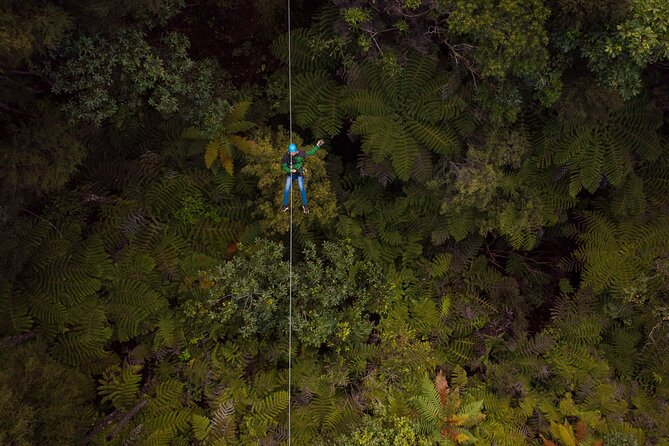
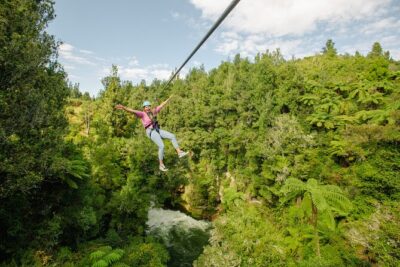
At the top, two guides lead you through the zipline course. The full route includes eight lines, covering roughly 705 meters, or about 2,300 feet.
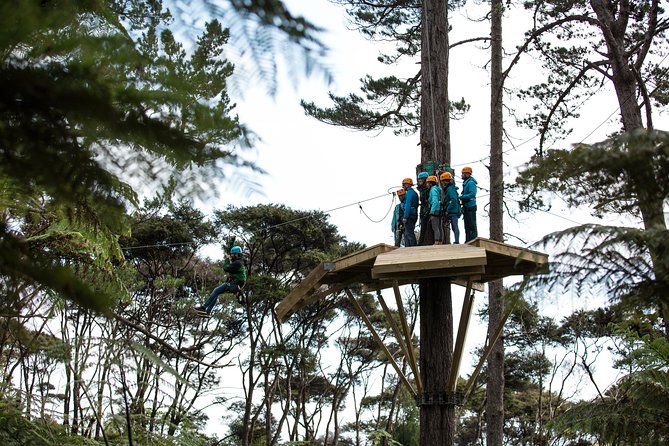
The course takes you through several levels of the forest. You fly above the treetops on some sections, then walk beneath ferns and among native trees on others. The short walks between platforms are important because they let you see the forest at ground level instead of treating it as scenery below you.
The lines cross gullies and streams, adding changes in height and view. This gives the course more variety than eight similar straight runs. You can expect a series of short stages, with the guides helping you move from one platform to the next and explaining the setting along the way.
The activity is suitable for a range of skill levels, according to the experience details and the strong feedback attached to it. Still, you should be comfortable with a moderately active outing that combines harness use, platforms, short forest walks, and exposure to height.
Support from guides matters here
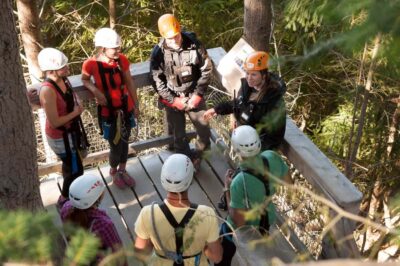
A zipline can be thrilling, but the quality of the guides shapes the whole day. Two guides stay with the group, handle the safety equipment, explain what to do, and help keep the pace relaxed.
That two-guide setup is especially useful in a group of up to 10. You are not being processed through a large operation with dozens of people waiting behind you. There is room for questions, and the guides can give more direct attention when someone needs a little extra support.
Several guide teams have been praised by name, including Hannah and Katie, as well as Liam and Tani. The important point is not to expect a particular pair on your date, but to know that the guiding style is a major part of the experience. People who arrive nervous about heights have found the staff reassuring, including one participant who felt much more comfortable by the second line.
That is useful if you are trying a zipline for the first time. You do not need to arrive as an experienced adventurer. You do need to listen carefully, follow the safety instructions, and tell the guides if you are uneasy.
A forest story beyond the adrenaline
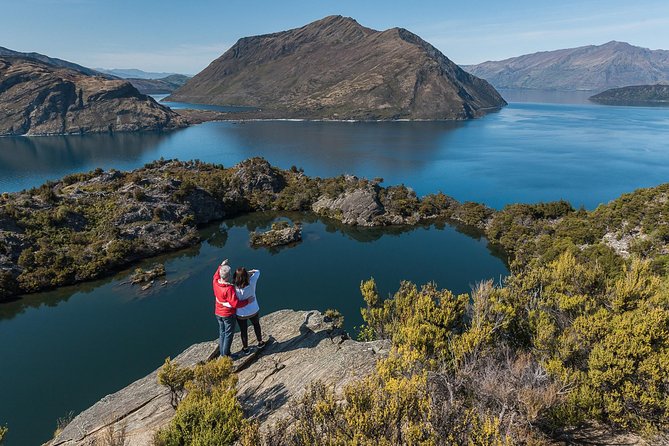
The activity works because it gives the forest a past and a future. Driving Creek was once affected by kauri logging, gold mining, and pastoral farming. The site was later reshaped into a planted native forest, now providing a setting for regenerating kauri and native birds.
The guides connect the physical course to that change. You learn about the largest tree species in New Zealand, the return of native forest, and the role of conservation work at Driving Creek. These talks take place during the route, so the information is tied to the trees and gullies you can see around you.
I like this approach because it avoids turning the forest into a generic backdrop. The ziplines provide the excitement, but the explanation of forest recovery gives the day more meaning. You leave with a better sense of how long-term planting and care can change a damaged site.
The connection to Barry Brickell is another unusual feature. The railway and the wider Driving Creek project reflect his work in clay arts and land restoration. You are getting a short local history lesson alongside the outdoor activity, not just a collection of fast rides.
Same base, a different kind of day:
- Hobbiton Movie Set: Guided Tour Ticket
★ 4.9 · 8,167 reviews - Waitomo: Glowworm Caves Guided Tour by Boat
★ 4.5 · 4,908 reviews - Hobbiton™ Movie Set Walking Tour from Shires Rest
★ 5.0 · 3,577 reviews - Mitai Maori Village: Cultural Experience and Dinner Buffet
★ 4.7 · 3,575 reviews
Why the small group changes the pace
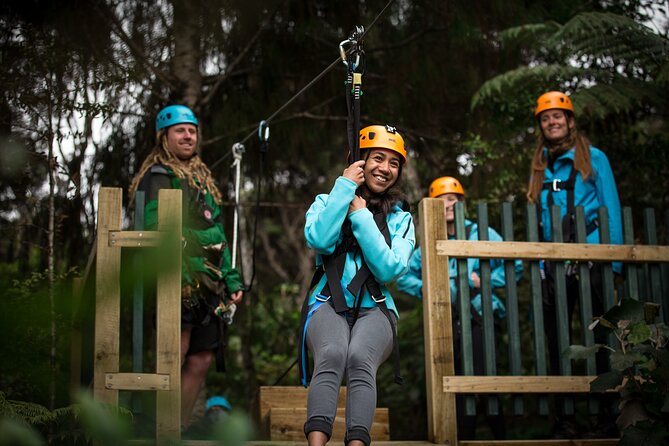
The group limit is 10 people. That is small enough for the guides to keep the activity social without making it feel crowded.
You will likely have short pauses while people move through the course. These breaks are not wasted time. They allow the guides to explain the forest, point out features, and let you take in the surroundings before the next line.
A small group also makes the trip more comfortable for first-timers. You can watch how the system works, ask questions, and see that each platform follows a clear routine. It is easier to stay connected with the guides when the group is limited.
The trade-off is that the tour depends on the group moving together. If you want a completely private or fast-paced experience, this is not that. The shared format is part of the value, and the chance to meet other people is one of the social elements of the outing.
Weather, clothing, and practical comfort
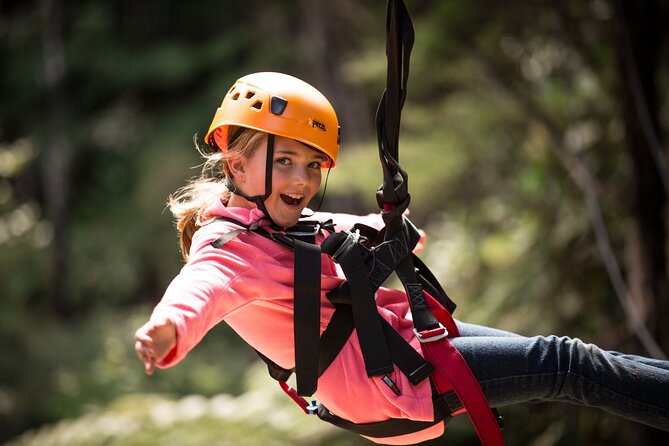
Coromandel weather can change, so the included wet-weather clothing is a useful detail rather than a marketing extra. You still need to dress sensibly for an outdoor activity, but the supplied clothing can make the difference between enjoying the forest and spending the whole time worrying about rain.
The tour runs for about two and a half hours. That includes preparation, the railway ride, the zipline stages, short walks, and the forest talks. Set aside enough time so you are not rushing to another booking immediately afterward.
The experience requires good weather. If poor weather forces a cancellation, you can choose a different date or receive a full refund. If you cancel yourself, you need to do so at least 24 hours before the start time for a full refund. Changes or cancellations made inside that window are not accepted.
The meeting point is also the finish point, which keeps the transport simple. The site is near public transportation, and confirmation is provided when you book.
Is $91.22 a fair price?
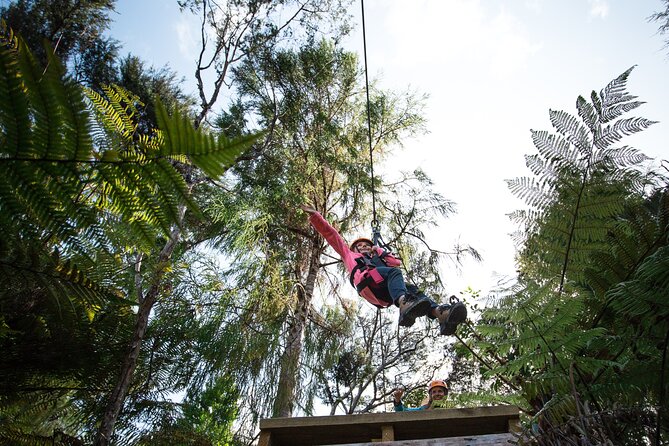
At $91.22 per person, this is not the cheapest short activity in New Zealand. The price makes more sense when you count what is included: two and a half hours, the railway journey, eight ziplines, two guides, safety equipment, wet-weather clothing, forest interpretation, and a return to the same meeting point.
You are also paying for a small-group format rather than a mass-market ride. With a maximum of 10 people, the guides have more time to help and explain. The conservation and clay arts contribution adds another layer of value, especially if you prefer activities that support the place you are visiting.
I would not choose this solely for the number of zipline runs. The lines are part of a broader experience that includes the railway, the site’s history, and the regenerating forest. If you only want a fast adrenaline hit, a simpler zipline course might suit you better.
For a first zipline outing, a family activity, or a half-day Coromandel experience with some substance, the price is reasonable. The 4.9 rating from 176 reviews and 99 percent recommendation figure support the idea that the combination works well for most people.
Who should book this Coromandel outing?
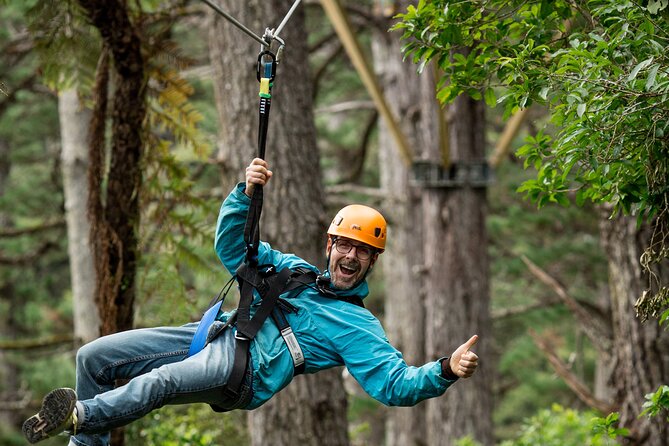
This tour suits you if you want several things in one package: a scenic railway ride, an outdoor challenge, native forest, and a local story. It is particularly appealing for first-time zipliners because the guides provide equipment and close support.
It also works well for families and mixed-experience groups. You do not need everyone in your party to be an expert. The guides can help nervous participants, while more confident people still get the excitement of eight lines across the forest.
You should think twice if you dislike heights, outdoor weather, or moving through a course at a shared group pace. Fear of heights is not an automatic reason to skip it, since the guides are used to helping nervous participants, but you should be honest with yourself about the setting.
The tour is also a good fit for anyone curious about Driving Creek itself. The railway, forest restoration, kauri stories, native birds, and Barry Brickell’s work make it more distinctive than a standard zipline park.
What I would remember when booking
Choose a time that leaves space around the two-and-a-half-hour activity. The tour returns to the meeting point, but the experience includes more than the eight lines, and you will want to give the railway and forest talks their proper time.
Wear clothing suited to an outdoor forest setting, even though wet-weather gear is supplied. Follow the booking weather policy closely, since poor conditions can lead to a new date or a full refund.
If you are nervous, tell the guides early. The strongest part of the experience is the personal attention from the two-guide team, and you will get more from it if they know what support you need.
Should you book it?
I would book this tour if you want a well-rounded Coromandel outing rather than a bare-bones zipline session. The railway ride gives it a memorable start, the eight lines provide enough excitement, and the forest restoration story makes the activity feel rooted in its setting.
Skip it if you want a dry, highly private, or purely adrenaline-focused experience. For everyone else, especially first-timers, families, and visitors who value conservation and local history, this is a strong use of half a day and a fair value at $91.22.
FAQ
Where does the zipline tour start and finish?
The tour starts at 380 Driving Creek Road, Coromandel 3506, New Zealand. It ends back at the same meeting point.
How long does the experience last?
The experience lasts approximately two hours and 30 minutes.
How many ziplines are included?
The course includes eight ziplines stretching about 705 meters through trees, gullies, and streams.
Is the railway ride included?
Yes. An 18-minute mountain railway ride takes you to the start of the zipline course.
Are safety equipment and wet-weather clothing provided?
Yes. The tour includes the safety gear and wet-weather clothing needed for the activity.
What happens if the weather is poor?
The experience requires good weather. If it is canceled because of poor conditions, you can choose another date or receive a full refund.
Just added in New Zealand
- Auckland: Half-Day Sea Kayak Tour to Motukorea Island★ 5.0 · 6 reviews
- Christchurch: Guided Crater Rim Walk with Coastal Scenery★ 5.0 · 56 reviews
- Monteith’s Brewery Tour★ 4.5 · 93 reviews
- From Methven: Hot Air Balloon Flight in Canterbury with Wine★ 4.8 · 48 reviews
- West Coast Treetop Walk★ 4.5 · 131 reviews
- From Tauranga: Dolphin and Wildlife Cruise★ 4.5 · 96 reviews
- Napier: Afternoon Wine Tasting + visit Silky Oaks Chocolates★ 5.0 · 135 reviews
- Hokitika: West Coast Treetop Walkway Entrance Ticket★ 4.5 · 82 reviews
Zip Lines, compared.
Rotorua Canopy Tours: 2.5Hour Native Forest Zipline Adventure
Read our review →
Rotorua’s Ultimate Zipline: 6 ziplines, 400 m Tandem, Cliff Walk
Read our review →

Browse the lists this tour appears in