
Reviewed · SAILING
America’s Cup 2-Hour Sailing Experience Waitemata Harbour
A genuine America’s Cup yacht is the star here, not a polished sightseeing boat with a few sails added for show. You feel the boat heel, hear the winches work, and see why these machines once belonged to elite racing crews. I like the chance to take the helm, and I like that the crew welcomes complete beginners rather than expecting sailing knowledge.
The other strong point is the setting: Waitemata Harbour, with Auckland’s towers on one side and open water and natural shores on the other. The main catch is wind. On a light day, the sail can be calm rather than thrilling, though the crew may offer a return voucher if conditions limit the experience.
Key points at a glance
- Sail a real America’s Cup yacht: These are former International America’s Cup Class racing boats, built for speed and precise teamwork.
- Choose your level of action: Steer, work the grinders, help with the sails, or sit back while the crew handles the boat.
- Expect a practical two-hour outing: The time includes a safety briefing, instruction, sailing maneuvers, and harbor views.
- Wind controls the mood: Stronger wind can produce exciting heel and speed, while light air means a gentler ride.
- Meet at Viaduct Harbour: Find the kiosk at the end of Quay Street, past the New Zealand Maritime Museum.
- Plan for an active boat: Wear comfortable shoes, leave large bags behind, and note that the minimum age is 10.
Why this Auckland sailing trip feels different
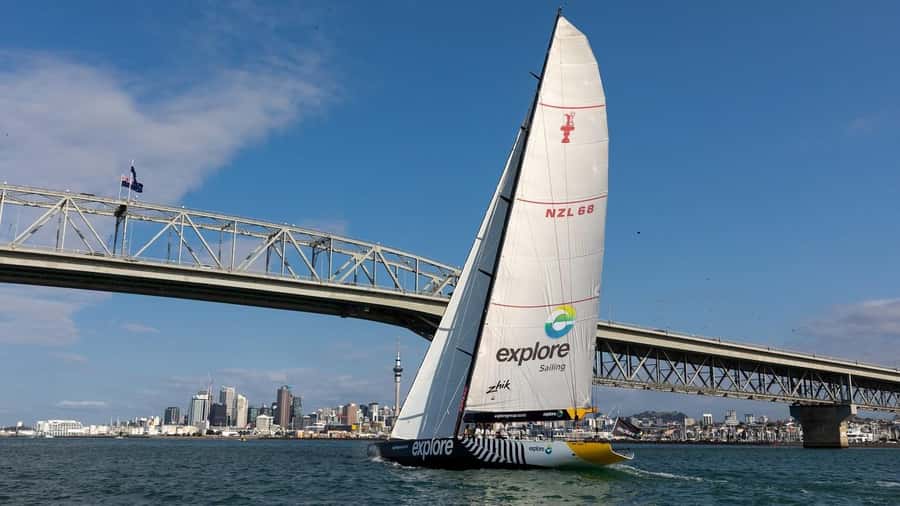
Many harbor cruises show you Auckland from the water. This one lets you help operate the vessel. That distinction matters. You are not just watching a crew pull ropes in the distance. You can turn the wheel, haul lines, grind a winch, and take part in the coordinated work that makes the boat move.
These America’s Cup Class yachts were designed for racing in light winds, but they remain serious machines. They have long, purposeful hulls and a large working deck rather than a sightseeing layout. When the sails fill and the boat leans, you get a small taste of the physical demands of competitive sailing.
I would not book this purely as a scenic cruise. The views are good, but the pleasure comes from being involved. If your idea of a perfect afternoon is sitting quietly with a drink, a standard harbor cruise may suit you better. If you want to understand how a racing yacht works by actually handling some of its equipment, this is a much better match.
The experience costs $125 per person. That is not the cheapest way to see Auckland Harbour, but the price makes more sense when you consider what you are riding. You are getting two hours on a genuine racing yacht, with professional crew, safety equipment, and the chance to participate rather than simply take photographs. For anyone interested in sailing, the cost is reasonable. For a visitor seeking only skyline views, it may feel high.
More sailing in Auckland:
- Auckland: Harbour Sailing Cruise with 3-Course Dinner
★ 4.5 · 319 reviews - Auckland Harbour 1.5-Hour Sailing Cruise
★ 4.7 · 301 reviews - America’s Cup Sailing on Auckland’s Waitemata Harbour
★ 4.5 · 298 reviews
Meeting the boat at Viaduct Harbour
The meeting point is the kiosk inside Viaduct Harbour, at the end of Quay Street and past the New Zealand Maritime Museum. Give yourself enough time to find it, since the waterfront contains several piers, restaurants, and boat operators.
Viaduct Harbour is a useful starting point because it places you right in Auckland’s maritime center. You begin among working boats and waterfront buildings, then move into the open harbor. The change from city promenade to sailing course happens quickly.
Large bags and luggage are not allowed aboard. Bring only what you need, and wear comfortable shoes. This is a working deck, so practical footwear is more useful than anything delicate or slippery.
The activity is conducted in English. The crew gives a safety briefing before sailing and explains what to do during maneuvers. You do not need previous sailing experience, but you do need to pay attention and follow instructions, especially when the boat is turning or the sails are being handled.
The safety briefing and first look at the yacht
Once aboard, the crew explains basic safety points, the areas you can move through, and the jobs available during the sail. You receive a life jacket, and weatherproof jackets are provided when needed.
This introduction is important because the boat is not arranged like a ferry. There is equipment underfoot, working lines, winches, and a large deck where people need to move carefully. The crew’s job is to make the boat useful and exciting without allowing enthusiasm to get in the way of safety.
You can decide how active you want to be. The crew will guide you through the actions slowly, so a first-time sailor can take part. If you prefer to watch, you are not pressured into handling the wheel or lines.
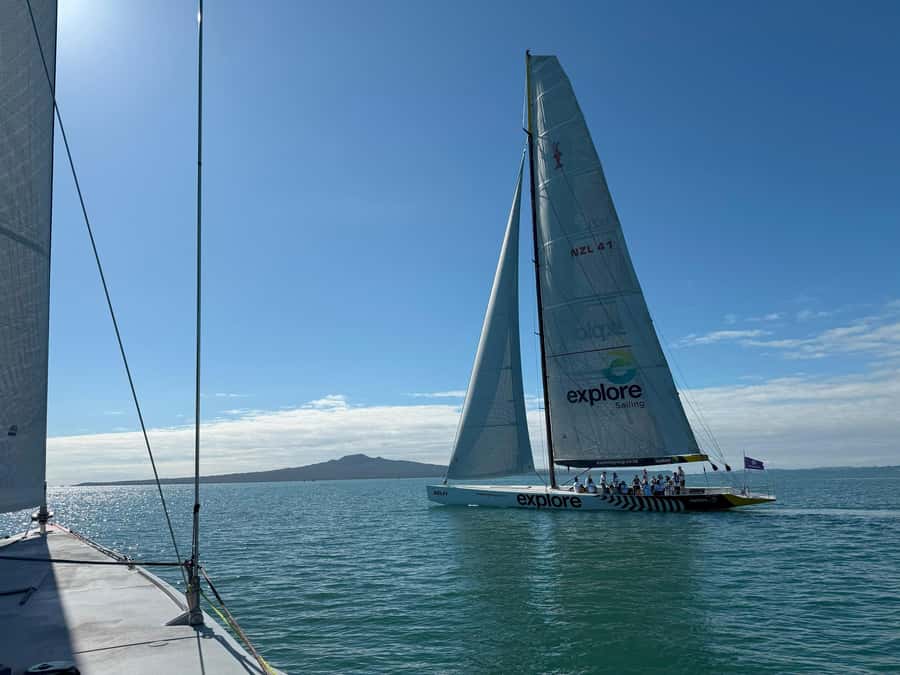
The yacht itself gives the outing much of its character. It is a former America’s Cup vessel, and the design feels stripped down and purposeful. You are close to the sailing hardware, not separated from it by a cabin window or viewing rail.
Raising the sails and learning the work
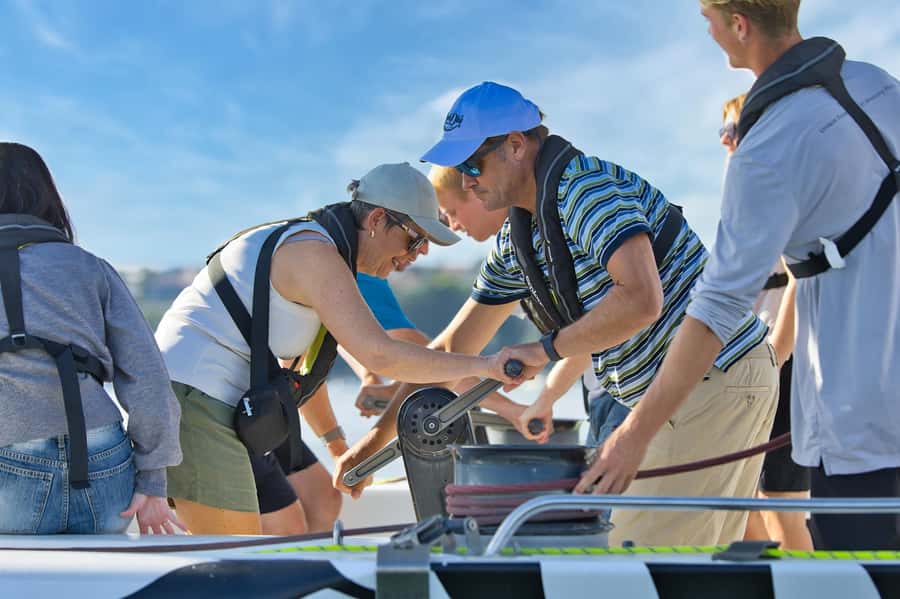
The most revealing part of the trip is often the first major sail-handling task. Raising a mainsail on a racing yacht takes real effort, and the crew shows you how to help safely and efficiently.
You may get a turn on the grinders, the winches used to pull in lines. This is not a decorative activity. It takes energy, timing, and teamwork. You quickly understand that sailing a large racing boat is physical work, even when the water looks calm.
The crew explains what each action does, which helps you connect the mechanics to the movement of the boat. Pulling a line is no longer an abstract task when you feel the sail tighten and the yacht begin to accelerate.
Depending on the wind and the plan for the sail, the crew may set a large gennaker, a powerful sail used to catch more wind. When it fills, the boat can pick up speed and the sense of occasion rises quickly. On a calm day, that sail may not be used in the same dramatic way, so keep your expectations tied to conditions.
Same base, a different kind of day:
- Waiheke Island: Ferry & Hop-On Hop-Off Explorer Bus Tickets
★ 4.6 · 3,311 reviews - Hobbiton & Waitomo Caves Guided Day Trip from Auckland incl lunch
★ 5.0 · 2,677 reviews - From Auckland: Hobbiton & Waitomo Caves Day Trip with Lunch
★ 4.9 · 2,505 reviews - Auckland Dolphin and Whale Watching Eco-Safari Cruise
★ 4.5 · 1,790 reviews
Taking the helm on Waitemata Harbour
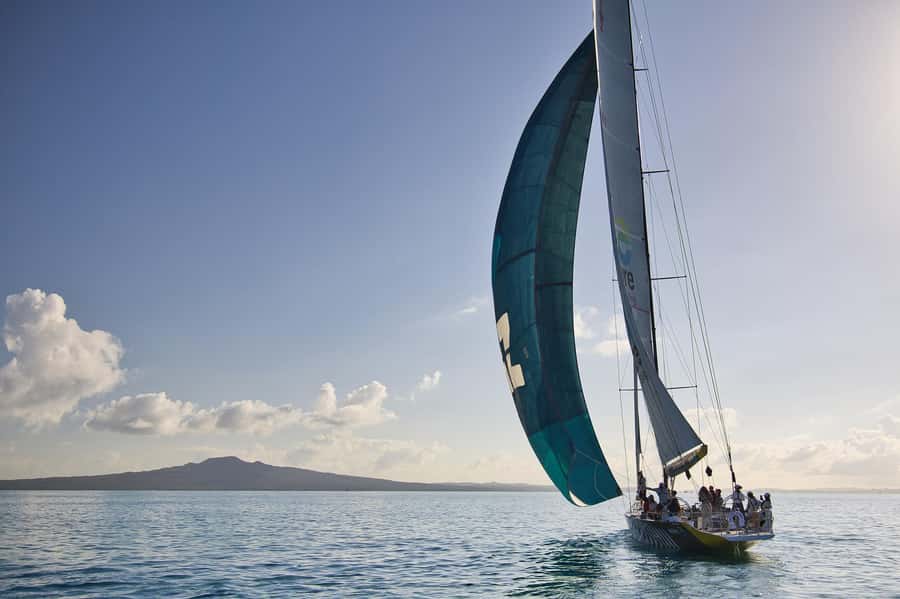
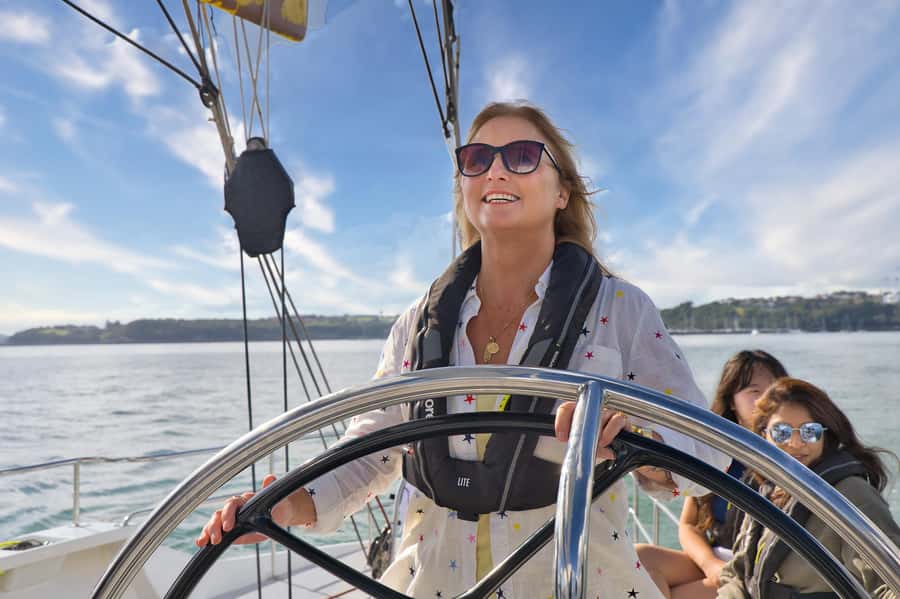
Steering is the moment many people remember most. The crew gives you a chance to take the wheel, with professional supervision close at hand. You do not need to arrive knowing how to sail. You simply need to listen and make small, controlled movements.
The boat responds differently from a small recreational sailboat. It is long, powerful, and designed to carry speed. Even a short turn at the wheel shows how much coordination is needed between the person steering and the crew trimming the sails.
You may take the helm for only a short period if the group is large. A smaller group can mean more time working the boat, and one past sailing found that a less crowded departure created more opportunities to take part. That is useful when choosing among available times, though the group size and exact schedule are not guaranteed.
People with sailing experience will enjoy comparing this yacht with boats they have used elsewhere. First-timers get something equally valuable: a clear sense of how steering, wind, sail shape, and teamwork fit together.
Tacking, jibing, and the thrill of the heel
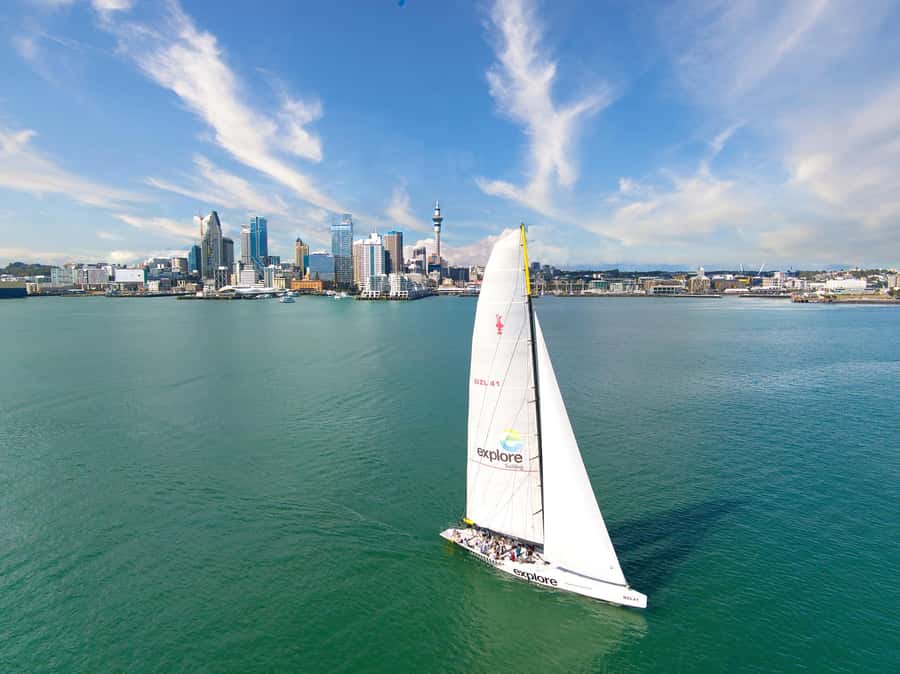
The crew may tack or jibe during the sail, turning the boat so the wind comes across a different side. These maneuvers bring everyone’s attention together. You may be asked to move, hold position, or help with the lines as the boat changes course.
In stronger wind, the yacht can heel sharply. One outing reached a dramatic angle of roughly 45 degrees, while another was described as exciting when the wind increased. That level of movement is part of the appeal, but it also explains why the activity is not recommended for pregnant women or people with pre-existing medical conditions.
You should also know that the boat may not deliver racing-style speed every time. The yacht class was designed mainly for light winds, and the operator uses wind limits to protect comfort and safety. The skipper makes the final decision about sailing.
A calm day can still be worthwhile. You can learn the boat, help with the sails, steer, and enjoy the harbor without being thrown around. One calm outing resulted in vouchers for another cruise, which shows that the crew takes the quality of the sailing seriously. Still, book with the understanding that nature controls the most dramatic part of the experience.
Auckland from the water
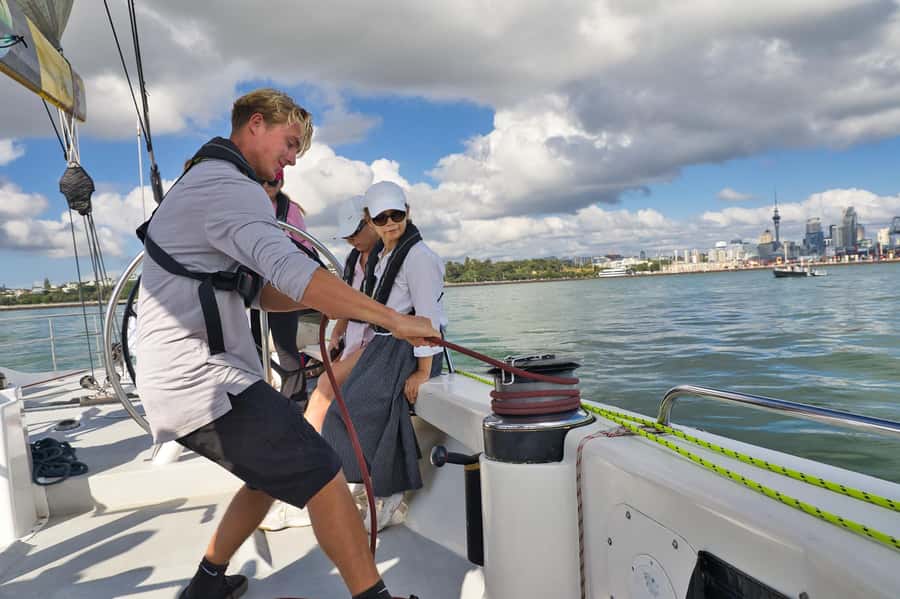
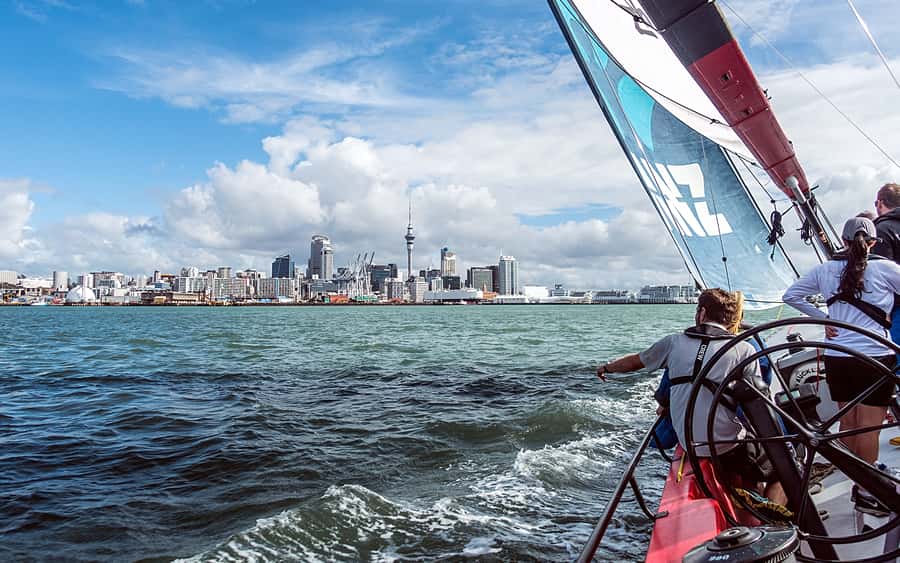
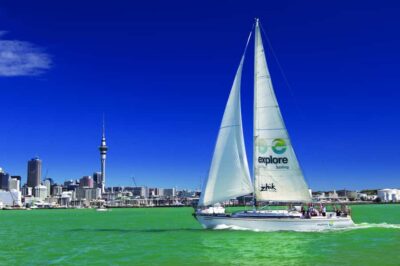
The harbor views provide a strong second act. From the yacht, Auckland’s skyscrapers sit in contrast with the open water and natural shores around the harbor. You get a different sense of the city than you do from a street or observation platform.
The view changes as the yacht moves away from Viaduct Harbour. The waterfront becomes a backdrop rather than your immediate surroundings, and the city’s relationship with the sea becomes clear. This was the harbor used for the America’s Cup in 2000 and 2003, so the setting is tied directly to the event that gives the boat its identity.
The crew also shares information about the yacht and America’s Cup sailing. The stories help explain why these boats require so much coordination and why small differences in wind or sail trim matter.
The route is not described as a fixed list of stops, and that is appropriate for a sailing experience. The skipper adjusts the outing to wind, safety, and traffic on the harbor. You should expect moving views and sailing maneuvers rather than a series of formal sightseeing stops.
The crew and the tone aboard
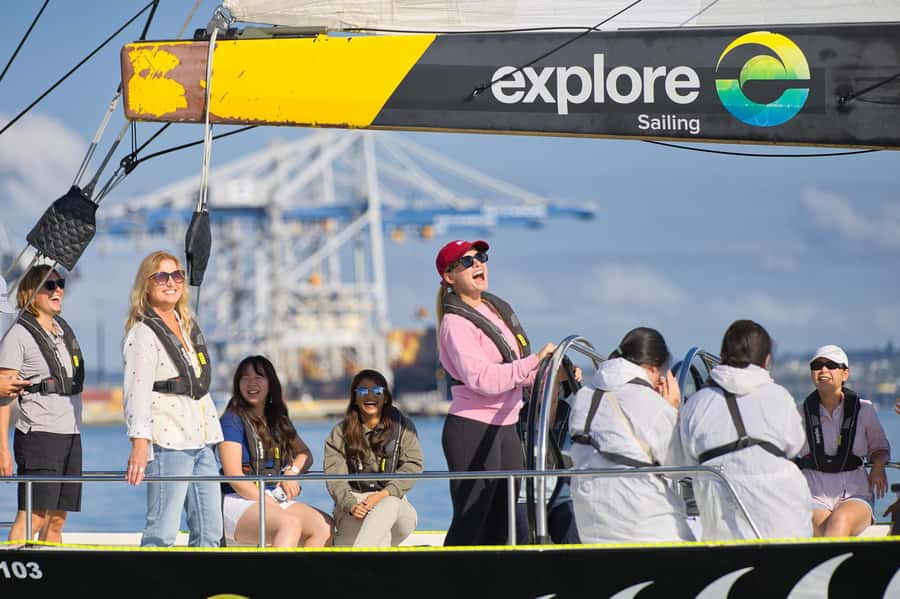
The professional crew is central to the experience. Their role is not just to operate the boat. They explain the equipment, manage safety, invite people to participate, and keep the mood relaxed.
Crew members such as Alex, Julia, Annabelle, Jessie, and Captain Luke have been associated with especially memorable outings, but staffing can change. The important point is the level of attention you should expect: instructions for beginners, practical help at the winches, and close supervision at the wheel.
The atmosphere is active but not intimidating. A sailor with years of experience can ask detailed questions, while someone stepping aboard a sailboat for the first time can start with a simple task. The crew adjusts participation to the people aboard.
That flexibility makes the trip work for mixed groups. A keen sailor can take the helm, while a companion who prefers to watch can enjoy the views and photography. You do not have to prove anything to the crew.
Who should book the two-hour sail
I recommend this experience most strongly to:
- People with an interest in sailing or the America’s Cup
- First-time sailors who want more than a passive boat ride
- Families with children aged 10 and over
- Couples looking for an active Auckland outing
- Visitors who enjoy hands-on activities and teamwork
- Anyone curious about how a high-performance yacht handles
It is less suitable if you need a very stable ride, dislike physical effort, or have a medical condition affected by movement. Pregnancy is specifically listed as a reason not to take part.
Children must be at least 10 years old. The age rule makes sense because the boat requires attention, movement, and careful listening. Parents should decide based on the child’s comfort with wind, motion, and an active deck, not just on the minimum age.
You also need to accept that the weather may shape the experience. A sunny day with a useful breeze can produce fast sailing and a pronounced heel. A light-wind day offers a slower, more instructional trip.
Is $125 good value?
At $125, this is a midrange Auckland activity rather than a budget harbor ride. The value depends on what you want from your two hours.
If you only want photographs of the skyline, you can find less expensive boat trips. If you want to sail a genuine America’s Cup yacht, handle the wheel, work a grinder, and learn from a professional crew, the price is easier to justify.
The experience also offers something difficult to arrange independently. You do not need to own a boat, bring sailing skills, or organize a crew. The yacht, equipment, instruction, and safety setup are already in place.
I especially like that the crew does not treat participation as an optional gimmick. The hands-on work is part of the outing. You can feel the force required to raise the sails and understand how much coordinated effort goes into moving the yacht.
The only value concern is weather. The cost does not guarantee a fast or dramatic sail. If conditions are too poor or numbers are too low for the trip to operate, you can be offered another date or a full refund. Cancellation is free up to 24 hours before departure, which gives you some flexibility when planning around Auckland’s changeable weather.
Practical advice before you book
Check the available departure times and choose one that fits your wider Auckland plans. A smaller group may provide more chances to steer or work the winches, though you cannot guarantee group size in advance.
Wear comfortable shoes and clothing suited to being outside on the water. Weatherproof jackets are available when required, but you should still prepare for changing conditions.
Leave luggage and large bags at your accommodation. Keep your hands free so you can move safely and take part when the crew calls for help.
If you have a medical condition, contact the local operator after booking to discuss it. Do not assume that a calm forecast makes the activity suitable. The yacht can move sharply when the wind rises.
The operator offers reserve now and pay later booking, plus free cancellation up to 24 hours before the activity. Those terms are useful if your Auckland schedule is still changing.
Should you book this America’s Cup sailing experience?
Book it if you want an authentic, hands-on look at racing yacht sailing. The best moments come from steering, grinding, helping raise the sails, and feeling the boat respond under pressure. It is an active experience with real equipment, not a themed harbor cruise.
Skip it if you want a guaranteed high-speed ride or a quiet sightseeing trip. Wind can be light, and the yacht may spend more time teaching and maneuvering than racing across the harbor.
For most visitors who have even a passing interest in sailing, $125 is fair value for two hours on a genuine America’s Cup yacht. Choose a time with flexible plans, wear practical shoes, and let the crew decide how much work and excitement the conditions can safely provide.
FAQ
Where does the America’s Cup sailing experience meet?
Meet at the kiosk inside Viaduct Harbour at the end of Quay Street, past the New Zealand Maritime Museum in Auckland.
How long does the sailing experience last?
The sailing experience lasts two hours.
Do I need sailing experience?
No. The professional crew gives you guidance and shows you how to take part. You can steer, work the grinders, help with the sails, or sit back and enjoy the trip.
What is included in the activity?
The experience includes two hours of sailing, a safety briefing, professional crew guidance, a life jacket, and weatherproof jackets when required.
What should I bring?
Bring comfortable shoes. Luggage and large bags are not allowed aboard.
Is there a minimum age?
Yes. The activity is suitable for children aged 10 and over.
Can weather affect the sailing?
Yes. The yachts have wind limits for safety and comfort, and the skipper makes the final decision about whether to sail. Light winds can also make the trip calmer and less fast.
Just added in Auckland
- Auckland: Half-Day Sea Kayak Tour to Motukorea Island★ 5.0 · 6 reviews
- Auckland Food Walking Tour★ 5.0 · 73 reviews
- Auckland: Segway to North Head Volcano Summit★ 4.9 · 53 reviews
- Day sea kayak tour Rangitoto Island★ 5.0 · 79 reviews
- The Tastebud Tour, award winning food tour of Auckland★ 5.0 · 124 reviews
- Auckland: Rotorua Wai-O-Tapu, Te Puia with Haka★ 4.9 · 161 reviews
- Sunset kayak tour to Rangitoto Island★ 5.0 · 168 reviews
- Hobbiton Movie Set Tour with lunch from Auckland★ 5.0 · 168 reviews
Sailing, compared.
Lake Taupo: Classical Sailing to the Māori Rock Carvings
Read our review →
Bay of Islands Tall Ship Sailing on R. Tucker Thompson Including BBQ Lunch
Read our review →
Island Hopper Day Cruise – sailing to wildlife sanctuary island – 6 hr cruise
Read our review →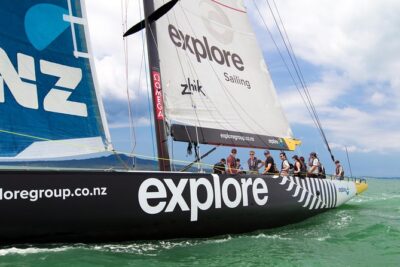
America’s Cup Sailing on Auckland’s Waitemata Harbour
Read our review →
Abel Tasman National Park: Sailing and Self-Guided Walk
Read our review →Browse the lists this tour appears in