
Reviewed · CANOES & KAYAKS
Auckland: Night Kayak Tour in Glowing Bioluminescent Waters
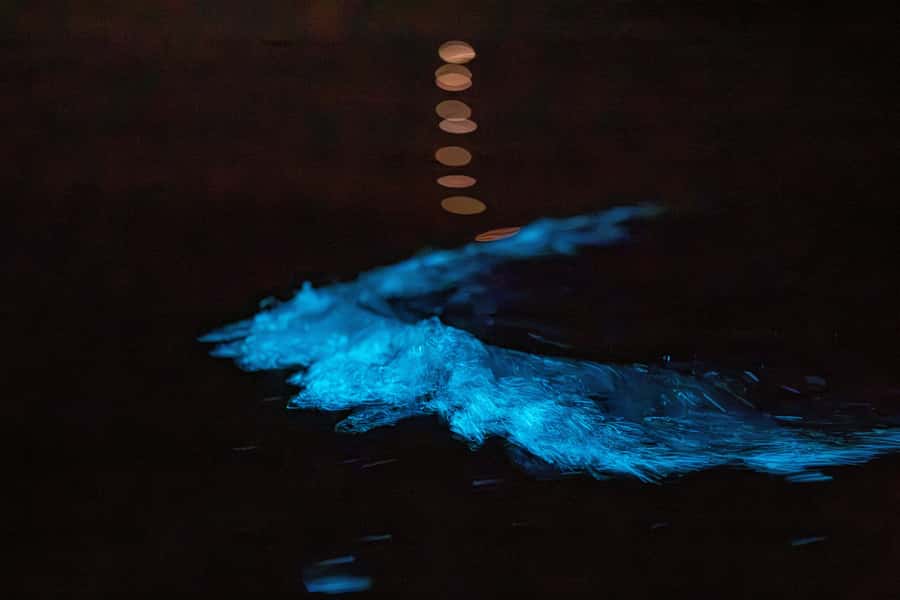
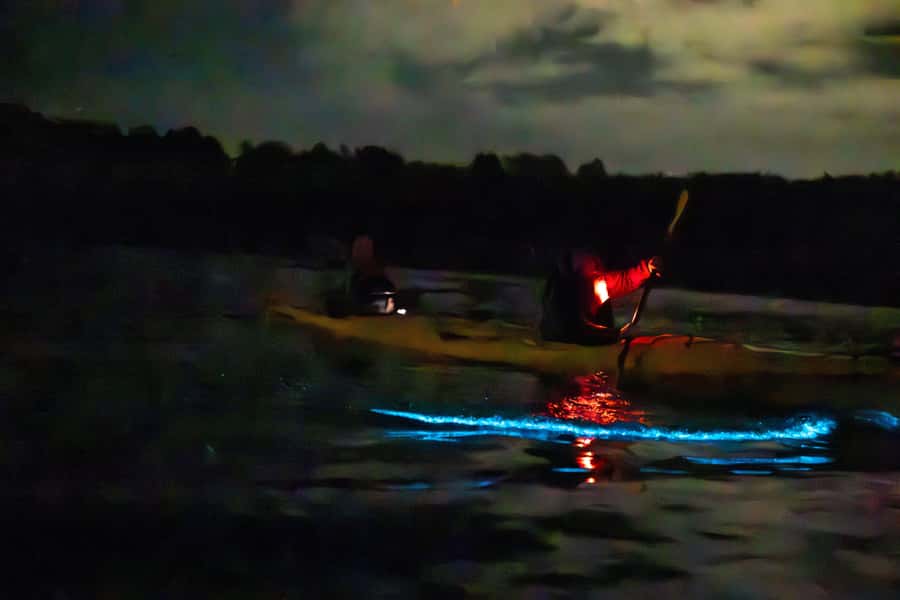
Auckland’s coastline gets a natural light show after dark. With each paddle stroke, tiny marine organisms can flash blue around your kayak, while fish may streak through the water like little shooting stars. I like the mix of star-filled sky and glowing sea, and I like that guides such as Paul, Maurice, Millie, Haley, Legend, and Conrad make the science part of the evening rather than treating the glow as a simple photo stop.
The small-group setting and low light pollution give this outing a calm, intimate feel. My main caution is that the display is a natural event, not a switched-on attraction. Moon phase, weather, water conditions, and the concentration of plankton all matter, so you should book this for the experience of being on the water at night, not for a guaranteed movie scene.
Key points at a glance
- Blue sparks with every paddle stroke: Movement through the water can trigger glowing trails from bioluminescent marine life.
- Two launch choices: Meet at Okura Boat Ramp or Waiake Beach, depending on the option you book.
- A science lesson on the water: Guides explain the four marine microorganisms involved and how they create their light.
- A short, gentle adventure: Plan on a 30-minute safety briefing, about 75 minutes of kayaking, and a 15-minute break.
- Night equipment is included: You receive a kayak, paddle, PFD, and safety light beacon.
- Transportation is optional: A pickup add-on may be available, including the Bio-Bus option from central Auckland.
Why the sea glows after sunset
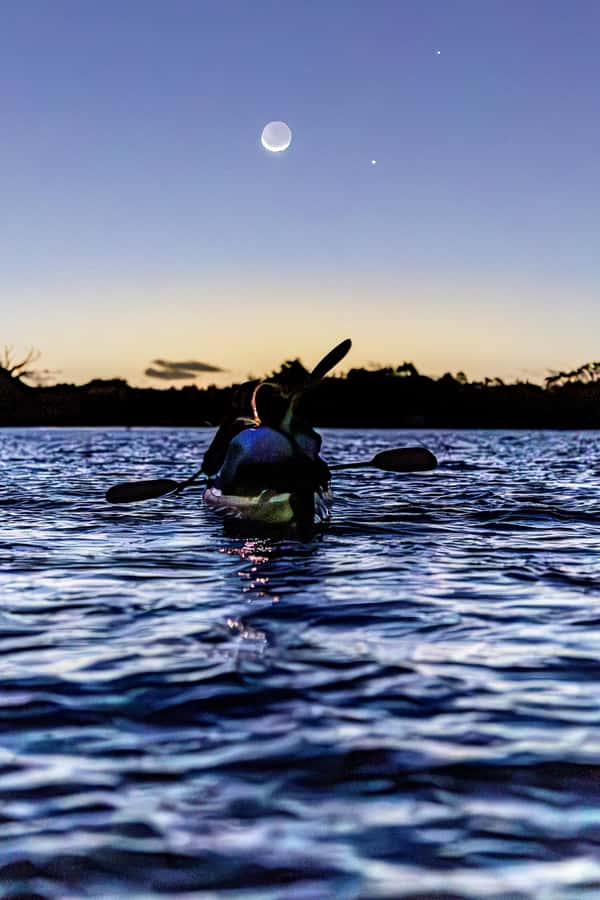
Bioluminescence is light made by living organisms. In this setting, the effect comes from tiny marine microorganisms in the water. When the water is disturbed by a paddle, a hand, or a moving fish, the organisms can produce brief flashes of blue light.
That means you are not simply looking at a glowing surface. You are helping create the show. Sweep your paddle through the water and you might see a bright line appear behind it. A fish moving past can leave a quick trail, giving the impression of a small meteor under the surface.
The tour presents this phenomenon as Sea Sparkle or Marine Aurora. Those names make sense once darkness settles in. You have a black sky overhead, a dark bay around you, and sudden points of light below. The four different marine microorganisms mentioned for the outing may not all be visible as separate species to the naked eye, but the guides explain the biology behind the effect and help you pay attention to what is happening in the water.
This is also why timing matters. Tours are arranged around favorable moon phases, since a darker sky helps you see the plankton. You still need suitable conditions, but the scheduling gives you a better chance of seeing the glow clearly.
More canoes & kayaks in Auckland:
- Bioluminescence Kayak Tour – Est. 1994
★ 4.0 · 187 reviews - Sunset kayak tour to Rangitoto Island
★ 5.0 · 168 reviews - Day sea kayak tour Rangitoto Island
★ 5.0 · 79 reviews
Arriving at Okura Boat Ramp or Waiake Beach
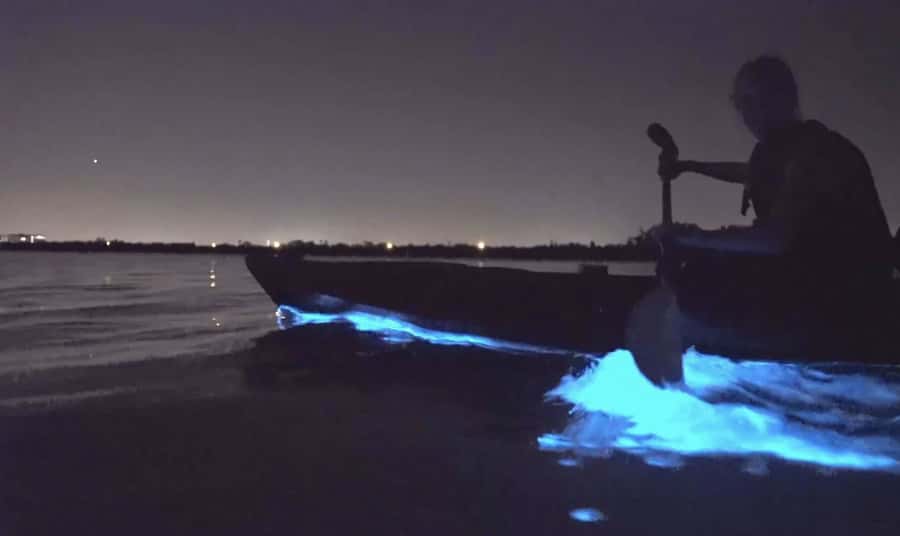
You begin at one of two locations: Okura Boat Ramp or Waiake Beach. Your meeting point depends on the option you book, so check the exact location before setting out. These are not interchangeable city-center meeting spots, and arriving at the wrong one would make for a poor start to an evening activity.
The tour begins around sunset with a welcome and safety briefing. This is useful for first-time kayakers because the guides cover how to handle the boat, use the paddle, and move safely in the dark. The briefing lasts about 30 minutes, which may sound long for a short outing, but night kayaking deserves more care than a quick daytime paddle.
You should wear clothing and shoes that can get wet or muddy. Bare feet are also allowed according to the tour information, though many people will prefer secure footwear. Bring warm layers, a hat, rain gear, water, a towel, and any personal medication you need. The temperature can feel cooler once you stop moving, and wet clothing is uncomfortable during the ride home.
The provider supplies the kayak, paddle, personal flotation device, and a safety light beacon. One particularly useful detail from the evening setup is the use of red head lamps. Red light helps people see what they are doing without flooding the water and sky with bright white light, which would make the plankton and stars harder to see.
The 30-minute safety briefing matters at night
The water may be calm, but the activity still has normal kayaking risks. Rocks, uneven ground, water, weather, hypothermia, falls, and drowning are all listed as possible hazards. You participate voluntarily and need to follow the guide’s instructions carefully.
The safety talk also helps settle the nerves of anyone who has not kayaked before. No previous kayaking experience is required, and the guides provide instruction and support throughout the outing. That makes this more approachable than a technical sea-kayaking trip, but it is still an active outdoor activity, not a seated sightseeing cruise.
Some people may prefer a single kayak. The standard arrangement can involve shared kayaks, and one participant specifically would have preferred a solo boat. If having your own kayak matters to you, ask about the arrangement before booking or consider the private-group option if available.
I like that the briefing is treated as part of the experience rather than rushed through. Once you are on the water, darkness changes your sense of distance and direction. Knowing how to hold your paddle, listen for instructions, and keep your light under control makes the rest of the evening more relaxed.
A 75-minute paddle through the dark
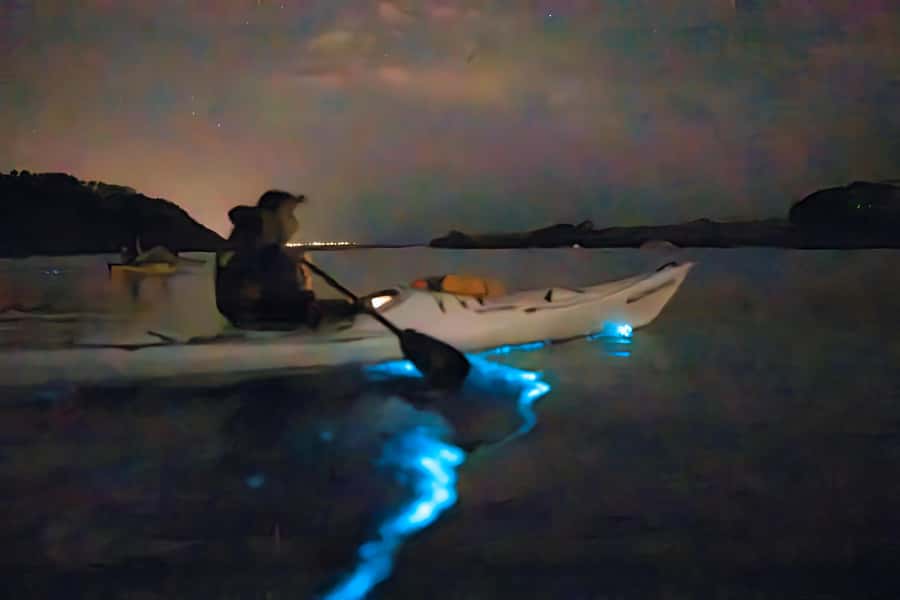
After the briefing, you launch for roughly 75 minutes of kayaking. The exact total outing can run from 90 minutes to two hours, and later tours of the night are listed as 1.5 hours long. Check the available start time and duration when booking, especially if you have a dinner reservation or evening transport afterward.
The paddle itself is not presented as a long-distance workout. The main purpose is to find and watch the glowing organisms. You move through selected coastal waters where the plankton may be concentrated, and the guides direct you toward the best viewing areas.
At first, you might notice little or nothing. As the sun fades and your eyes adjust, the water becomes easier to read. Each stroke can produce a faint flash, a swirl, or a brighter patch near the boat. The effect may be strongest when several people paddle in the same area, although you should follow the guides’ instructions rather than splashing randomly.
Fish can add another layer to the scene. Their movement may create quick luminous trails, like sparks crossing the water. These flashes are brief, so you need to watch the water around the kayak instead of keeping your attention on one fixed point.
The setting is part of the value. The activity takes you away from Auckland’s city lights to a darker coastal area. Above you, the stars may be unusually clear. Below you, the water responds to movement. The two views work together, and this is where the tour feels most different from a standard evening paddle.
Same base, a different kind of day:
- Waiheke Island: Ferry & Hop-On Hop-Off Explorer Bus Tickets
★ 4.6 · 3,311 reviews - Hobbiton & Waitomo Caves Guided Day Trip from Auckland incl lunch
★ 5.0 · 2,677 reviews - From Auckland: Hobbiton & Waitomo Caves Day Trip with Lunch
★ 4.9 · 2,505 reviews - Auckland Dolphin and Whale Watching Eco-Safari Cruise
★ 4.5 · 1,790 reviews
Guides who connect the science to the spectacle
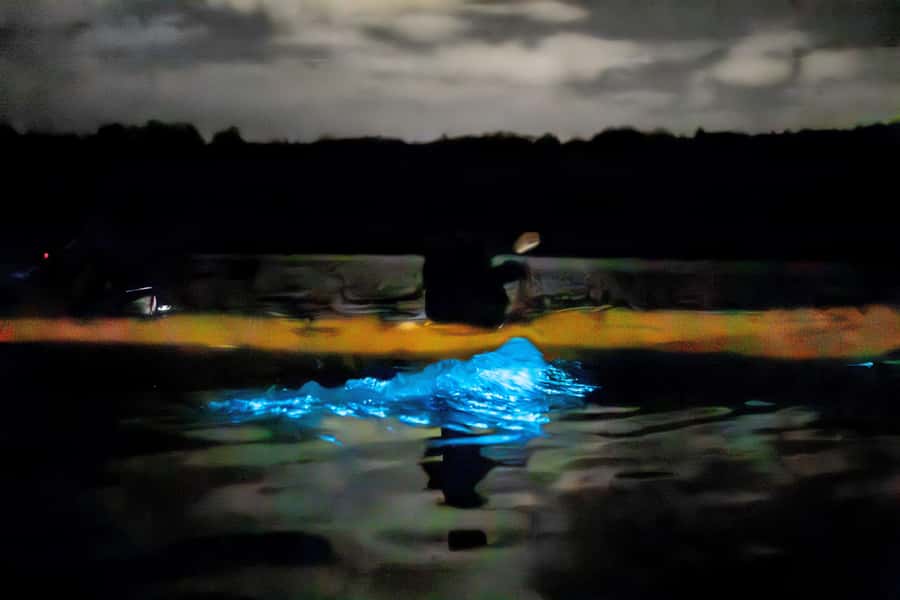
A good night tour guide has two jobs: keep you safe and help you notice what you would otherwise miss. The Social Nature Movement team appears to take both seriously. Paul and Conrad are associated with clear explanations and active help finding the glow. Maurice and Paul are praised for letting people explore while explaining the background of bioluminescence. Millie, Haley, Legend, and other guides are also named as friendly and engaged leaders.
The science is kept practical. You learn how tiny organisms make light and why a paddle stroke can trigger it. A guide with a scientific background has been especially effective at explaining the process in a way that remains easy to follow outdoors at night.
I like this part because it adds meaning without interrupting the quiet. The guides do not need to fill every moment with commentary. The best rhythm is a short explanation, a chance to paddle, then time to watch the water. You get information when it helps, followed by silence when the setting deserves it.
A private group is available, which may suit families, couples, or friends who want a more personal pace. The regular small-group format is likely the better value for solo visitors and couples who enjoy meeting other people, though the supplied information does not specify an exact maximum group size.
The 15-minute break is for watching, not rushing
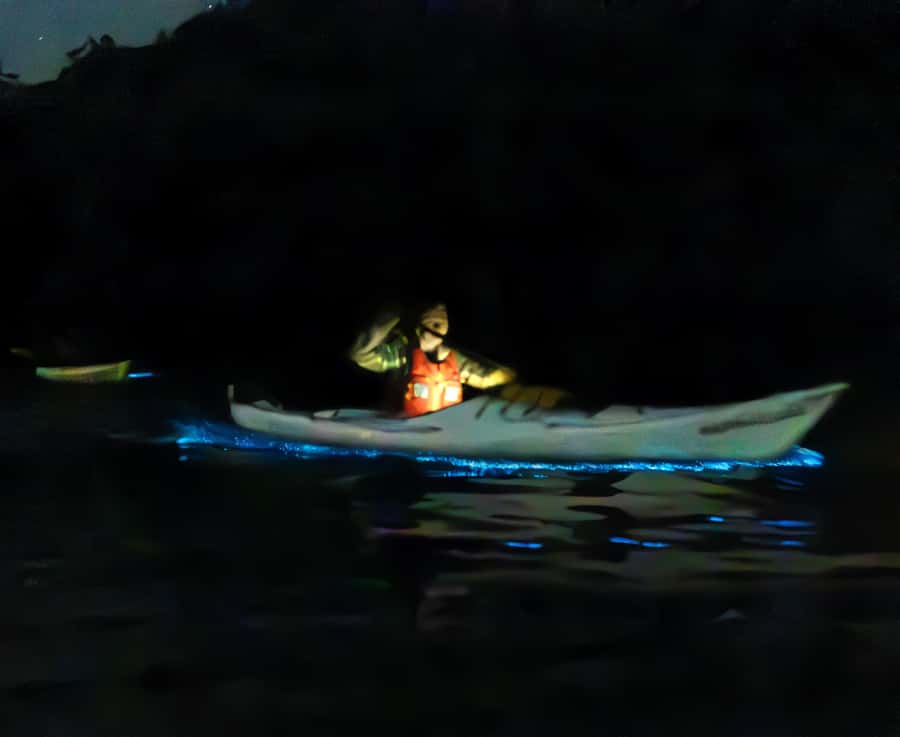
A 15-minute break is built into the schedule. This is not a major shore stop with food or facilities described in the tour details. Think of it as a pause to rest, take in the glow, and let the guides point out what is happening around you.
The break also gives you time to appreciate the quiet. The kayaking portion is fairly short, and the main focus is observing the plankton and learning about them. If you want a strenuous paddle with a long route, this may feel too brief. If you want an unusual evening activity that does not take up an entire night, the short format works well.
You should bring your own water and towel. No meal or drink is included, and alcohol and drugs are not allowed. Keep your gear simple and secure, since anything dropped into the dark water may be difficult to retrieve.
How much value do you get for $56?
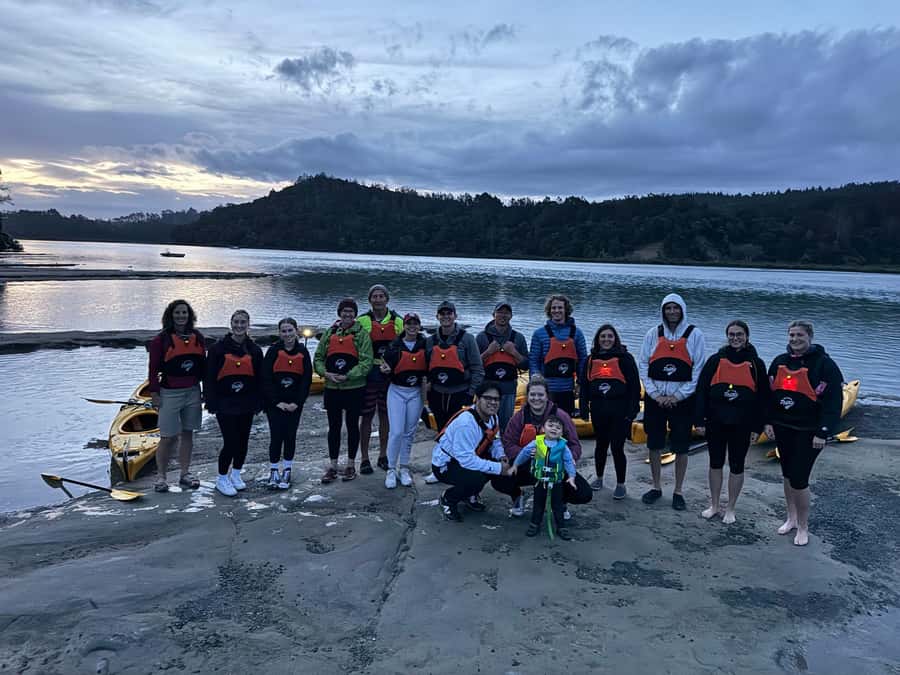
At $56 per person, the price is reasonable for a guided outdoor activity that includes the kayak, paddle, PFD, safety beacon, instruction, and a guide. You are paying for more than boat rental. The provider handles the equipment, safety planning, route choice, and the search for the best glow.
The value is strongest if you would not be comfortable arranging a night paddle on your own. Bioluminescence can be difficult to find, and the guides know how to look for it. They also provide context, which turns a pretty sight into a lesson about marine life.
Transportation is not included in the base price. It may be added at checkout, and the Bio-Bus option requires you to meet one hour before the start time at the stated coordinates. If you are staying in central Auckland and do not have a car, compare the transportation add-on with the cost and effort of getting to Okura Boat Ramp or Waiake Beach yourself.
The tour includes no promise of a certain intensity of glow. That is the main value question. You should book it if the chance to see a natural phenomenon, along with a peaceful night on the water, sounds worthwhile. You should think twice if you need a guaranteed bright display or want a long, physically demanding kayaking route.
What to bring for a comfortable night
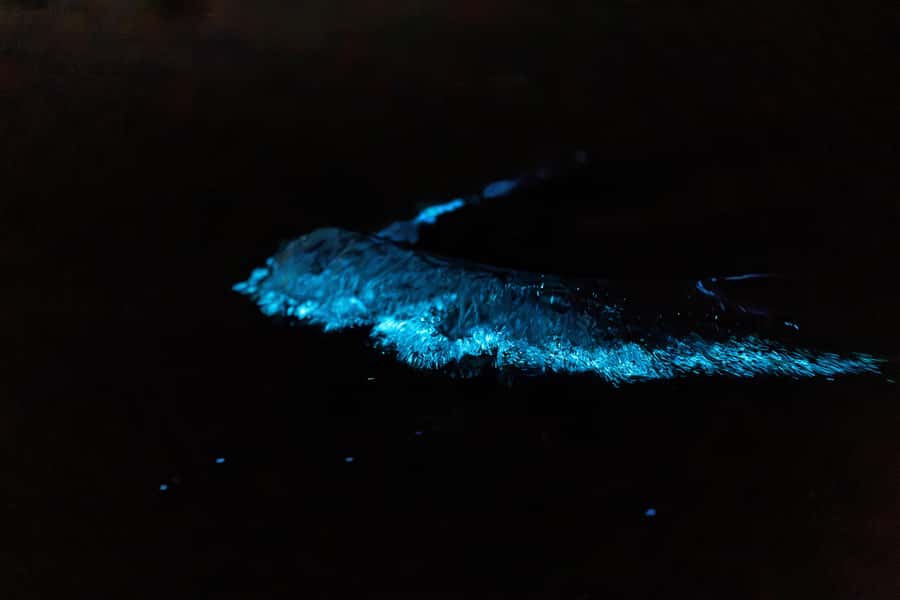
Pack for sitting still near water, not just for the paddle itself. Comfortable shoes, warm clothing, a hat, rain gear, water, a towel, and personal medication are all recommended.
Footwear deserves special attention. Choose shoes you do not mind getting wet or muddy, or go barefoot if that suits you. Avoid bringing anything precious that could be damaged by spray or an accidental drop.
A towel is useful after launching and landing. Warm layers matter because the evening air can cool quickly after sunset. You may also spend time waiting quietly for the plankton to appear, so a dry outer layer is more useful than lightweight clothing alone.
The tour does not allow alcohol or drugs. This is sensible for a night water activity and also keeps the safety briefing clear and the group focused.
Who will enjoy this Auckland night tour?
This outing suits couples looking for a quiet evening, families with older children who can follow instructions, friends wanting something different from a restaurant or bar, and solo visitors who enjoy nature-based activities.
It is also a good choice for first-time kayakers. You do not need previous experience, and the guides provide instruction. Still, you should be comfortable with the listed risks of an adventurous water activity and able to follow directions.
The tour may not suit anyone who dislikes getting wet, feels uneasy on dark water, or wants a guaranteed visual show. It is also not the best pick for someone seeking a full-length kayak expedition. The route is short, and the focus stays on the microorganisms, the stars, and the explanations.
The private-group option could help families or couples who prefer more control over the pace. For everyone else, the small-group format keeps the cost down while preserving the intimate feel of a dark, low-light-pollution setting.
Booking, cancellation, and practical timing
You can cancel up to 24 hours before the activity for a full refund. A reserve-now, pay-later option is also available, which helps if your Auckland schedule depends on weather or changing plans.
Start times vary, so check availability for your chosen date. Tours take place after sunset, and the first tour of the night may follow a different duration from later departures. The stated overall duration is 90 minutes to two hours, while later tours are listed as 1.5 hours.
The guide language is English. Transportation is an add-on rather than part of the standard ticket. Confirm the meeting point carefully because the launch may be at Okura Boat Ramp or Waiake Beach.
Should you book the glowing-water paddle?
I would book this tour if you want a gentle, unusual Auckland evening and are happy to accept nature’s uncertainty. The combination of glowing water, stars, low light pollution, and guides who explain the biology gives the outing real substance. It is not just a photo stop.
The strongest reasons to go are the guides, the carefully timed night setting, and the chance to see fish and paddle strokes create their own light. The main reasons to hesitate are the short paddle, possible shared kayaks, extra transportation cost, and the fact that the glow can vary.
At $56, it is a fair buy for a guided experience with equipment included. Bring warm clothes, protect your phone, check the meeting location, and approach the bioluminescence as a natural possibility rather than a guarantee. If you do that, this can be one of the more memorable ways to spend two hours near Auckland.
FAQ
Where does the night kayak tour start?
The tour starts at either Okura Boat Ramp or Waiake Beach, depending on the option booked.
How long does the activity last?
The stated duration is 90 minutes to two hours. Tours after the first tour of the night are listed as 1.5 hours.
How much does the tour cost?
The listed price is $56 per person.
Is transportation included?
No. Transportation is not included in the base price, but it is available as an add-on at checkout.
What is the Bio-Bus option?
The Bio-Bus is an optional transportation add-on. You must meet one hour before the start time at the location provided for that option.
Do I need previous kayaking experience?
No. Previous kayaking experience is not required. Guides provide instruction and support during the activity.
What equipment is supplied?
The tour includes a guide, kayak and equipment, a personal flotation device, and a safety light beacon.
What should I bring?
Bring comfortable shoes, warm clothing, a hat, towel, water, rain gear, and any personal medication. Wear footwear you do not mind getting wet or muddy, or go barefoot.
Can I cancel or pay later?
You can cancel up to 24 hours in advance for a full refund. A reserve-now, pay-later option is also available.
Just added in Auckland
- Auckland: Half-Day Sea Kayak Tour to Motukorea Island★ 5.0 · 6 reviews
- Auckland Food Walking Tour★ 5.0 · 73 reviews
- Auckland: Segway to North Head Volcano Summit★ 4.9 · 53 reviews
- The Tastebud Tour, award winning food tour of Auckland★ 5.0 · 124 reviews
- Day sea kayak tour Rangitoto Island★ 5.0 · 79 reviews
- Sunset kayak tour to Rangitoto Island★ 5.0 · 168 reviews
- Hobbiton Movie Set Tour with lunch from Auckland★ 5.0 · 168 reviews
- Auckland: Rotorua Wai-O-Tapu, Te Puia with Haka★ 4.9 · 161 reviews
Canoes & Kayaks, compared.
Small-Group Kayak Adventure from Franz Josef Glacier
Read our review →
Dart River Canoe and Jet Boat Experience from Queenstown
Read our review →Browse the lists this tour appears in