
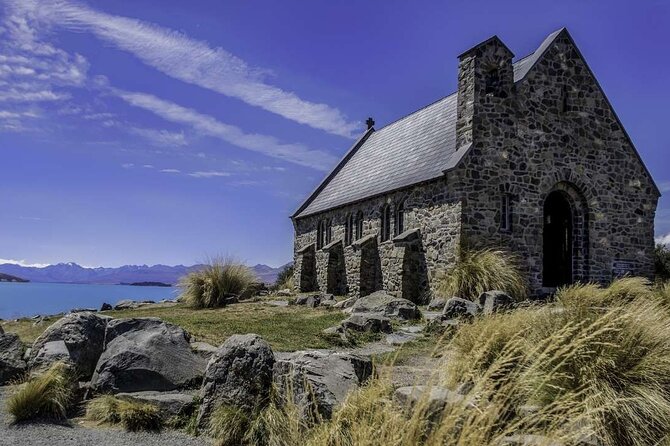
Reviewed · FRANZ JOSEF & FOX GLACIER TOURS
The Adventurer: Tasman Glacier Heli-hike
The most thrilling part of the Tasman Glacier heli-hike is the landing itself. A helicopter carries you over the ice to a remote point high on the glacier, around 4,265 feet above sea level, where you walk through a frozen world of blue holes, snow fields, tunnels, and ice walls. You get the mountain view from above, then step into the ice rather than simply admiring it from a lookout.
I like the two-part design: the flight gives you a grand view of Aoraki/Mount Cook and the glacier, while the guided walk slows things down and lets you see small details. I also like the practical gear package, since leather boots, wool socks, waterproof layers, crampons or snowshoes, and poles are supplied. The main drawback is the price, $572.23 per person, and the fact that weather can change your plans at short notice.
Key points
- A helicopter landing on Tasman Glacier: Reach remote ice that would require a long and demanding overland journey.
- A close fly-by of Aoraki/Mount Cook: The two flights are scenic in their own right, not just transport.
- Ice caves, holes, and blue formations: Your guide may lead you through unusual features and even show you water moving beneath the ice.
- Equipment is supplied: Boots, socks, crampons or snowshoes, poles, a waterproof jacket, and over-trousers are included.
- Small groups capped at 11 people: You get more room for questions and more direct attention from the guide.
- Weather controls the schedule: Flexibility is essential, and a spare half-day is a smart idea.
Why the Tasman Glacier flight is more than a scenic ride
A helicopter tour over Aoraki/Mount Cook would already be a memorable outing. This experience adds a proper walk on the Tasman Glacier, so you see the ice from two very different angles.
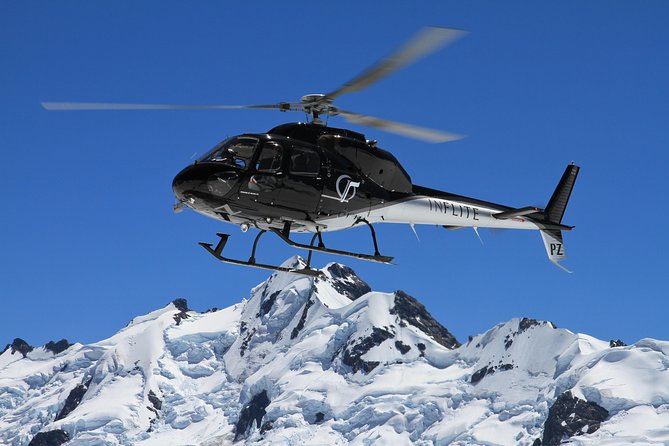
The outward flight takes you over the glacier toward a remote landing point. Along the way, you get views of New Zealand’s highest peak and the broad fields of ice below. The return flight brings another chance for mountain views, and the route may include a close pass by a glacier on a mountain face.
That matters because the helicopter is not simply a shuttle. The flight gives you the scale of the Southern Alps, while the walk shows you the texture and movement of the glacier at close range. From the air, the ice looks vast and calm. On foot, you notice cracks, hollows, ridges, meltwater, and changing shades of white and blue.
The tour takes about three hours in total. The actual time on the glacier can vary with conditions and the day’s operation. One recent outing included roughly two hours on the ice, but you should treat that as an example rather than a fixed promise.
More scenic helicopter flights in Mount Cook:
- Mount Cook: Scenic Helicopter Flight with Alpine Landing
★ 4.8 · 442 reviews - Mount Cook: Ski Plane and Helicopter Glacier Combo Flight
★ 4.6 · 271 reviews - Mount Cook: 3-Hour Tasman Glacier Helicopter Ride and Hike
★ 4.9 · 235 reviews
Taking off from Mount Cook Airport
You start and finish at Mount Cook Airport on Mount Cook Road. Plan to arrive ready for a firm departure time. Helicopter schedules are tightly arranged, and the operator cannot simply hold the aircraft for a late arrival.
The small group size, with a maximum of 11 people, is a real advantage here. You are not being moved through a large crowd. You can hear the safety briefing, ask questions, and stay closer to your guide as the group moves across the ice.
The seating arrangement may change between the outbound and return flights. The company has switched seats so everyone gets either a window or front-row view on one of the flights. That is a thoughtful touch, since helicopter views are a major part of what you are paying for.
You should bring three or four warm upper-body layers, warm trousers, sunglasses, sun protection, a hat, gloves, water, and snacks. Do not rely on jeans. They are a poor choice for cold, wet conditions and do not provide much freedom of movement.
The flight over Aoraki/Mount Cook and Tasman Glacier
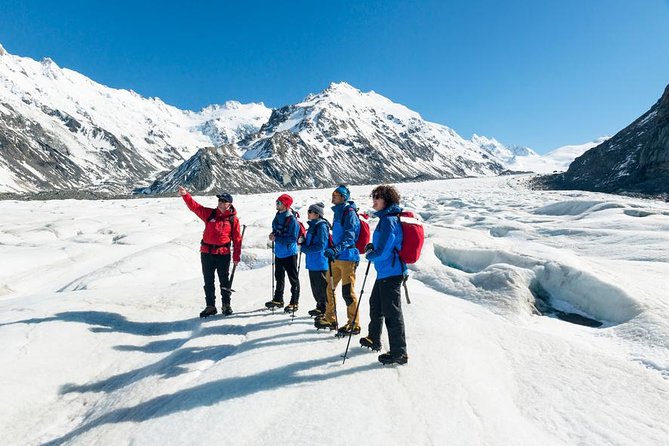
The first flight is your introduction to the scale of the area. You rise from Mount Cook Airport and head toward the glacier, with Aoraki/Mount Cook forming the main visual landmark when the weather allows.
The flight is short enough to leave plenty of time for the walk, but it is not an afterthought. The pilots add to the experience with scenic routing and, on the return, may make a close fly-by of another glacier on a mountain face. Recent outings have included views of small avalanches, steep ice, and broad snow fields.
You should keep your camera ready, but do not let it take over. Glare, window reflections, and quick changes in direction mean that the best view may last only a few seconds. Sunglasses are useful for comfort, and sun protection matters even on a cold day.
The weather can be uncertain around Mount Cook. A cloudy morning does not always mean cancellation, but the final decision rests with the operator and pilot. Some departures have been moved from morning to afternoon, while other bookings have been shifted to a later day because of weather or road closures.
This is the part of the trip that requires patience. You cannot force clear skies, and a helicopter cannot operate safely in poor conditions. If the company cancels for weather, you can choose another date or receive a full refund.
Landing on the glacier at 1,300 metres
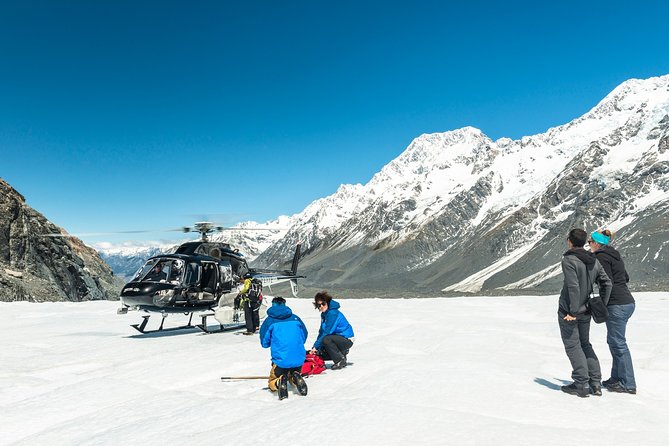
Once the helicopter lands, the experience changes from sightseeing to movement. You are fitted with the equipment needed for the conditions, then follow your guide onto the ice.
The supplied leather boots and wool socks are useful because ordinary hiking shoes are not suitable for glacier travel. Waterproof jackets and over-trousers help protect you from wind, damp snow, and meltwater. Crampons are used when appropriate, while snowshoes may be provided in winter. Adjustable walking poles are also included.
Your guide leads the route and cuts steps into the glacier when needed. This is not a marked walking path with signs and railings. The ice changes, and the guide chooses the safest route based on the day’s conditions.
A harness may be used if required. The safety equipment is part of the professional setup, but you still need to move carefully and follow instructions. This is a moderate physical activity, not a casual stroll to a photo stop.
You may walk over fresh snow, uneven ice, and sloping sections. The exact route and features depend on the glacier that day. That unpredictability is part of the appeal, though it also means you should not arrive expecting one fixed sequence of caves or formations.
More glacier trips from Mount Cook:
- Mt Cook & Tasman Glacier lookout Small Group Tour from Queenstown
★ 5.0 · 296 reviews - Mount Cook: 3 Hour Heli Hike to the Tasman Glacier
★ 4.7 · 218 reviews - Mount Cook and The Glaciers 55-Minute Helicopter Flight
★ 4.5 · 133 reviews - 45-Minute Glacier Highlights Helicopter Tour from Mount Cook
★ 5.0 · 57 reviews
Blue holes, ice caves, and moving water
The glacier walk is strongest when your guide points out details you would probably miss alone. You might see blue-white ice, tunnels, holes, channels, and small caves. One outing included a descent of about ten feet into a blue-white hole with water surging underneath.
Another included an ice tunnel, a cave, fresh snow, and glacier water. You may even get the chance to make a small slushie with glacier ice. These details turn the trip from a simple walk on snow into a closer look at how moving water and pressure shape the ice.
The colour is part of the magic. Dense glacial ice can appear blue because of the way it absorbs and reflects light. The effect is especially striking inside a hole or tunnel, where the surrounding snow looks almost white by comparison.
You will also see the glacier as an active place. Small avalanches may occur in the wider area, and meltwater can run beneath or across the ice. Your guide will decide where you can safely stand and how close you can get to any feature.
This is where a small group helps. You can stop for photographs without holding up a large procession, and your guide has a better chance to explain what you are seeing. Guides named in recent outings include Hunter, Richard, Fiona, Flav, Pawel, and Anna. The exact guide is not guaranteed, but the experience depends heavily on the person leading your group.
The guides make the difference
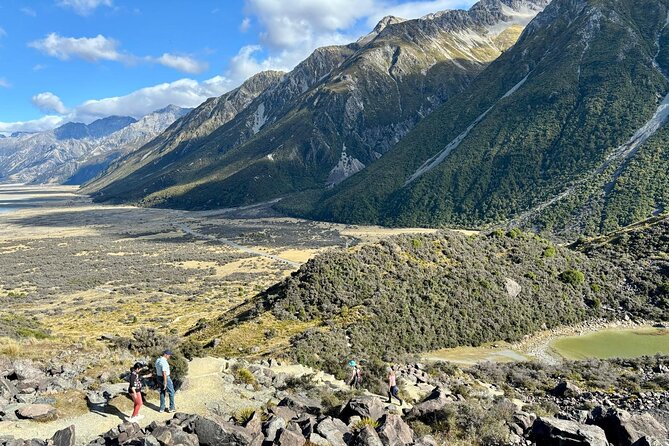
The guide is responsible for more than safety. They read the ice, choose the route, explain the formations, and decide when it is worth stopping for photographs.
Guides such as Hunter and Richard have been praised for finding interesting features and keeping the walk lively. Fiona has led groups through a strong morning outing, while Flav has been noted for making time for photographs and explaining the glacier in a friendly way. Pawel and Anna have also led outings that combined clear instruction with an easygoing approach.
You should expect a guide who is active on the ice, not someone who simply walks at the front. The description of the trip says the guides use techniques passed down from New Zealand’s mountain pioneers, including cutting steps when necessary.
The pace will not be set entirely by you. The group needs to stay together, and the guide must account for snow, ice, weather, and equipment. Still, the small maximum group size gives you a better chance to ask questions or request a brief pause for a photograph.
What the $572.23 price buys you
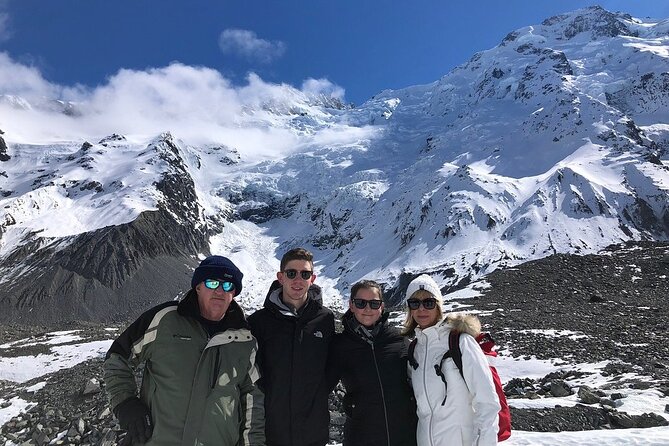
At $572.23 per person, this is a premium activity. You are paying for two helicopter flights, not just a transfer to a glacier. The price also includes a professional guide and a full set of specialist clothing and equipment.
That package has real value if you do not own mountaineering gear. You receive boots, wool socks, a waterproof jacket, over-trousers, crampons or snowshoes, poles, and a harness if needed. You only need to bring your personal warm layers, food, water, sunglasses, and sun protection.
The alternative would be arranging glacier equipment separately and reaching a remote section of Tasman Glacier without helicopter access. That is not a simple independent outing. The helicopter cuts out the long approach and gives you a mountain flight at the same time.
Still, this is not a budget choice. If you are mainly interested in seeing Aoraki/Mount Cook from the air, a scenic flight without the hike may better fit your plans. If you want to walk on the glacier and explore its ice features, the added cost makes more sense.
The experience is best value for someone who considers the flight and the walk equally important. You get the most from it if you are excited by both sweeping mountain views and small physical details such as ice walls, holes, and meltwater.
Who should book this experience
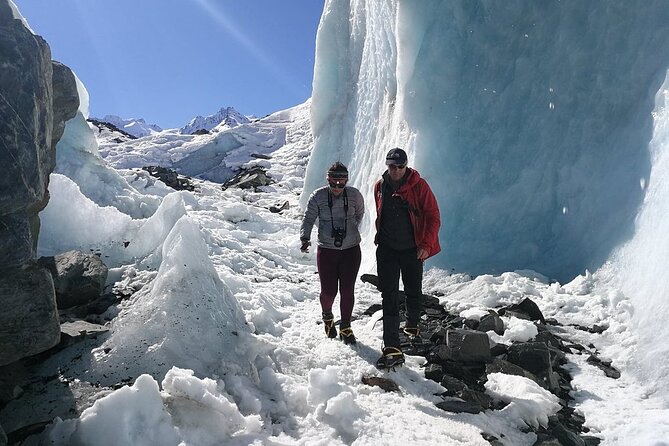
I would recommend it to active visitors who want a real mountain outing without committing to a long expedition. You need moderate fitness, comfort with cold conditions, and enough balance to walk carefully on uneven ground.
It suits couples, small groups, and solo participants who want more than a viewpoint. It also works well for a special occasion, since the helicopter flight alone feels unusual and the glacier landing adds something you cannot reproduce from the valley floor.
You should think twice if you dislike flying, have very little tolerance for schedule changes, or want a relaxed activity with no physical effort. You also need to accept that the exact route, ice features, and time outside depend on weather and glacier conditions.
Parents should check the operator directly about the suitability of the activity for children, since no child age policy is provided here. The available information confirms a moderate fitness requirement but does not give a detailed medical or age rule.
Planning around weather and cancellation terms
Keep this outing early in your Mount Cook schedule rather than leaving it until the final few hours before you depart. Weather can cancel a flight, and road conditions can also affect plans. A spare day gives you a better chance of taking the trip if the first departure does not operate.
You can cancel for a full refund up to 24 hours before the local start time. Cancellations or changes inside that window are not refunded or accepted. If the operator cancels because of poor weather or because the minimum number is not met, you can choose another date or receive a full refund.
Do not assume the aircraft can wait if you are late. Missing the confirmed departure may result in a charge for the full cost if the space cannot be resold.
Is the Tasman Glacier heli-hike worth booking?
I would book this if you want a high-impact Mount Cook experience and can accept the cost and weather risk. The combination of helicopter views, a guided glacier walk, specialist gear, and a small group gives you far more than a standard scenic flight.
The best reason to choose it is the change in scale. You first see the Southern Alps from above, then stand on the ice and notice blue tunnels, moving water, snow texture, and cracks beneath your boots.
Skip it if $572.23 would put pressure on the rest of your trip, or if you need a guaranteed departure time. For the right person, though, this is one of the most distinctive ways to experience Tasman Glacier without undertaking a major mountaineering trip.
FAQ
How long does the Tasman Glacier heli-hike last?
The experience lasts approximately three hours. Time on the glacier can vary with weather, safety conditions, and the day’s route.
Where does the tour start and finish?
You start at Mount Cook Airport on Mount Cook Road in the Canterbury Region. The activity ends back at the same meeting point.
What equipment is included?
The tour includes leather boots, wool socks, a waterproof jacket, over-trousers, crampons, snowshoes in winter when appropriate, adjustable walking poles, and a harness if required.
What should I bring?
Bring three or four warm upper-body layers, warm trousers rather than jeans, sunglasses, sun protection, a hat, gloves, water, and snacks.
Does the tour operate in all weather?
No. The experience depends on favourable weather. If poor weather causes cancellation, you will be offered another date or a full refund.
How many people can join the group?
The maximum group size is 11 people.
Can I cancel for a full refund?
Yes, if you cancel at least 24 hours before the experience start time. Cancellations or changes made less than 24 hours before departure are not refunded or accepted.
More hiking & trekking in Mount Cook
- Glentanner High Country Heli Hike
★ 5.0 · 52 reviews - Mount Cook: 3-Hour Tasman Glacier Heli-Hike
★ 4.5 · 29 reviews - Mount Cook: Glentanner High Country Heli Hike
★ 5.0 · 7 reviews - Franz Josef Glacier Heli-Hike
★ 4.5 · 618 reviews
Just added in Mount Cook
- Skydive Mt. Cook – 70+ Seconds of Freefall from 16,500ft★ 5.0 · 5 reviews
- Mt Cook to Christchurch One-Way Small Group Tour via Lake Tekapo★ 5.0 · 16 reviews
- Skydive Mt. Cook – 45+ Seconds of Freefall from 13,000ft★ 5.0 · 14 reviews
- Mount Cook: Mountains High 40-Minute Helicopter Flight★ 5.0 · 53 reviews
- Skydive Mt. Cook – 20+ Seconds of Freefall from 10,000ft★ 5.0 · 5 reviews
- Mt Cook & Lake Tekapo 2-Day Small Group Tour from Queenstown★ 5.0 · 15 reviews
- Mt Cook to Queenstown Small Group Tour (One-Way)★ 4.5 · 25 reviews
- Mount Cook: Alpine Vista Helicopter Flight with Alpine Landing★ 4.5 · 39 reviews
Franz Josef & Fox Glacier Tours, compared.
Franz Josef Glacier: Helicopter Flight & Alpine Landing
Read our review →
Small-Group Kayak Adventure from Franz Josef Glacier
Read our review →
Mount Cook, Lake Tekapo and Tasman Glacier Tour from Christchurch
Read our review →
Franz Josef & Fox Glaciers Helicopter Flight & Snow Landing
Read our review →
Pilot’s Choice: 2 Glaciers & Snow Landing – 35min
Read our review →Browse the lists this tour appears in