
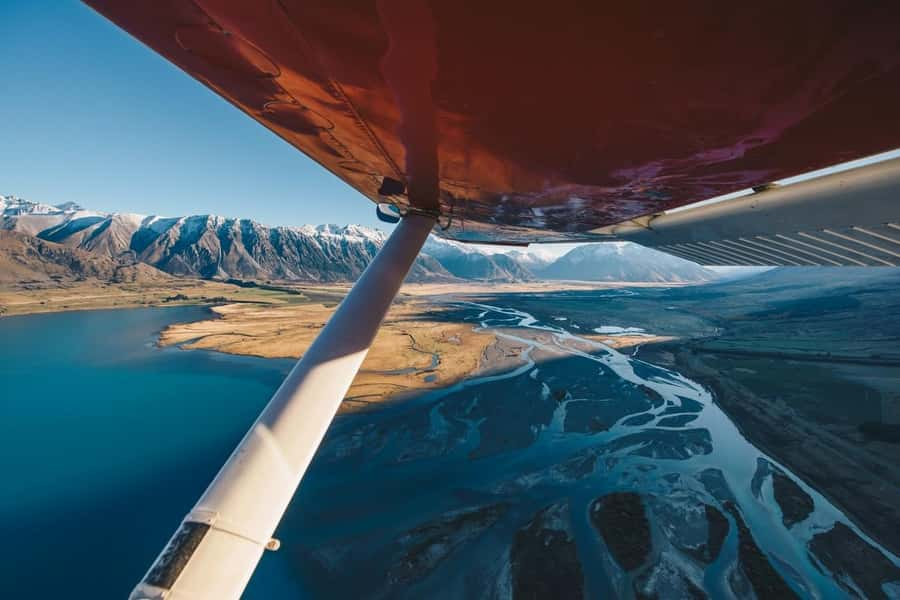
Reviewed · MOUNT COOK & LAKE TEKAPO TOURS
Mt Cook: 55-Minute Scenic Flight in Helicopter or Ski Plane
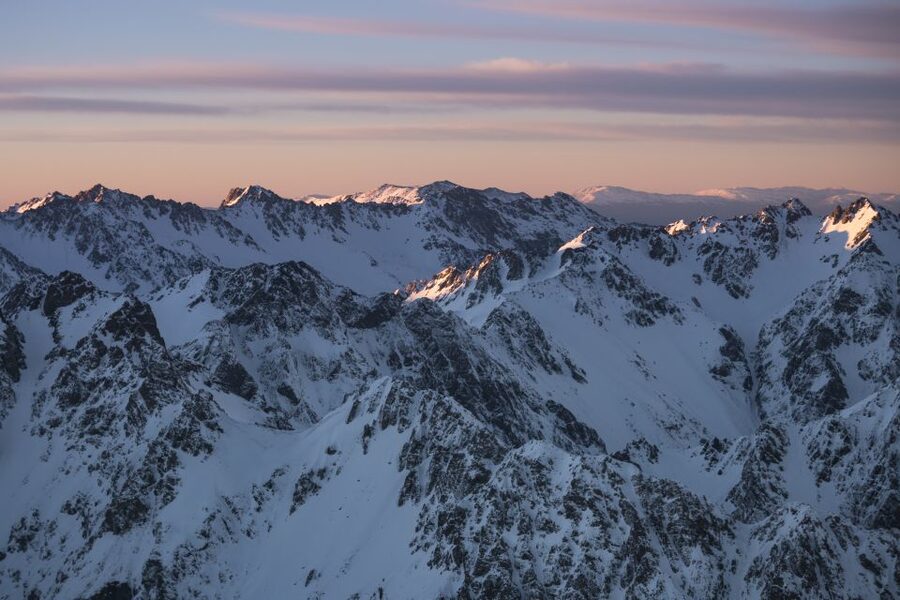
A ski plane or helicopter takes you from the Mt Cook area over the Southern Alps, across the Main Divide, and toward the West Coast glaciers. The route packs a remarkable amount into 55 minutes: Fox and Franz Josef Glaciers, Mount Tasman, Aoraki Mount Cook, the Tasman Glacier, and the Hochsteter Icefall.
I like the small group size of six, which gives the flight a more personal feel than a large sightseeing aircraft. I also like the flexibility shown by the operator: when weather shortened one ski-plane flight, a passenger was later moved to a helicopter flight instead. The main caution is seating. One passenger had a poor view from a middle seat behind the rotor blade, so your window position may affect how much you see.
Key points to know before booking
- 55 minutes in the air: Long enough to cross the Main Divide, see West Coast glaciers, and circle the Aoraki Mount Cook area.
- Two aircraft options: The experience can operate by helicopter or ski plane, with the exact aircraft subject to conditions and scheduling.
- A glacier route with variety: You may see Fox Glacier, Franz Josef Glacier, the Tasman Glacier, the Grand Plateau, and Hochsteter Icefall.
- Small groups of up to six: This keeps the flight intimate, but seating still matters, especially on a helicopter.
- Weather controls the day: Poor visibility can lead to cancellation, rescheduling, or a shorter flight.
- Bring a camera, leave bags behind: Phones and cameras are allowed, but bags and selfie sticks are not.
A 55-minute route through the Southern Alps
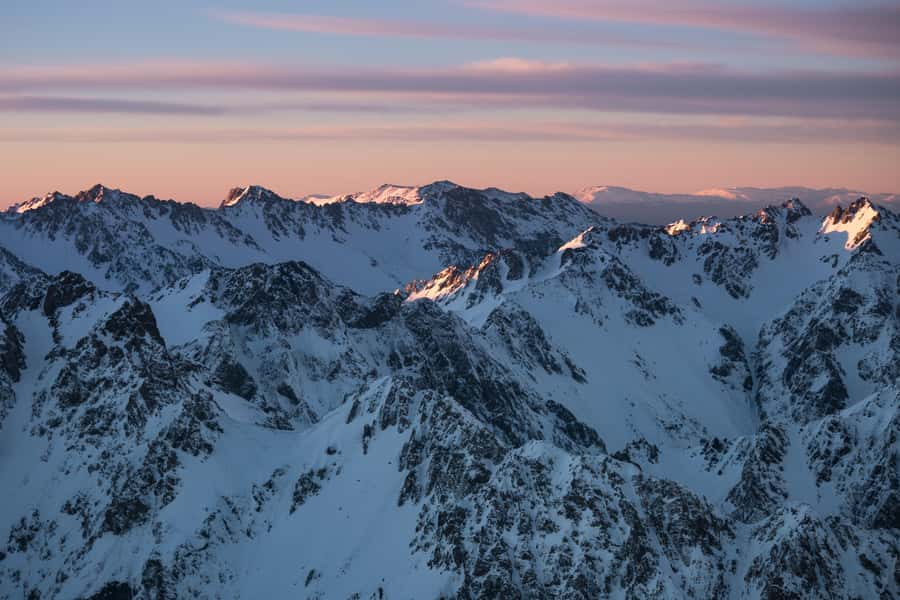
This flight is designed as a wide circuit rather than a quick look at one mountain. You start near Aoraki Mount Cook and head across the Main Divide toward the West Coast. From the first climb, you get views of the snow-covered peaks and changing ice fields below.
The route then takes you toward Fox Glacier and Franz Josef Glacier. These are among the most memorable parts of the flight because the view changes from high mountain peaks to long tongues of ice flowing toward the coast. You are not landing at both glaciers, but you do get an aerial view of their scale and position within the Southern Alps.
From there, the aircraft tracks north along the Tasman Sea before crossing the snowy divide again. That crossing gives the flight a useful sense of geography. From the air, you can see how quickly the region changes from the West Coast to the inland side of the mountains.
The return route follows the Tasman Glacier and brings you back toward Mount Cook National Park. The final section passes through the Grand Plateau and near the Hochsteter Icefall, then under the east face of Aoraki Mount Cook before descending over the Tasman Terminal Lake.
This is a strong route for anyone who wants more than a single mountain flyover. You see several major peaks and glaciers, plus the relationship between the West Coast, the Main Divide, and the Tasman Glacier. The tradeoff is that the 55-minute schedule leaves little room for pauses. The aircraft keeps moving, so you need to watch, listen, and photograph quickly.
More scenic helicopter flights in Mount Cook:
- Mount Cook: Scenic Helicopter Flight with Alpine Landing
★ 4.8 · 442 reviews - Mount Cook: Ski Plane and Helicopter Glacier Combo Flight
★ 4.6 · 271 reviews - Mount Cook: 3-Hour Tasman Glacier Helicopter Ride and Hike
★ 4.9 · 235 reviews
Mount Cook, Tasman, and Sefton from above
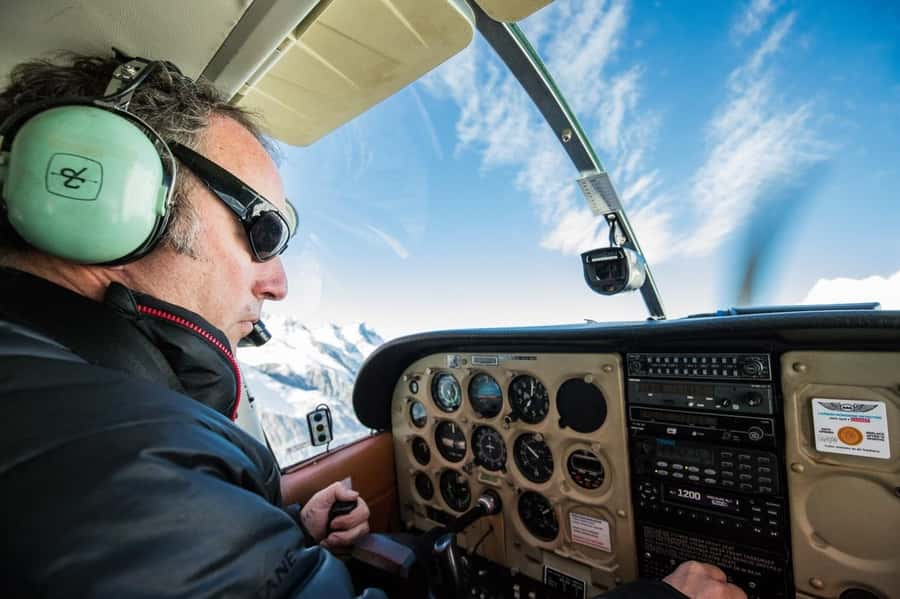
Aoraki Mount Cook is the star of the flight, but it is not the only peak in view. The route also includes Mount Tasman and Mount Sefton, giving you a broader look at the highest part of New Zealand’s South Island.
The most dramatic section comes near the east face of Aoraki Mount Cook. The flight passes beneath this face before heading down toward the Tasman Terminal Lake. That angle matters. A mountain seen from a valley can appear massive, but an aerial view shows its ridges, snow shelves, and nearby ice fields in one frame.
The Tasman Glacier gives the return journey a different mood. It is a major feature of the area, and viewing it from above helps you understand its width and long route through the mountains. The terminal lake marks the lower end of that glacial system and provides a clear visual finish to the flight.
Mount Sefton adds another striking peak to the route, while Mount Tasman helps fill out the larger view of the Southern Alps. You will not spend a separate stop at each mountain. Instead, the aircraft links them in one continuous circuit, with commentary from an English-speaking guide or pilot explaining what you are seeing.
Ski plane or helicopter: what the choice means
The experience is offered in either a ski plane or helicopter. Both give you an aerial view, but they create different kinds of outings.
A ski plane feels closely tied to the high snowfields. One passenger described landing and taking off from a glacier as a particularly memorable part of the trip. That detail is important, but you should not assume every departure includes a glacier landing. The available aircraft and conditions determine what happens on the day.
A helicopter usually gives you a more direct sense of the mountain walls and ice formations. Its ability to fly close to steep terrain can make the peaks feel immediate. It may also be the replacement option if a ski-plane flight cannot operate as planned. In one case, a passenger was moved to a helicopter after weather affected the original flight.
You may not have complete control over which aircraft operates. If you have a strong preference, check the available option when booking and confirm it with the operator. Even then, weather and safety take priority.
The small group limit is a real benefit. With no more than six participants, the briefing and commentary should feel less like a mass sightseeing ride. Still, a small group does not guarantee every person an equally clear view. A three-seat row can put one passenger behind a rotor blade, pilot, or another obstruction. If the operator discusses seating before takeoff, ask where the clearest view is likely to be.
Why weather matters more here than on a normal flight
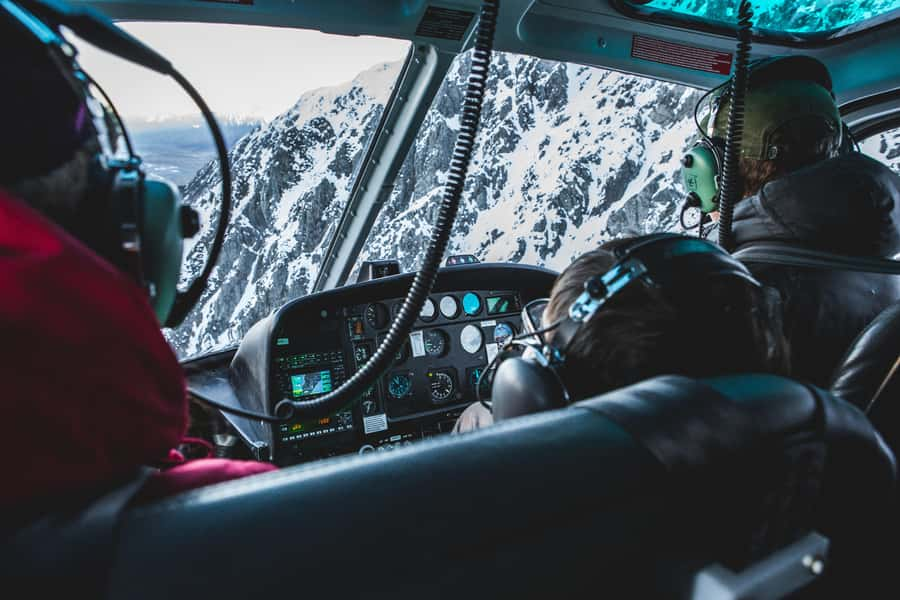
The Southern Alps can change quickly, and this flight depends on visibility around high peaks and glaciers. A cloudy day does not simply mean a less attractive view. It can make the route unsafe or remove the very sights you are paying to see.
The operator may cancel the flight for safety reasons, offering a full refund or a new time. A flight may also be shortened if conditions change after departure. That happened to one passenger, followed by a later cancellation and a move to a helicopter flight.
I would plan this activity early in your Mt Cook stay if possible. The stated cancellation policy allows a full refund when you cancel at least 24 hours ahead, and weather cancellations are handled with a refund or rescheduling. The practical advantage of going early is time. If clouds interfere, you may have a chance to try again rather than losing your only available afternoon.
Do not build a tight connection around the flight. The starting times vary by availability, and conditions may change. A flexible schedule is more useful than a rigid plan here.
Other Mount Cook and Tekapo days:
- Mt Cook Small Group Scenic Day Tour from Queenstown
★ 5.0 · 407 reviews - Mt Cook & Tasman Glacier lookout Small Group Tour from Queenstown
★ 5.0 · 296 reviews - Mount Cook: 3 Hour Heli Hike to the Tasman Glacier
★ 4.7 · 218 reviews - Mount Cook and The Glaciers 55-Minute Helicopter Flight
★ 4.5 · 133 reviews
The view from your seat
A scenic flight sounds simple, but aircraft seating affects the result. One passenger reported very poor visibility from a middle seat immediately behind the rotor blade, pilot, and another passenger. That is a specific warning worth taking seriously.
You can use your phone or camera during the flight, so keep your attention ready for sudden views of the glaciers and peaks. Bags are not allowed, and selfie sticks are prohibited. Wear comfortable clothes, but avoid bringing extra items that you hope to keep with you in the cabin.
The best approach is to photograph in short bursts and then put the camera down. Glaciers and mountain faces can appear and disappear as the aircraft changes direction. Commentary also adds value, since you may not recognize the Grand Plateau, Hochsteter Icefall, or different sections of the Tasman Glacier on your own.
Visibility from one seat may not match visibility from another. If getting clear photographs is your top priority, ask about the seating arrangement before boarding. The information provided does not promise a particular seat, so do not assume a window position is guaranteed.
The safety limits you need to know
This experience is not suitable for people with mobility impairments. The operator also lists a maximum passenger weight of 254 pounds, or 115 kilograms.
There is another weight-related condition that applies to the whole group. If the combined weight of all passengers reaches the aircraft’s safety limit, your flight may be rescheduled. That is not a sign that something has gone wrong, but it can affect your timetable.
The preflight safety briefing is included. Listen closely, especially if you have not flown in a helicopter or ski plane before. The flight is short enough to feel manageable for many first-time passengers, but it is still a mountain flight in a small aircraft.
A verified booking described helpful staff and praised a pilot named Angus. You cannot assume Angus will operate your flight, but the comment points to the importance of the crew in a small-group experience. A clear briefing and calm pilot matter just as much as the views.
Is $447 a fair price?
At $447 per person, this is a major expense. It is not an inexpensive way to see Mt Cook, and food or drinks are not included. You are paying for the aircraft, the 55-minute route, the safety briefing, and live commentary, not for a meal or a ground-based attraction.
The value depends on what you want from your South Island trip. If you only need a quick photo of Aoraki Mount Cook, the price may feel hard to justify. If you want to see the wider mountain region, including both West Coast glaciers and the Tasman Glacier in one outing, the flight covers ground that would take much longer to experience from below.
Aerial viewing also provides context that roads and walking routes cannot. You can see the Main Divide, the movement of the glaciers, the high plateaus, and the connection between major peaks. That makes the flight especially useful if you have limited time in the Mt Cook area.
The risk is that bad weather can reduce the experience. Even with a refund or reschedule option, a cancellation can disrupt your day. I would book it when the route itself matters to you, not simply because it looks like a good-weather photo opportunity.
Who will enjoy this flight most?
I would recommend this experience to anyone who wants a broad view of the Southern Alps in a short period. It suits photographers, mountain fans, first-time visitors to Mt Cook, and people who cannot spend several days walking through the region.
It is also a good fit if you want to compare the character of the West Coast glaciers with the eastern side of the divide. The route gives you that contrast without requiring a long overland journey.
It may not suit you if you dislike small aircraft, need guaranteed seating, or cannot keep your schedule flexible. The flight may be changed by weather, and the view from one seat may be less clear than from another.
People with mobility impairments should not book this activity based on the stated restrictions. Anyone above the listed weight limit should also check directly before reserving.
Practical advice for making the most of it
Book with enough time in your itinerary for a weather change. A spare half-day or later departure can make the difference between accepting a cancellation and taking the flight.
Wear comfortable clothes and keep your hands free. Since bags are not allowed, avoid arriving with gear you expect to carry aboard. Phones and cameras are permitted, so a compact camera or phone is enough for most people.
Ask about the aircraft and seating if those details are important to you. The product allows a helicopter or ski plane, and the operator may alter the plan for safety or operational reasons. You should treat the aircraft type as part of the day’s conditions, not as an absolute promise unless confirmed.
Listen to the commentary. The route moves quickly, and the guide can point out features that are easy to miss. The flight is not just a view through a window. The explanation helps you understand what you are looking at and why the route crosses the divide twice.
Should you book the Mt Cook scenic flight?
Book it if you want to see the Southern Alps from several angles in one 55-minute outing and can accept weather and seating uncertainty. The combination of Aoraki Mount Cook, Mount Tasman, Mount Sefton, Fox Glacier, Franz Josef Glacier, and the Tasman Glacier gives the flight real range.
I would be more cautious if $447 is a stretch or if you have only one narrow time slot. In that case, a cancellation or poor visibility could be frustrating, even with the refund option.
For the right passenger, this is one of the most efficient ways to understand the scale of Mt Cook National Park. Go in with flexible timing, modest expectations about your exact seat and aircraft, and a camera you can use quickly. If the weather cooperates, the route offers far more than a single mountain photograph.
FAQ
How long is the scenic flight?
The flight lasts 55 minutes.
Is the flight by helicopter or ski plane?
The experience operates in either a helicopter or ski plane. The aircraft can depend on conditions and scheduling.
Which mountains can I see?
The route includes Aoraki Mount Cook, Mount Tasman, and Mount Sefton.
Can I see Fox and Franz Josef Glaciers?
Yes. The route provides aerial views over Fox Glacier and Franz Josef Glacier.
Will I see the Tasman Glacier?
Yes. The flight crosses back over the Southern Alps to the Tasman Glacier and later continues toward the Tasman Terminal Lake.
Is there a glacier landing?
One reported flight landed and took off from a glacier, but a glacier landing is not guaranteed in the supplied activity details.
Can I use my phone or camera?
Yes. Phones and cameras are allowed during the flight.
Can I bring a bag or selfie stick?
No. Bags and selfie sticks are not allowed.
What happens if bad weather cancels the flight?
You will be offered a full refund or a rescheduled flight if the operator cancels because of weather.
Is the flight suitable for everyone?
No. It is not suitable for people with mobility impairments or anyone over 254 pounds, or 115 kilograms. A flight may also be rescheduled if the combined passenger weight reaches the aircraft’s safety limit.
More Skiing in Mount Cook
- 45-Minute Mount Cook Ski Plane and Helicopter Combo Tour
★ 4.5 · 107 reviews - 45-Minute Glacier Highlights Ski Plane Tour from Mount Cook
★ 5.0 · 19 reviews - 55 minute Grand Circle Ski Plane
★ 5.0 · 16 reviews
Just added in Mount Cook
- Skydive Mt. Cook – 70+ Seconds of Freefall from 16,500ft★ 5.0 · 5 reviews
- Mt Cook to Christchurch One-Way Small Group Tour via Lake Tekapo★ 5.0 · 16 reviews
- Skydive Mt. Cook – 45+ Seconds of Freefall from 13,000ft★ 5.0 · 14 reviews
- Mount Cook: Mountains High 40-Minute Helicopter Flight★ 5.0 · 53 reviews
- Skydive Mt. Cook – 20+ Seconds of Freefall from 10,000ft★ 5.0 · 5 reviews
- Mt Cook & Lake Tekapo 2-Day Small Group Tour from Queenstown★ 5.0 · 15 reviews
- Mount Cook: Alpine Vista Helicopter Flight with Alpine Landing★ 4.5 · 39 reviews
- Mount Cook and The Glaciers 55-Minute Helicopter Flight★ 4.5 · 133 reviews
Mount Cook & Lake Tekapo Tours, compared.
Mt Cook Small Group Scenic Day Tour from Queenstown
Read our review →
Mount Cook, Lake Tekapo and Tasman Glacier Tour from Christchurch
Read our review →
Tekapo Shuttle: Mt Cook Day Tour via Pukaki & Tasman Lake
Read our review →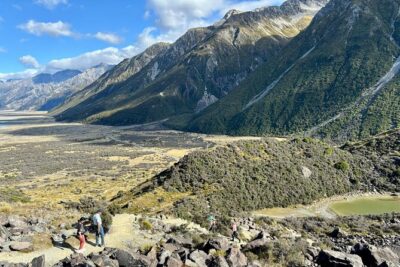
Mt Cook & Tasman Glacier lookout Small Group Tour from Queenstown
Read our review →Browse the lists this tour appears in