
Reviewed · SCENIC HELICOPTER FLIGHTS
Rotorua: Floatplane Flight with Orakei Korako Landing
The best part of this Rotorua outing is the river landing at Orakei Korako. You fly over volcano craters and steaming parks, then skim along the Waikato River before touching down beside a geothermal valley. I especially like the combination of big aerial views and a one-hour walk on solid ground. You get the grand picture first, then see the hot springs and terraces close up.
I also like the tiny group, limited to six people, and the chance to see places that are hard to connect in a normal day of sightseeing. The tradeoff is the compact aircraft: you need to be comfortable climbing in and out of a small plane, and the ride can be bumpy. At $505 per person, this is a special-occasion splurge, not a cheap way to get from point A to point B.
Key details at a glance
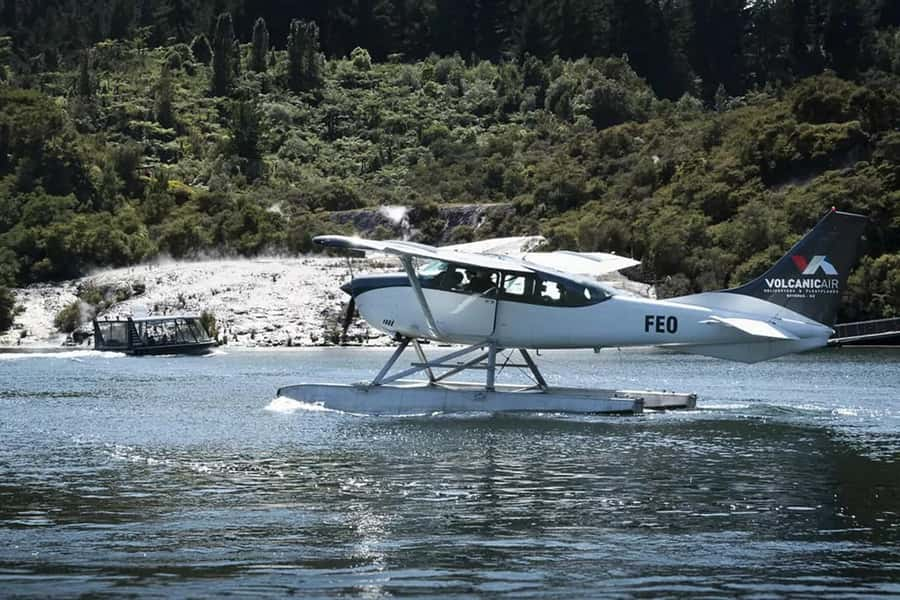
- River landing: The floatplane lands on the Waikato River at Orakei Korako, then docks beside native bush.
- Volcanic views: You fly over the 17-kilometer rift of Mount Tarawera, Waimangu Volcanic Valley, Frying Pan Lake, Inferno Crater, and Wai-O-Tapu.
- One-hour walk: Orakei Korako gives you time to see geysers, mud pools, hot springs, silica terraces, and a thermal cave.
- Small aircraft: The plane has six small bucket seats, so the experience feels personal but not spacious.
- Pilot commentary: Pilot Ben has been praised for friendly, clear explanations and confident handling.
- Two-hour outing: The flight and landing are designed as one compact experience from Volcanic Air’s Lake Rotorua base.
Why this flight offers more than a scenic ride
Rotorua is easy to enjoy from ground level, but the region makes much more sense from above. Its lakes, volcanic cones, farmland, forest, and steaming thermal zones are spread across a broad area. A floatplane lets you connect them in a single two-hour outing.
From the air, you can see the relationship between Rotorua’s lakes district and its volcanic past. Lake Rotorua, Mokoia Island, Sulfur Bay, native forest, and open farmland appear in quick succession. You may even try to count all 14 lakes as the plane moves across the district, though the changing views make that more of a fun challenge than a formal activity.
This is also a flight with a clear purpose. You are not simply circling Rotorua and returning to the pier. The aircraft carries you to Orakei Korako, where you leave the plane for a proper walk through an active thermal area. That second half matters. It gives you time to slow down and look closely after the fast-moving views from the air.
More scenic helicopter flights in Rotorua:
- Mt. Tarawera Volcano Scenic Floatplane Tour from Rotorua
★ 5.0 · 42 reviews - Mt Tarawera Helicopter Tour with Volcano Landing
★ 5.0 · 40 reviews - Rotorua: Scenic Flight over Mt Tarawera & Waimangu Valley
★ 4.9 · 25 reviews
Leaving Lake Rotorua for Mokoia Island and Sulfur Bay
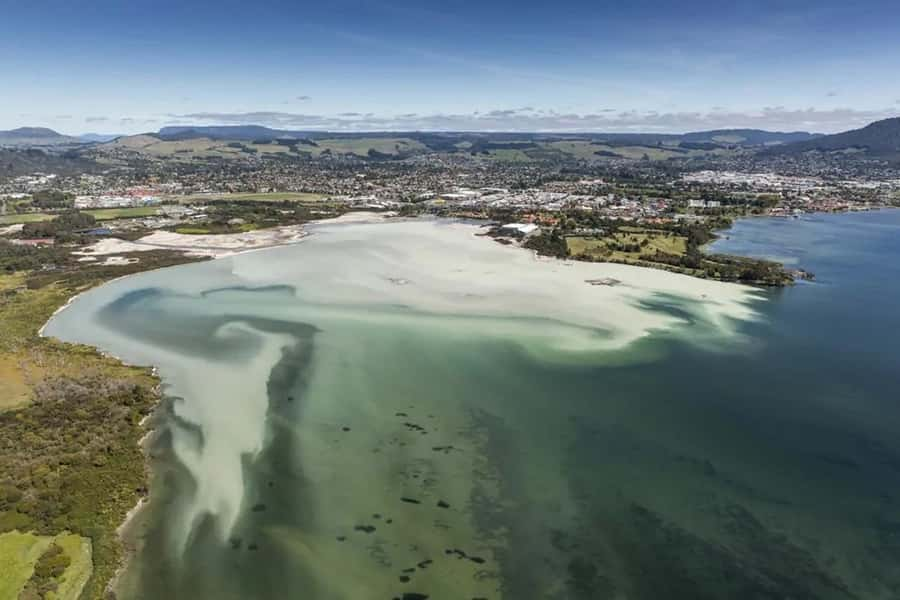
The trip begins at Volcanic Air beside Lake Rotorua. After takeoff, the aircraft gives you an aerial view of the city, the lake, Mokoia Island, and Sulfur Bay. This opening section helps you get your bearings before the flight heads toward the larger volcanic sights.
A floatplane is a different way to leave the shore. The water-based departure and return add character, while the small cabin keeps the group close to the pilot. That also means the aircraft is compact. One person described it as having six small bucket seats and noted that you need some flexibility to get in and out.
The company advises comfortable shoes, a hat, sunscreen, and water. Those items are mainly for the walk at Orakei Korako, but they make sense from the start. Bring a camera if you want to record the changing views, though the short flight segments and reflections can make photography a little hit or miss.
Mount Tarawera and the 17-kilometer volcanic rift
The flight then heads toward Mount Tarawera, a dormant volcano with a major place in Rotorua’s story. Its eruption reshaped the area and destroyed the Pink and White Terraces, once described as the eighth wonder of the world. Those terraces are now covered by lakes, so the aerial view gives you a sense of what changed, even though you cannot see the terraces themselves.
The most striking feature is the 17-kilometer volcanic rift. From above, its deep craters and colored surfaces show the force of the eruption more clearly than a ground-level viewpoint can. This is one of the strongest reasons to choose the floatplane rather than visit only one thermal park by road.
The aircraft may jostle as it moves through the air. That is part of the experience, but it is worth considering if you dislike small-plane rides. The flight is not sold as a smooth, quiet sightseeing cruise. It is a close-up look at a volcanic region from a small aircraft, with the occasional bump included.
Waimangu, Frying Pan Lake, and Inferno Crater
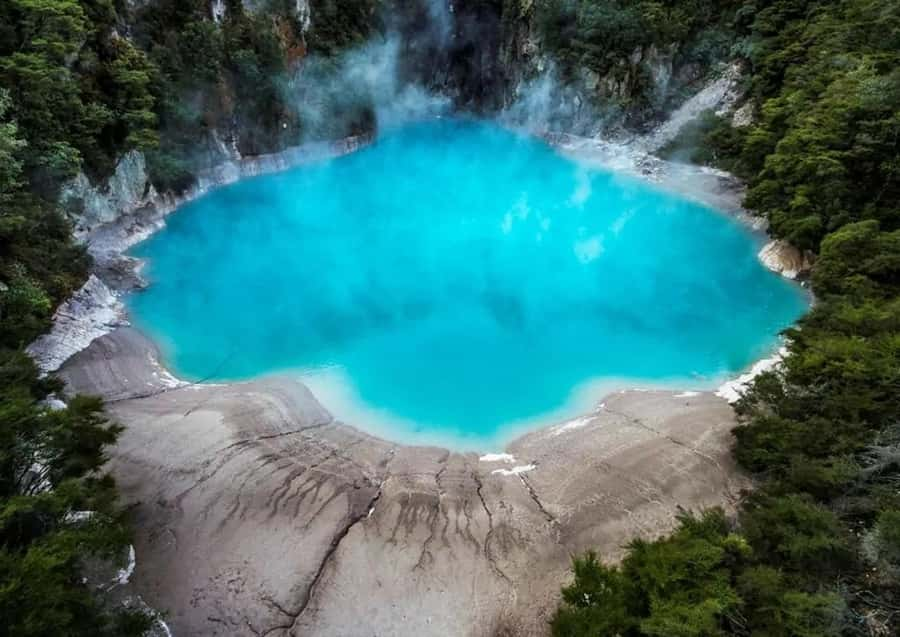
Next comes Waimangu Volcanic Valley, described as the youngest geothermal park on Earth. From above, you see a broad area shaped by volcanic activity rather than a single isolated spring. Frying Pan Lake and Inferno Crater are two major sights in this section.
Frying Pan Lake is known for its large steaming surface, while Inferno Crater catches the eye with its strong blue color. From the plane, you will not get the same close detail as you would on a walking trail, but you gain scale. The thermal features appear as part of a much bigger system of vents, lakes, ridges, and forest.
This is where the pilot’s commentary adds real value. The scenery moves quickly, and a clear explanation can help you understand what you are looking at before it slips behind the wing. Pilot Ben has been praised for being relaxed, friendly, enthusiastic, informative, and confident. The commentary is especially useful on a flight like this, where many craters and lakes can look similar at first glance.
Same base, a different kind of day:
- Rotorua Canopy Tours: 2.5Hour Native Forest Zipline Adventure
★ 5.0 · 4,563 reviews - Mitai Maori Village: Cultural Experience and Dinner Buffet
★ 4.7 · 3,575 reviews - Rotorua: Wai-O-Tapu Geothermal Park Entry Ticket
★ 4.6 · 2,601 reviews - Rotorua’s Ultimate Zipline: 6 ziplines, 400 m Tandem, Cliff Walk
★ 5.0 · 2,557 reviews
Wai-O-Tapu from the air
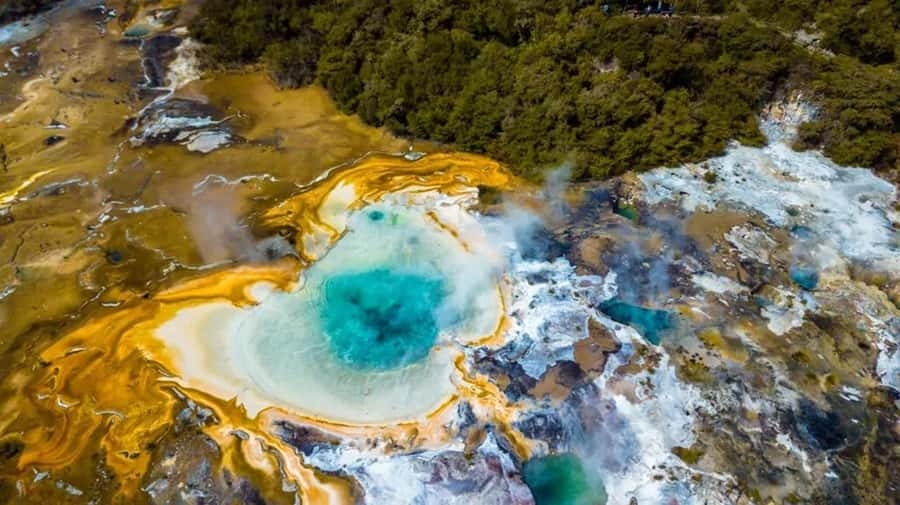
The route continues over Wai-O-Tapu Thermal Wonderland, including Artist’s Palette and Champagne Pool. These features are famous for strong mineral colors and unusual thermal shapes. From the air, the view is brief but memorable.
You should set your expectations correctly here. You are getting an aerial preview, not a full visit to Wai-O-Tapu. The aircraft does not land there, and the schedule allows only a short viewing pass. If you want to study each pool and boardwalk in detail, you would need a separate ground visit.
Still, seeing Wai-O-Tapu in the same flight as Mount Tarawera and Waimangu helps explain the size of Rotorua’s geothermal zone. You are not looking at one attraction in isolation. You are tracing a belt of volcanic activity that runs across the region.
Following the Waikato River to Orakei Korako
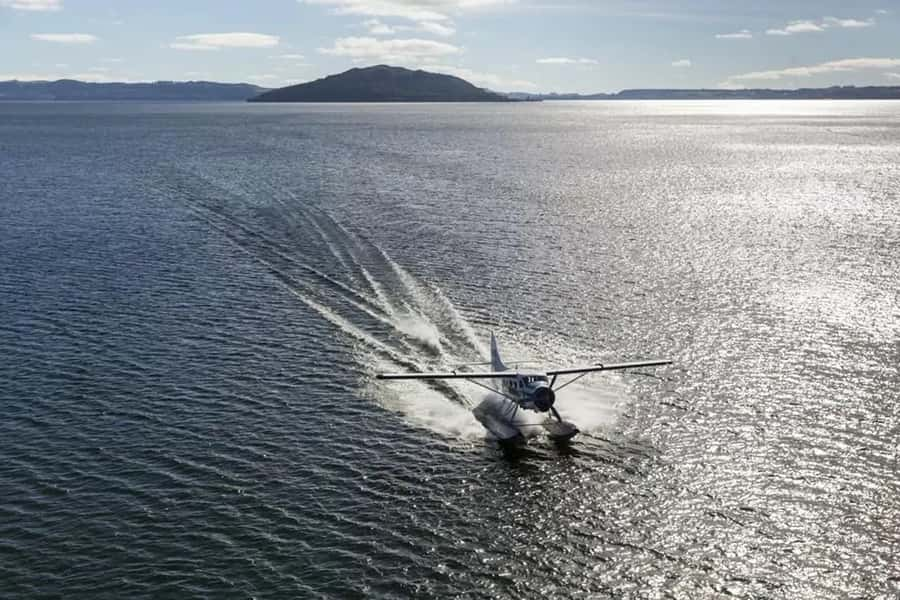
The route’s most unusual moment comes as the plane heads south and descends toward the Waikato River. Rather than landing at a standard airfield, the floatplane follows the river’s bends, passes native bush, and touches down on the water near Orakei Korako.
The landing itself is the central thrill. One passenger described it as a first floatplane flight and singled out the river landing as the highlight. Another noted that both landing and takeoff from the river were memorable. That detail tells you what makes this outing different from a standard scenic flight: the arrival is part of the attraction.
Once the aircraft docks, you have about an hour to explore Orakei Korako on a self-guided walk. You are not tied to a large tour group or required to keep pace with a guide. Instead, you can decide how long to spend at a geyser, mud pool, terrace, or viewing point within the available time.
Walking through Orakei Korako’s thermal valley
Orakei Korako is the payoff for the flight. The walk includes hot springs, gushing geysers, bubbling mud pools, a thermal cave, and some of the largest silica terraces in the world. The ground-level visit supplies the detail that the aerial portion cannot.
Wear proper walking shoes. The company specifically recommends comfortable footwear, and you should take that seriously rather than treating the stop as a quick stroll from the aircraft. You will also want water, sunscreen, and a hat, since the advice calls for protection from the sun and hydration during the walk.
The one-hour limit is useful but not generous if you stop often for photos. You can see the main thermal features, but you may need to keep moving rather than linger at every viewpoint. I would use the early part of the walk to take in the major terraces and geysers, then return to any feature that deserves more time.
The self-guided format suits people who like to set their own pace. It is less ideal if you want a detailed naturalist talk at every stop. The pilot provides commentary during the flight, but the park visit itself is designed for independent exploration.
A short café stop before the return flight
After the walk, you can stop for coffee, tea, or a local snack at the café before reboarding. Meals and drinks are not included, so carry some spending money if that break matters to you.
This pause also gives you a practical buffer between the walk and the return flight. You can catch your breath, refill if appropriate, and enjoy the change from the aircraft’s confined cabin to an open park setting. Do not expect a full meal service or a long restaurant stop. It is a simple refreshment break within a tightly timed outing.
The floatplane then heads back toward Rotorua over farmland and the Paeroa mountain range. The return route gives you another look at the region’s mix of open fields, forest, mountains, and lakes before the aircraft lands at the Lakefront pier.
What the small group and price mean
The price is $505 per person. That is high for a two-hour activity, but the cost covers more than a short sightseeing flight. You are paying for a small aircraft, a pilot-led aerial route over several major geothermal areas, a water landing, transport to Orakei Korako, and entry to the park with time to walk independently.
The group is limited to six participants. That makes it easier to hear the pilot and see out of the aircraft than it would be on a large sightseeing operation. It also means the cabin is small, so personal space is limited. If you are tall, stiff, or uncomfortable in compact aircraft, this is worth weighing before you book.
I see the price as reasonable for a special Rotorua experience, especially if you have limited time and want to combine several sights in one outing. It is harder to justify if your main goal is simply to visit one geothermal park. In that case, a ground-based visit may offer more time for less money.
Free cancellation up to 24 hours before departure and the option to reserve now and pay later make the booking less rigid. Weather still matters, and you should check conditions and dress sensibly. The experience is not suitable for pregnant women or people with back or heart problems.
Who should book this Rotorua floatplane trip?
I would choose this for a first visit to Rotorua when you want a strong overview of the region and one memorable hands-on stop. It suits people who enjoy scenic flights, volcanic features, small groups, and unusual transport.
It is also a good match for photographers who want changing views of lakes, craters, forest, and farmland. Bring realistic expectations: the plane moves, weather can affect visibility, and you will not have unlimited time at each feature.
I would think twice if you dislike small aircraft, have trouble climbing in and out, or prefer long, slow walks at geothermal parks. The compact cabin and occasional bumps are part of the deal. You should also skip it if any of the listed medical restrictions apply.
Should you book the Orakei Korako floatplane flight?
Book it if you want one concentrated experience that joins Rotorua’s lakes, volcanoes, geothermal parks, and a river landing. The flight offers a broad view that is hard to recreate from roads, while Orakei Korako gives you a proper hour on foot among geysers, mud pools, silica terraces, and a thermal cave.
Skip it if your budget is tight or you want a full day at one park. At $505, this is a premium outing. But for a small group, a skilled pilot, and a rare landing on the Waikato River, it offers more than a standard scenic circuit. If the price fits and you can manage the compact plane, I would put it high on a Rotorua short list.
FAQ
How long does the floatplane experience last?
The full experience lasts two hours, including the flight, the landing at Orakei Korako, the self-guided walk, and the return to Rotorua.
Where does the flight begin and end?
The experience begins and ends at Volcanic Air at the Lakefront pier on Lake Rotorua.
How much does the experience cost?
The price is $505 per person.
How many people are in the group?
The group is limited to six participants. The aircraft has six small bucket seats.
Does the flight land at Orakei Korako?
Yes. The floatplane lands on the Waikato River and docks near Orakei Korako.
How much time do you get to explore Orakei Korako?
You get about one hour for a self-guided walk through the geothermal park.
What can you see at Orakei Korako?
The park includes hot springs, gushing geysers, bubbling mud pools, a thermal cave, and large silica terraces.
Are food and drinks included?
No. Meals and drinks are not included, though you can stop at the café for coffee, tea, or local snacks.
What should you bring?
Bring comfortable walking shoes, a hat, sunscreen, water, and a camera. Check the weather and dress appropriately.
Who should not take this activity?
The experience is not suitable for pregnant women or people with back problems or heart problems. Smoking is not allowed.
Just added in Rotorua
- Thrilling Riverbug Adventure on the Rangitāiki River★ 5.0 · 4 reviews
- Te Puia: Tuku Iho Trail with Cultural Show★ 5.0 · 5 reviews
- Te Puia: Te Pō Indigenous Combo – Tour, Dinner + Haka★ 4.4 · 52 reviews
- Te Puia: Te Rā Guided Day Tour + Haka Cultural Performance★ 4.7 · 128 reviews
- Tauranga: Wai-o-Tapu with Redwood Forest Walk or Forest Spa★ 5.0 · 4 reviews
- Taupo: Orakei Korako Geothermal Park and Cave Entry Ticket★ 4.6 · 158 reviews
- Rotorua: White Island, Mount Tarawera & Waimangu Volcanic …★ 4.4 · 5 reviews
- Rotorua: Wai Ariki Hot Springs & Spa 1hr Restorative Bathing★ 4.8 · 16 reviews
Scenic Helicopter Flights, compared.
Franz Josef Glacier: Helicopter Flight & Alpine Landing
Read our review →

Franz Josef & Fox Glaciers Helicopter Flight & Snow Landing
Read our review →
Pilot’s Choice: 2 Glaciers & Snow Landing – 35min
Read our review →
Milford Sound Small Group Tour from Queenstown with Scenic Flight
Read our review →Browse the lists this tour appears in