
Reviewed · SPA & HOT SPRINGS
Rotorua: Hell’s Gate Geothermal Walk
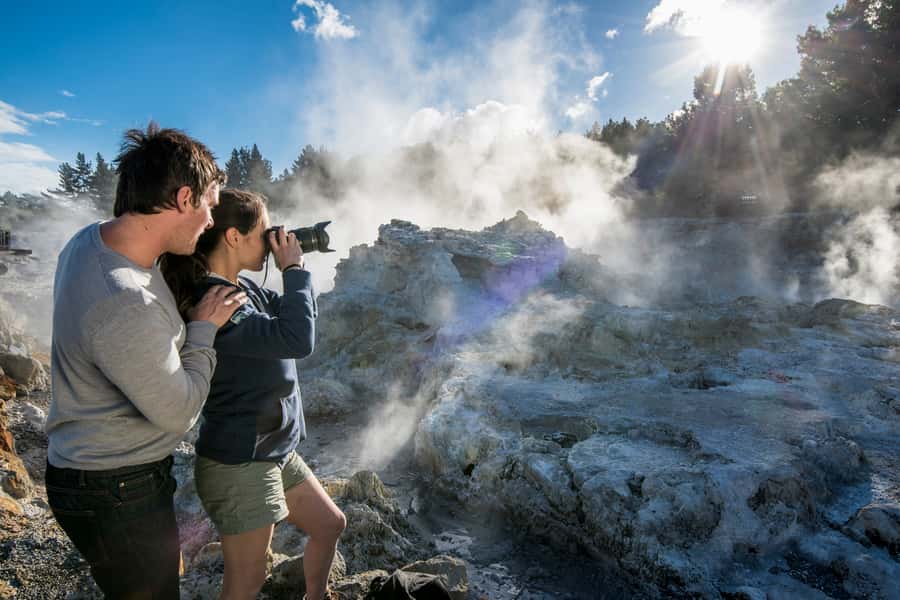
Hell’s Gate is the sort of place where the ground seems to be cooking its own dinner. You walk past bubbling mud, steaming fumaroles, boiling pools, sulfur crystals, and hot waterfalls, then follow the path into a surprisingly green bush section. The best parts are the close-up geothermal sights and the way Māori culture and local geology meet through the optional carving activity. The strong sulfur smell is the main drawback, and the hot ground demands careful attention.
I like that you can choose between a self-guided walk and a live tour, so you can move at your own pace or get the stories behind the pools. I also like the contrast between the harsh geothermal plain and the leafy walk near the waterfall. Guides such as Liam, T, and Luke have been singled out for warmth, humor, and clear explanations, but guided walks run only at set times and may not always be available.
Key points to know before you go
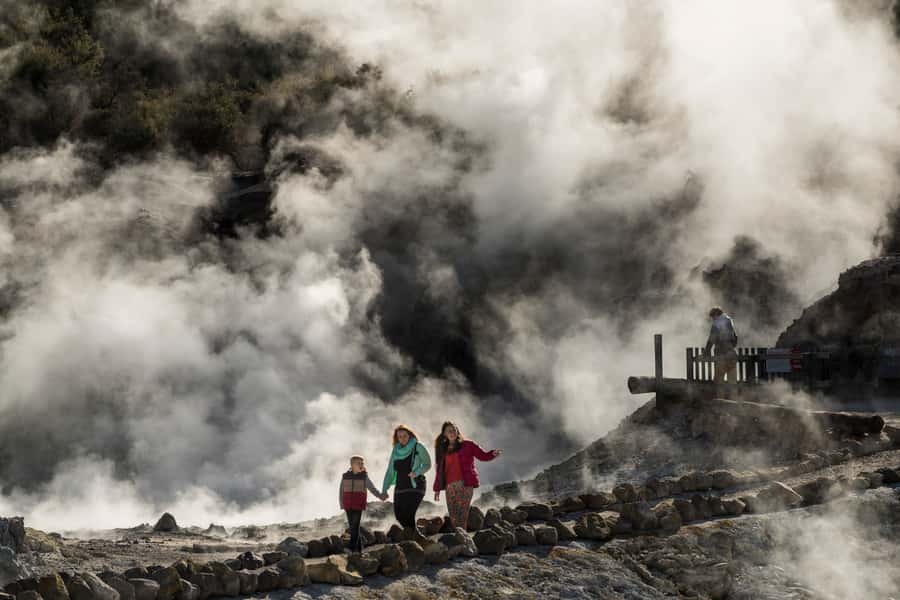
- New Zealand’s largest active mud volcano: See one of Hell’s Gate’s most unusual features from the marked walking route.
- A one-hour route with a lot to see: The walk covers about 2 kilometers and includes boiling pools, hot lakes, fumaroles, sulfur deposits, bush, and waterfalls.
- Choose your level of explanation: Use the supplied map and written notes, or join the English guided walk at 10:30 AM or 2:30 PM.
- The smell is part of the experience: Sulfur can be strong, often with a rotten-egg odor, so sensitive noses may struggle.
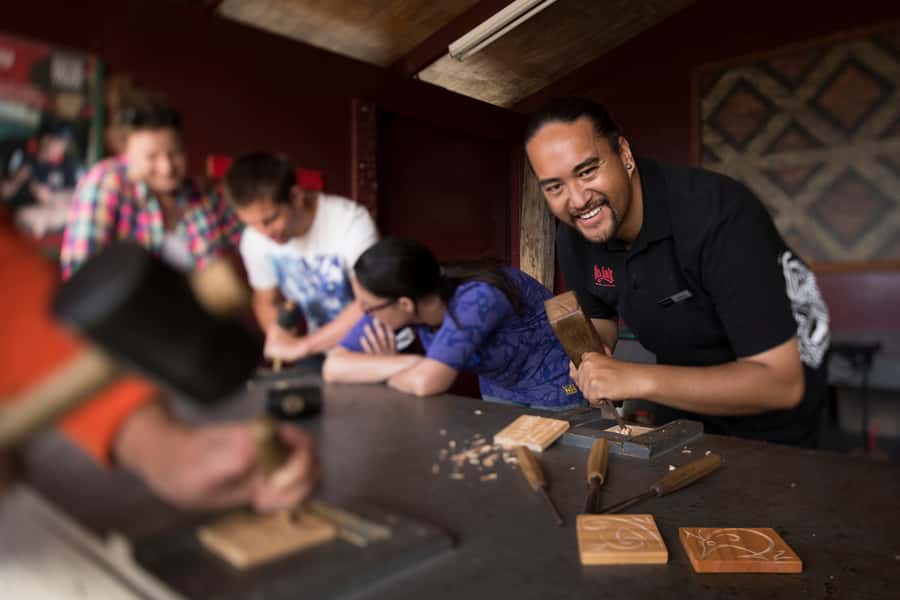
- Māori carving adds a cultural element: The activity is subject to availability, and children must be at least 12 to take part.
- Check the final price carefully: The advertised price is $26 per person, but the activity details also say the entry ticket is not included.
Walking into Rotorua’s hottest corner
Hell’s Gate, also called Tikitere, sits about 15 minutes east of central Rotorua. From town, take State Highway 30, continue roughly five minutes past the airport, turn toward Whakatane, and follow the road for about 3 kilometers.
The setting changes quickly. Rotorua’s roads give way to a reserve where steam rises from the earth and the air carries a sharp sulfur odor. This is not a polished garden with a few tame hot pools. Hell’s Gate is an active geothermic field, and the sights feel raw and close to the surface.
You receive a map for the walk, which is useful if you are short on time or prefer to stop when something catches your eye. The route takes about an hour, although the included guided option is listed as 1.5 hours. That difference likely comes from the guide’s pauses and explanations, so allow extra time if you plan to join the tour.
The path covers about 2 kilometers. It is described as an easy walk by several visitors, but the reserve is not suitable for people with mobility impairments. Wear comfortable shoes, and do not treat the route like a casual stroll through a city park. Stay on the marked paths and respect the barriers around the hot ground.
More walking tours in Rotorua:
- Rotorua’s Ultimate Zipline: 6 ziplines, 400 m Tandem, Cliff Walk
★ 5.0 · 2,557 reviews - Rotorua: Hell’s Gate Outdoor Mud Spa & Guided Walk
★ 4.7 · 1,140 reviews - Volcanic Valley Self Guided Walking and Hiking at Waimangu
★ 4.5 · 248 reviews
Boiling mud, fumaroles, and hot water lakes
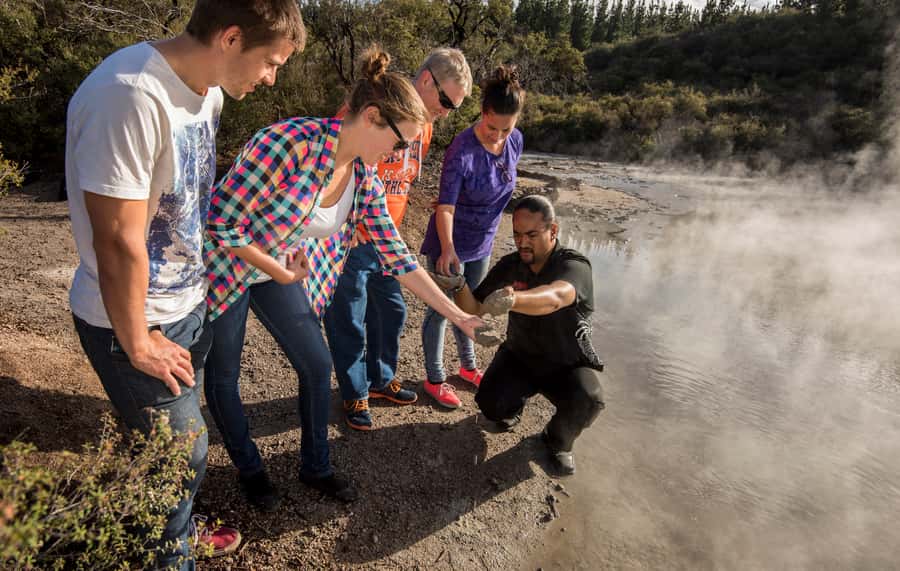
The geothermal section gives you the visual drama you came for. Steam escapes through fumaroles, mud bubbles and pops, and hot pools sit in colors and textures that do not look entirely natural. Water temperatures can exceed 100 degrees Celsius, so the fences and viewing points are important, not decorative.
The reserve’s largest claim is its active mud volcano, described as the largest in New Zealand. A mud volcano is not a cone of flowing lava. It is a mound built by gases and hot fluids forcing mineral-rich mud upward. The result is slower and stranger than a conventional volcano, with thick bubbling mud that looks almost alive.
You will also see sulfur crystals and deposits around the geothermal features. These details reward a slower pace. At first, you may focus on steam and boiling water, but the yellow and pale mineral edges show how the hot fluids alter the ground over time.
The heat and smell can be intense. Sulfur often smells like rotten eggs, and at Hell’s Gate it can be especially noticeable. I would not choose this activity for someone very sensitive to strong odors, and young children may find the fumes difficult. Sunglasses can help on a bright day, while sunscreen and water are sensible additions to your day pack.
One useful warning: sulfur residue can tarnish gold and silver jewelry. Remove valuable pieces before entering the reserve. This is an easy precaution and saves you from discovering later that a favorite ring or chain has changed color.
The hot waterfalls and the green bush section
The reserve is more varied than a circuit of steaming pools. One of the most memorable sights is the hot waterfall, described as the largest hot waterfall in the Southern Hemisphere. The waterfall gives the visit a stronger sense of scale than the smaller pools and vents.
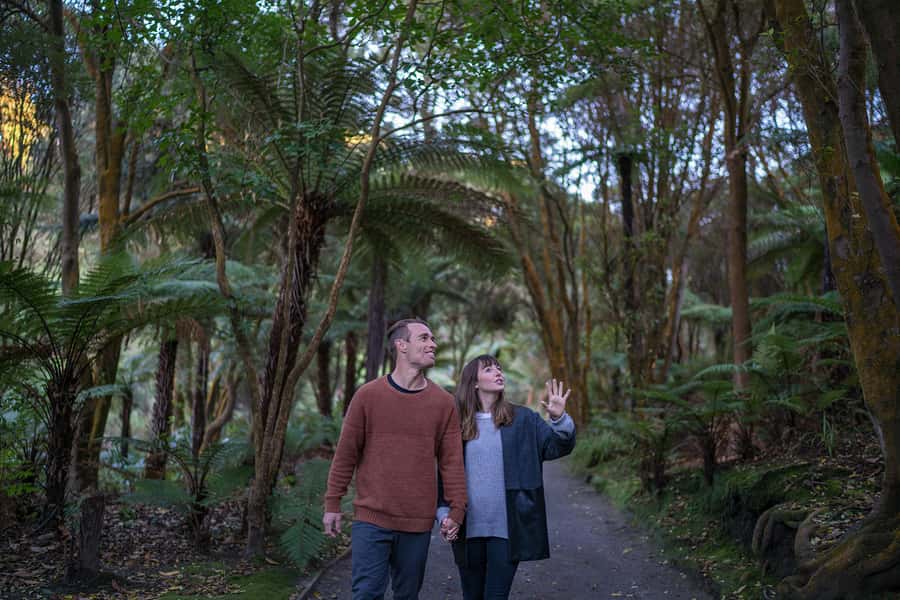
The path also passes through a vegetated bush section. That contrast is one of Hell’s Gate’s strongest features. You move from bare, steaming ground into greenery, then back toward the hot pools. The change helps you understand that geothermal activity does not cover every inch of the reserve in the same way.
Examples of land coral add another unusual detail. The name can sound confusing, since this is not a tropical reef. In this setting, it refers to coral-like mineral formations created on land by geothermal activity. The supplied map and explanations help put these odd shapes into context.
Rain does not ruin the visit. In fact, the reserve is said to be at its best in wet weather, when steam and water become more dramatic. Bring weather-appropriate clothing and be ready for changing conditions. A rain cape can be bought on site, but it is not included.
Self-guided walk or live explanation
The self-guided option works well if you have only a limited window in Rotorua. The map identifies the geothermal pools and features, and the route is easy to follow. You can stop for photographs, read at your own pace, and finish in about an hour if you keep moving.
The tradeoff is depth. Written notes can tell you what you are looking at, but a live guide can explain why a pool behaves as it does and how Māori culture connects with the area. The guided walk is in English and is listed at 10:30 AM and 2:30 PM.
Do not assume a guided walk will match any arrival time. The fixed departures matter if you are fitting Hell’s Gate around a full Rotorua day. If you arrive between tour times, the self-guided route is your practical choice. It is not a poor substitute, especially if you enjoy reading signs and examining the features closely, but the live walk adds personality and context.
Guide quality can shape the visit. Liam has been praised for being informative, friendly, and humorous, while T has been described as a strong storyteller. Luke has also been noted for his clear explanations and humor. These names reflect particular guide experiences, not a promise that one of them will lead your tour, but they show why the guided option can be worth timing your visit around.
A guide is most useful here because the sights are unusual but not always self-explanatory. Anyone can see mud bubbling. A good explanation tells you what is happening below the surface, why the water is hot, and how the reserve’s cultural story fits beside its geology.
Other hot pools and geothermal parks around Rotorua:
- Rotorua: Wai-O-Tapu Geothermal Park Entry Ticket
★ 4.6 · 2,601 reviews - Rotorua: Hells Gate Outdoor Mud Bath & Spa Experience
★ 4.6 · 398 reviews - Wai-O-Tapu Thermal Wonderland, Rotorua, New Zealand
★ 4.5 · 379 reviews - Polynesian Spa Rotorua: Deluxe Lake Spa Hot Spring Bathing
★ 4.5 · 358 reviews
Māori carving and the extra activities
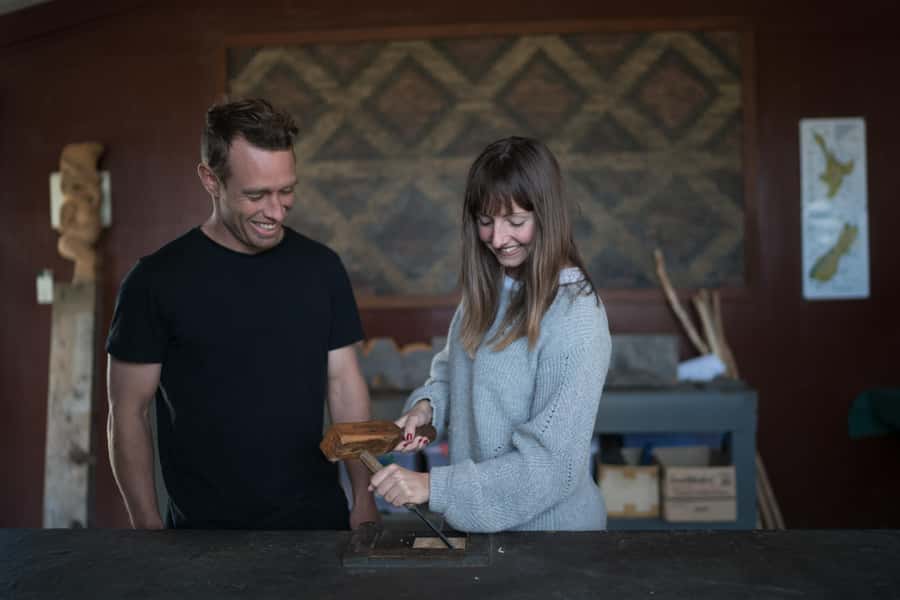
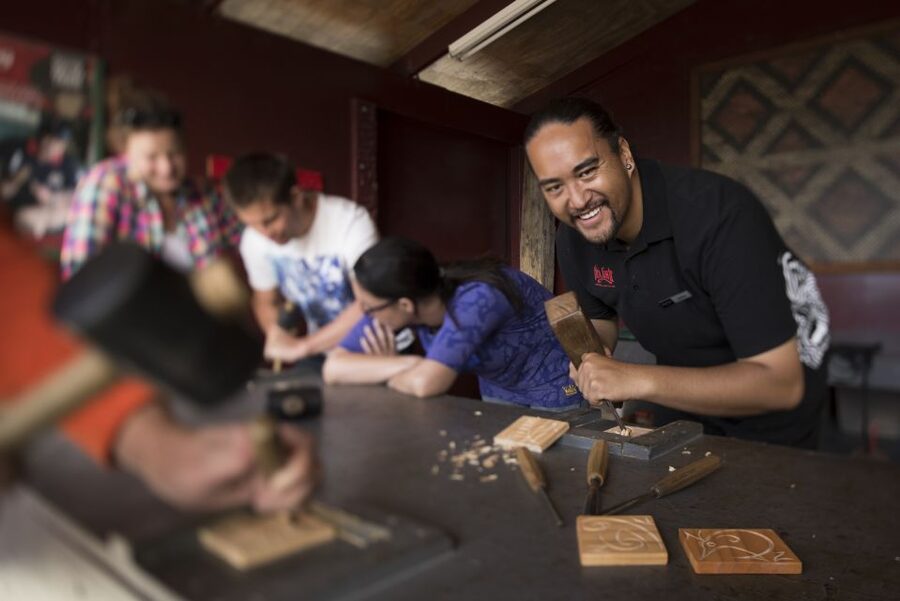
The Māori carving activity gives the visit a welcome human dimension. After the walk, you may have the chance to take part in carving, and a complimentary Māori carving is included in the stated activity details. Availability can vary, so treat it as an added possibility rather than the central reason to book.
Children must be at least 12 years old to participate in the carving. That age rule does not necessarily describe the minimum age for the entire walk, but it does apply to the carving activity.
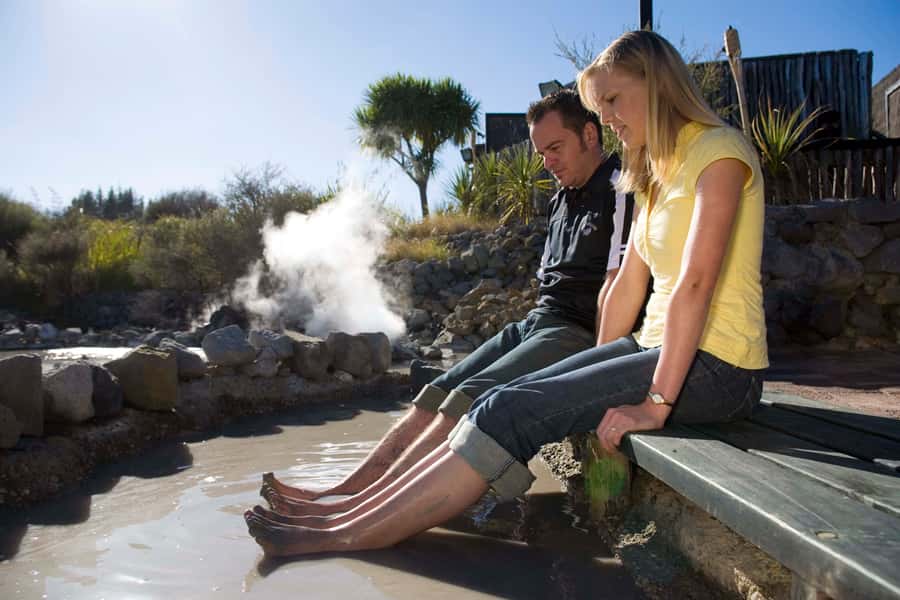
A mud foot pool is also subject to availability. If it is operating, it can be a pleasant extra after the walk, but do not build your schedule around it unless the staff confirms it is open. The same practical point applies to the guided tour and carving.
These extras matter because Hell’s Gate is not only a quick look at hot pools. They can turn a short geology stop into a broader introduction to Rotorua’s Māori culture and local traditions. Still, the main product is the geothermal walk, and it remains worthwhile even if the optional activities are unavailable.
What the $26 price really means
The listed price is $26 per person, which sounds reasonable for a one-hour attraction with a map, marked route, and access to a large geothermal reserve. It becomes better value if your visit includes the guided walk, carving, or mud foot pool.
There is an important pricing detail to check before you pay. The activity information says the entry ticket is not included, even though the advertised price is shown as $26 per person. Confirm the full admission cost at booking so you know whether $26 is the final price or only a reservation component.
For value, I would compare Hell’s Gate with your other Rotorua geothermal choices based on what you want. If you only need a quick look at one or two hot pools, a one-hour visit may feel brief. If you want a varied route with mud, fumaroles, sulfur formations, hot lakes, bush, waterfalls, and optional cultural activities, the reserve offers more range.
The supplied map also makes the self-guided version practical for people on a schedule. You are not paying only for a lecture or a single viewing platform. You are paying for access to a substantial walking route through an active geothermal area.
Who will enjoy Hell’s Gate most
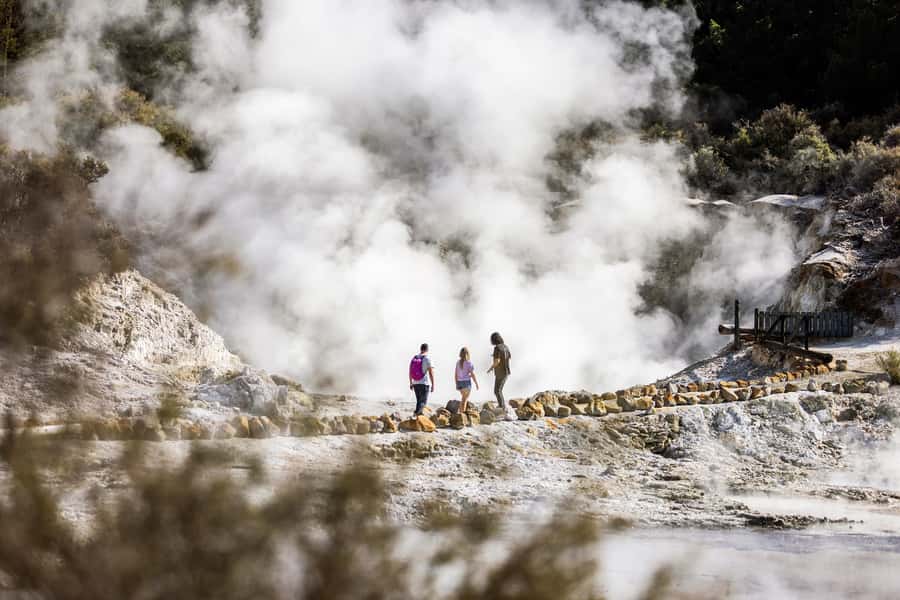
I would recommend Hell’s Gate to you if you want Rotorua geology presented in a direct, walkable format. It suits people who enjoy odd natural features, photography, and short outdoor activities with plenty of visual variety.
It is also a good fit if you want a guided option but do not want a full-day excursion. The tour takes place close to Rotorua and the walking route is about an hour. The set guided times mean you need to plan ahead, but the self-guided alternative gives you more freedom.
Families can enjoy the route, especially since the path is described as easy for children and adults. Keep in mind the sulfur odor, hot ground, and safety barriers. Children must be 12 or older for the carving activity.
I would think twice if you have mobility limitations, dislike strong smells, or want a large, erupting geyser as the main event. One important detail is that Hell’s Gate does not have a hot water geyser of the type found at some other geothermal attractions. Its appeal comes from the mix of mud, steam, pools, mineral deposits, waterfalls, and bush.
Bring comfortable shoes, water, sunglasses, sunscreen, and clothing suited to the weather. Leave drones and cigarettes at home. If rain is forecast, do not automatically cancel. Wet conditions can make the steam and water more striking, but a rain cape may be useful.
Should you book the Hell’s Gate walk?
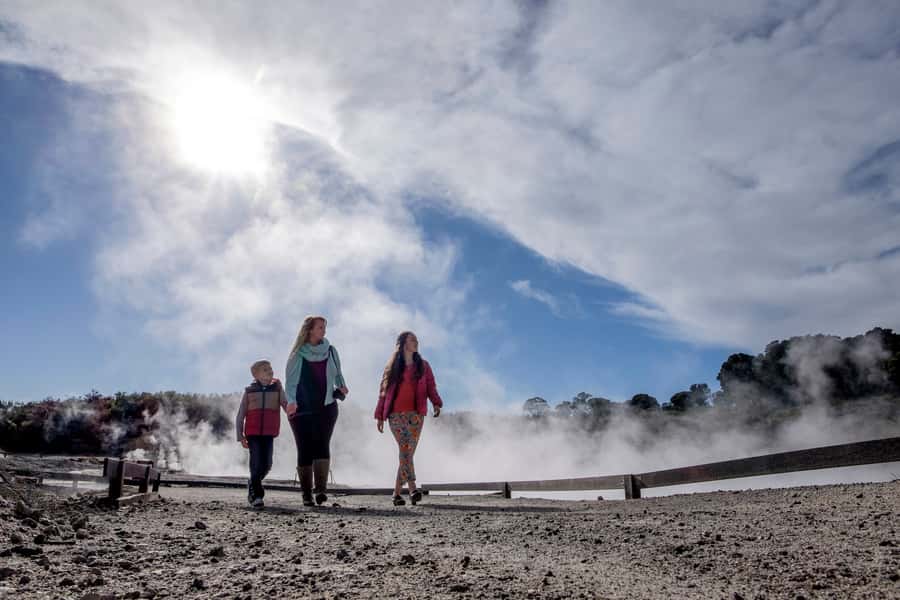
Book it if you want a compact, unusual Rotorua outing with strong geothermal sights and the choice of a map-led walk or live explanation. The active mud volcano, hot waterfall, sulfur deposits, and change from steaming ground to bush give the route more variety than a simple pool circuit.
I would choose the guided departure if you can match the 10:30 AM or 2:30 PM schedule. The right guide can turn strange-looking pools into a clear story about heat, minerals, vegetation, and culture. Choose the self-guided walk if your timing is tight, but verify the final admission price and check which extras are running that day.
The sulfur smell is real, the ground is dangerous beyond the marked areas, and the optional activities are not guaranteed. For most people who accept those limits, Hell’s Gate offers a memorable and fairly short look at Rotorua’s restless earth.
FAQ
Where is Hell’s Gate Geothermal Reserve?
Hell’s Gate is just outside Rotorua’s city center on the North Island of New Zealand. Drive east on State Highway 30, turn toward Whakatane about five minutes past the airport, then continue for about 3 kilometers.
How long does the geothermal walk take?
The walking route takes about one hour and covers approximately 2 kilometers. The included guided tour is listed as lasting 1.5 hours.
What guided tour times are available?
Guided walks are listed at 10:30 AM and 2:30 PM. The guided tour is in English and is subject to availability.
Can I explore Hell’s Gate without a guide?
Yes. You receive a map for the geothermal walk, and the self-guided route can be completed independently.
What will I see at Hell’s Gate?
You can see New Zealand’s largest active mud volcano, steaming fumaroles, hot water lakes, boiling pools, sulfur crystals and deposits, hot waterfalls, examples of land coral, and a vegetated bush section.
Is Hell’s Gate suitable for children?
The walking route has been described as easy for children and adults, but children must be at least 12 years old to take part in the Māori carving activity. The sulfur smell may be difficult for very young children.
Is the activity suitable in rainy weather?
Yes. The geothermal park operates in all weather, and it is described as being at its best when raining. Bring weather-appropriate clothing, and remember that a rain cape is available to buy on site.
What should I bring?
Bring comfortable shoes, sunglasses, sunscreen, water, and clothing suited to the weather. Consider removing gold and silver jewelry because sulfur residue can tarnish it.
Is the entry ticket included in the $26 price?
The advertised price is $26 per person, but the activity details also state that the entry ticket is not included. Check the final booking price before you confirm.
Just added in Rotorua
- Mt Tarawera Helicopter Tour with Volcano Landing★ 5.0 · 40 reviews
- Mt. Tarawera Volcano Scenic Floatplane Tour from Rotorua★ 5.0 · 42 reviews
- 15-Minute Crater Lakes Flight by Floatplane from Rotorua★ 4.5 · 11 reviews
- Whaka Geothermal Trails Self-Guided Tour★ 3.5 · 44 reviews
- Rotorua: Scenic Flight over Mt Tarawera & Waimangu Valley★ 4.9 · 25 reviews
- Lake Rotoiti Evening Kayak Tour including Hot Springs, Glowworm Caves and BBQ Dinner★ 5.0 · 60 reviews
- Mountain Jade Highlights Tour★ 5.0 · 31 reviews
- Rotorua Highlights Inc. Te Puia & Secret Spot Hot Tubs Day Tour★ 4.5 · 129 reviews
Spa & Hot Springs, compared.
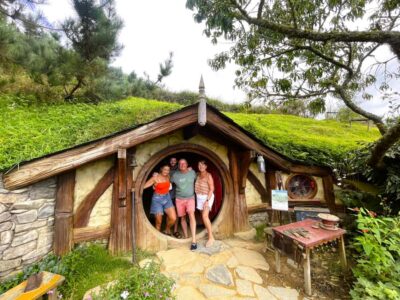
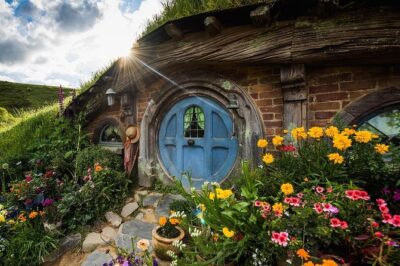
Hobbiton & Rotorua including Wai-O-Tapu – Small Group Tour from Auckland
Read our review →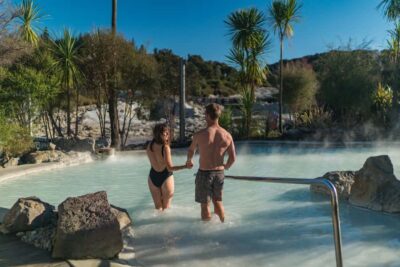
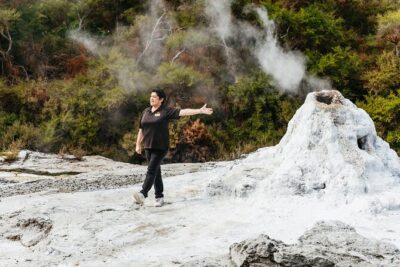
Wai-O-Tapu Thermal Wonderland, Rotorua, New Zealand
Read our review →
Polynesian Spa Pavilion Hot Pool Bathing (12+ yrs)
Read our review →
Polynesian Spa Rotorua: Deluxe Lake Spa Hot Spring Bathing
Read our review →Browse the lists this tour appears in