
Reviewed · WALKING TOURS
Rotorua: Mount Tarawera Volcanic Crater Half-Day Guided Walk
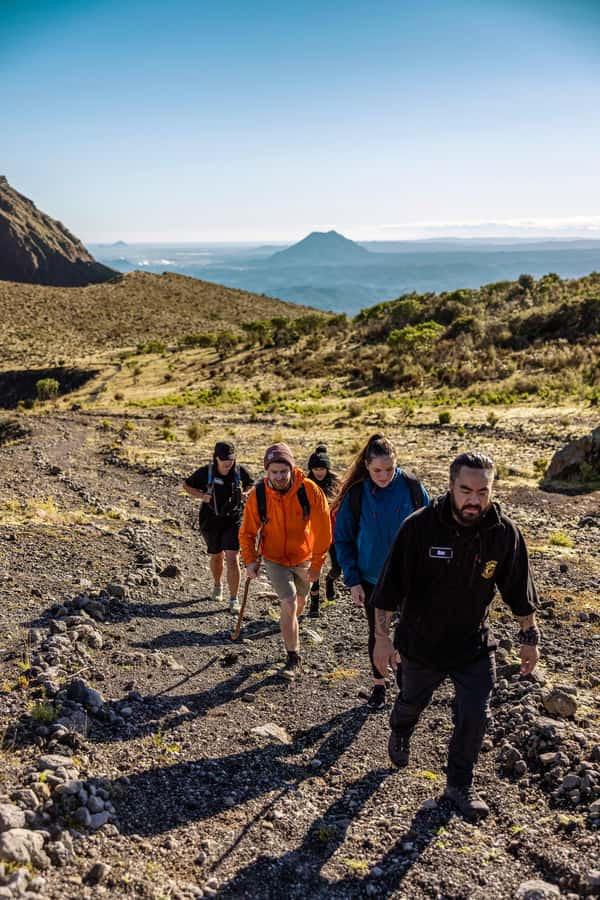
Mount Tarawera is not a gentle viewpoint reached by a short stroll. You ride an off-road 4×4 into the mountain country, hike to the summit, then descend into the volcanic crater on loose scree. The payoff is 360-degree views over Rotorua’s lakes, forests, and geothermal country, plus a close look at the place where the 1886 eruption reshaped the region.
I like the thoughtful Māori welcome at base camp and the way guides connect the geology to local stories. I also like the practical setup: hotel pickup, a 4×4 climb, and a four-and-a-half-hour outing that gives you a major experience without using your whole day. The main caution is simple: this is more demanding than the word walk suggests, with steep ground, loose rock, and a crater descent that may be required even if you skip the optional run.
Key points to know before booking
- A 4×4 ride gets you high on the mountain: You avoid a long approach on foot and reach the hiking section with more time for the summit and crater.
- The Māori karakia adds meaning: A traditional prayer at the solar-powered base camp welcomes the group and asks for protection on the journey.
- The crater section is active, not flat: Expect steep inclines, descents, loose scree, and some use of hands on rock.
- The views depend heavily on weather: Clear skies can reveal lakes, native forest, and geothermal country in every direction, while low cloud may hide much of it.
- The scree descent is the fun feature: You can run or slide down the loose volcanic slope, but the descent itself may not be optional.
- Guides make the difference: Guide teams have included Kai, Tahi, Jason, Steve, and Bob, with a friendly, encouraging approach suited to mixed abilities.
Why Mount Tarawera feels different from a standard Rotorua outing
Rotorua has no shortage of geothermal attractions, but Mount Tarawera gives you a more physical connection to the region. You are not simply looking at volcanic features from a platform. You climb through the mountain, walk along the crater, and feel the loose material shift under your shoes.
The mountain also carries major cultural weight. Your guide explains the eruption that changed the area, then places those events alongside Māori traditions and local stories. That combination matters. The mountain is not treated as scenery alone, and the tour gives you a clearer sense of why this place is remembered and respected.
The experience costs $118 per person. That is not a bargain activity, but the price covers hotel pickup and drop-off, the Rotorua transfer, the 4×4 ride up the mountain, the guided crater walk, and the local guide. You are paying for access, transport, interpretation, and a route that would not be a simple independent walk.
If you want a cheap viewpoint, choose another Rotorua activity. If you want a distinctive half-day that combines transport, culture, geology, and a real physical challenge, the price makes reasonable sense.
More walking tours in Rotorua:
- Rotorua’s Ultimate Zipline: 6 ziplines, 400 m Tandem, Cliff Walk
★ 5.0 · 2,557 reviews - Rotorua: Hell’s Gate Outdoor Mud Spa & Guided Walk
★ 4.7 · 1,140 reviews - Volcanic Valley Self Guided Walking and Hiking at Waimangu
★ 4.5 · 248 reviews
From Rotorua pickup to the mountain road
The day begins with pickup from selected Rotorua hotels and accommodation points. The available stops include the Rotorua i-SITE, major hotels such as the Millennium, Pullman, Rydges, Sudima Lake Rotorua, and Distinction Rotorua, as well as several motels, holiday parks, and backpacker properties.
You need to wait roadside or outside your selected pickup point. Add your accommodation details when booking, and pay attention to the pickup instructions. This is a small point, but it can prevent a rushed start.
The transfer to Mount Tarawera is part of the experience. As you leave Rotorua, your guide introduces the mountain’s past and explains how the 1886 eruption altered the area. The journey helps you understand the setting before the hiking begins, rather than dropping you at a trailhead with no context.
The exact group size is not provided, so do not assume a private outing. You will be sharing the vehicle and mountain walk with other people. That can add a social feel, though it also means the pace must suit a mixed group.
The 4×4 climb to Mount Tarawera
At the foot of the mountain, you change to a rugged off-road vehicle. The 4×4 carries you upward through native bushland and along rougher tracks. It is not just a transfer in the ordinary sense. The climb gives the outing a sense of occasion and saves your legs for the summit section.
The ride can also be bumpy. If you prefer smooth coach travel, this may not be your favorite part, but the rough road is what gives the outing its mountain character. You get higher without committing to a long uphill approach, which is especially useful during a four-and-a-half-hour schedule.
The vehicle stops at a solar-powered base camp. Here, your guide leads a Māori karakia, a traditional prayer. This moment sets the tone for the walk. It asks for protection and acknowledges the cultural importance of the mountain before you continue upward.
Guides such as Kai, Tahi, and Jason have been singled out for their welcoming and respectful approach, while Steve and Bob have also led memorable outings. The guide team can vary, but the pattern is clear: expect the walk to be explained as you go, with encouragement when the ground becomes tiring.
The summit walk and the 90-minute crater route
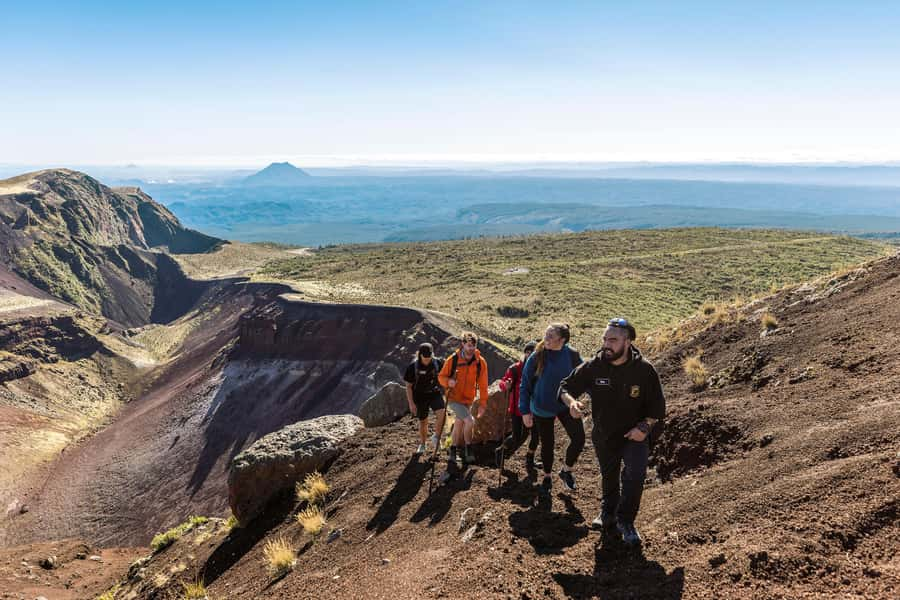
The guided crater walk is listed as 90 minutes, while the full mountain portion is described as about four and a half hours. That distinction is useful. You are not spending the entire outing walking, but the active section still requires steady effort.
The trail includes steep inclines and descents. One person described sections that involved using hands on rock, so I would not picture a smooth park path. You need comfortable shoes with a secure fit, and you should be happy moving over uneven ground.
The reward comes quickly as you gain height. The mountain opens toward Rotorua’s lakes, native forests, and geothermal country. On a clear day, the 360-degree view is the signature moment. You can look across a broad sweep of North Island scenery instead of seeing only one framed viewpoint.
The guides keep the walk moving while explaining the mountain’s geology, eruption, Māori heritage, and local legends. That interpretation is one of the strongest reasons to choose a guided visit. Without it, you would see impressive volcanic forms. With it, you gain a better sense of how the mountain fits into the area’s identity.
The pace appears supportive rather than competitive. Guides have helped tired walkers, offered encouragement, and made room for younger participants. That does not remove the effort, but it means you are not expected to race the group.
Same base, a different kind of day:
- Rotorua Canopy Tours: 2.5Hour Native Forest Zipline Adventure
★ 5.0 · 4,563 reviews - Mitai Maori Village: Cultural Experience and Dinner Buffet
★ 4.7 · 3,575 reviews - Rotorua: Wai-O-Tapu Geothermal Park Entry Ticket
★ 4.6 · 2,601 reviews - Rotorua Rafting: Kaituna River White Water Rafting & Free Sauna
★ 5.0 · 1,952 reviews
Entering the volcanic crater on loose scree
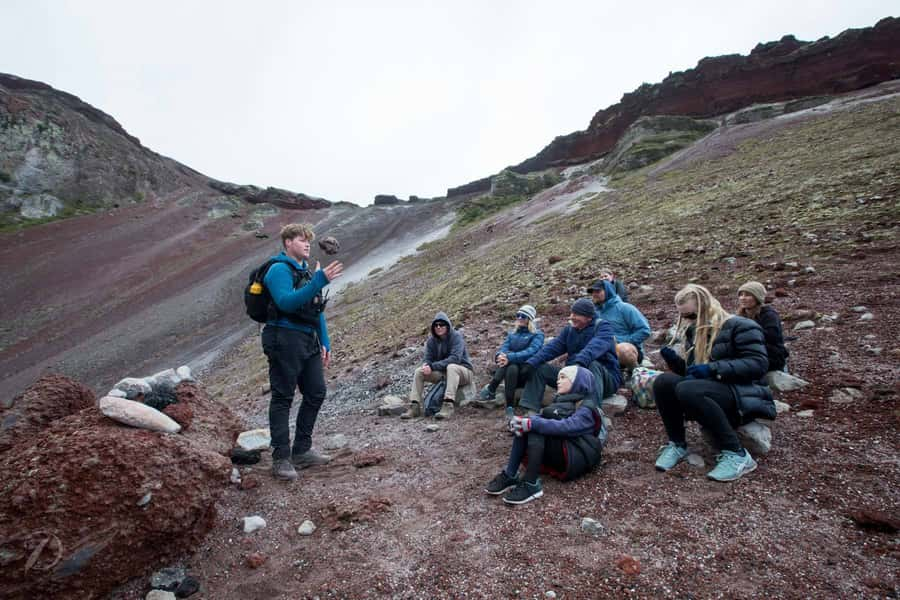
The crater section is the most unusual part of the outing. From the summit area, you descend into the volcanic basin on loose scree. The material shifts beneath your feet, so your balance and leg strength matter more than they would on a firm trail.
The advertised highlight is an optional scree run. You can move quickly down the slope, creating a playful, sliding descent that some people compare to riding a wave of loose volcanic rock. It is a memorable way to enter the crater, but it is not the only way to go down.
Here is the point to clarify before booking: the run is optional, but the descent into the crater may not be. One account specifically noted that there was no alternative route back down, with only the running part left to personal choice. Ask your guide for the exact plan on the day, especially if steep loose ground worries you.
The crater can be windy and chilly even under bright sun. Long trousers and a windbreaker are sensible choices. You may also find that poles or walking sticks help on the steeper sections. The tour provider has supplied sticks when needed, but bring your own if you normally rely on one.
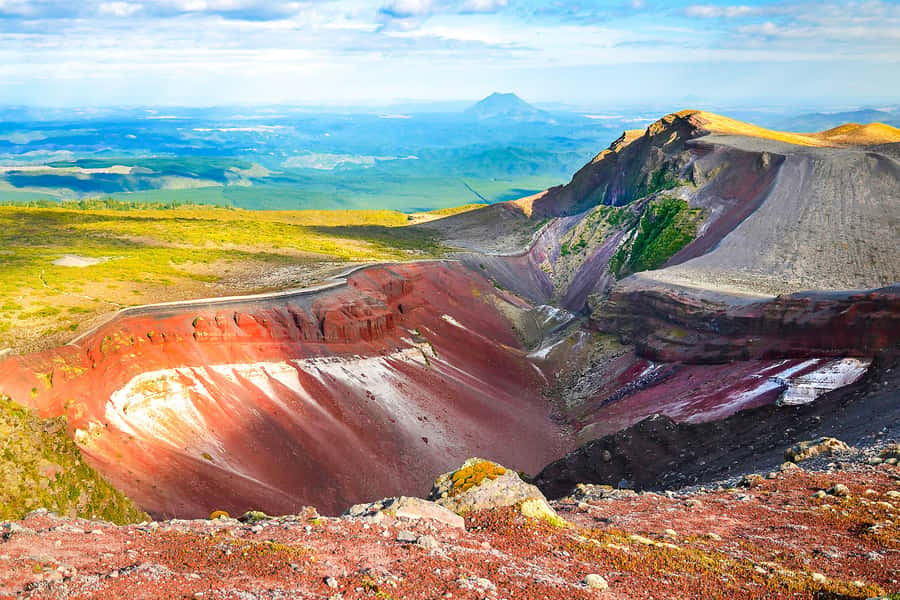
Once inside the basin, you get a close view of the volcanic structure rather than a distant look from the rim. The scale is hard to appreciate from photographs. The descent demands care, but it is also where the outing feels most unlike a normal sightseeing tour.
What weather can change
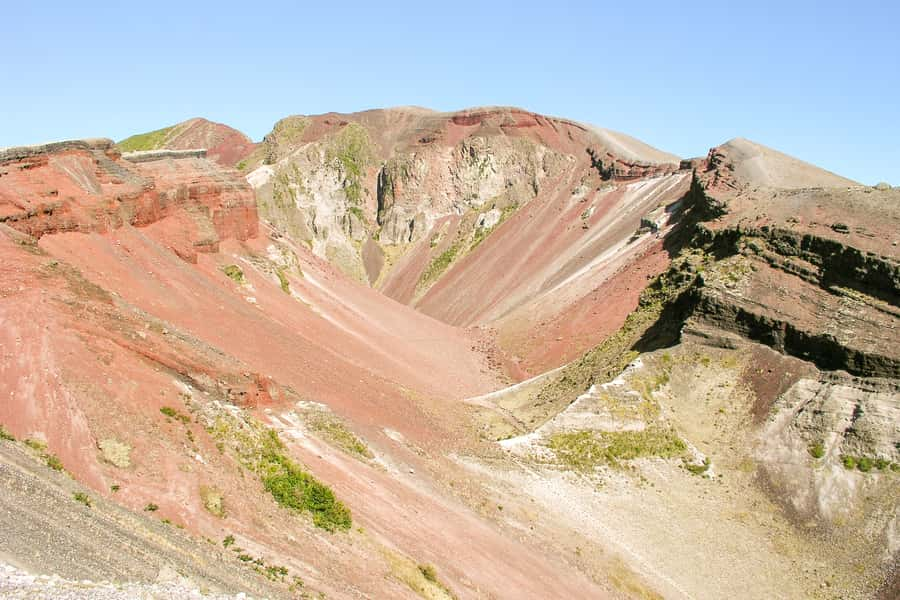
Weather is the biggest variable. In good conditions, the mountain offers wide views and a strong sense of open space. Low cloud can cover the summit and erase much of the panorama. One outing had little to see because of cloud, despite the rest of the tour running normally.
Wind is another issue. Even on a sunny day, the summit and crater can feel cold. Pack a windbreaker, water, snacks, and clothing that allows you to move freely. Sunscreen is also sensible, since exposed volcanic ground provides little shelter.
The tour can still be worthwhile in mixed weather because the guide, cultural material, 4×4 ride, and volcanic formations remain. But if your main reason for booking is the panorama, keep your expectations flexible. No operator can promise clear views.
Fitness, children, and the real level of effort
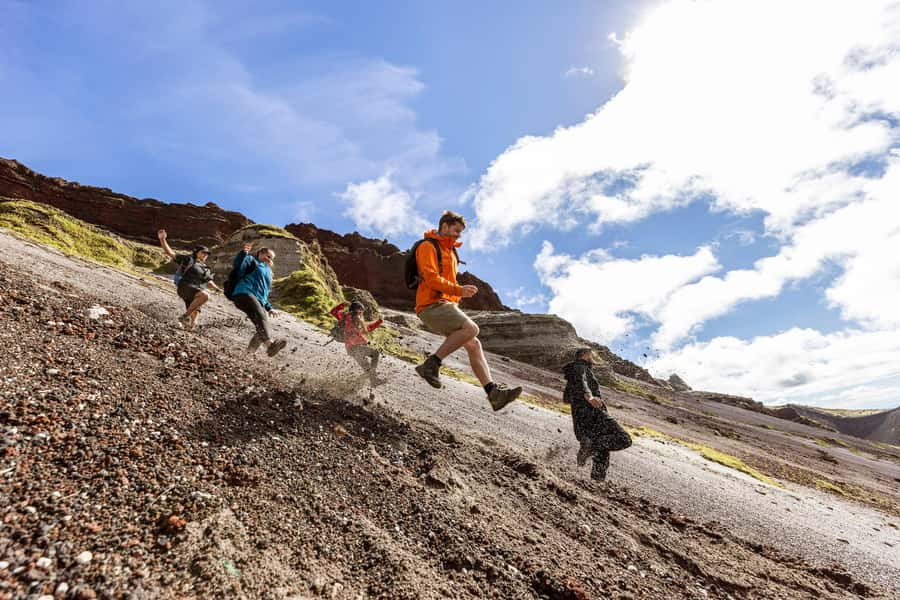
The activity is suitable for children aged seven and older, and an eight-year-old has completed it successfully. That does not mean it is effortless for every child. Young walkers need to manage steep ground, loose scree, and a fairly active mountain route.
A moderate level of fitness is recommended. The most important requirements are strong knees, reasonable balance, and comfort with inclines and descents. You do not need to be an athlete, but people with a low level of fitness should choose a gentler Rotorua activity.
The route can be a good challenge for families and active older adults. A 65-year-old participant found the scree descent manageable, but that should not be treated as a guarantee. Your own comfort with uneven surfaces matters more than your age.
If you are uneasy with heights, tell the guide early. One participant used the mountain as a personal test of that fear and found the challenge rewarding. The guide’s encouragement can help, but you still need to decide how much exposure feels right for you.
Culture, stories, and the value of a local guide
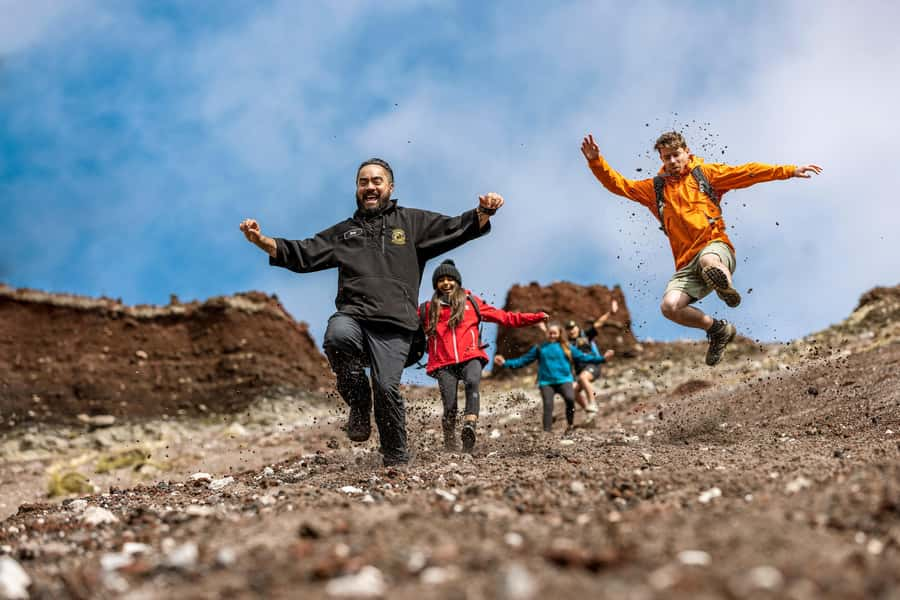
The cultural side is not a short speech added at the end. It begins with the karakia at base camp and continues through the explanation of Māori heritage, local myths, and the mountain’s history.
This is where the guide matters most. A local guide can explain why the mountain is significant, connect the eruption to the region, and help you approach the site with respect. The best moments are often small: a story told while the group pauses, a reminder about the mountain’s meaning, or a clear explanation of what you are seeing underfoot.
The tour is available with an English or Japanese-speaking guide. Ask about the language option when you check starting times, since the available departure and guide may vary.
What to pack for the crater walk
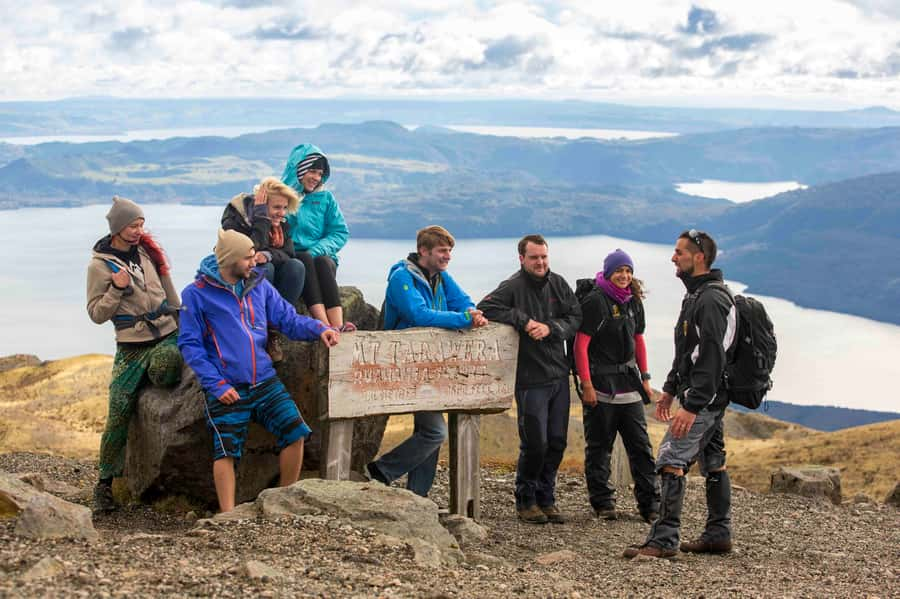
Bring the basics, but take the clothing advice seriously:
- Comfortable shoes with good grip
- Long trousers or other clothing that protects your legs
- A windbreaker
- Water
- Snacks
- Comfortable clothes
- Sunscreen
Food and drinks are not included, but you may bring your own. There is no reason to plan on buying refreshments during the mountain section, so carry enough water and a snack for your needs.
Avoid dressing only for Rotorua’s town weather. The summit can be colder and windier, and the weather can change the feel of the route quickly.
Who should book this Mount Tarawera tour?
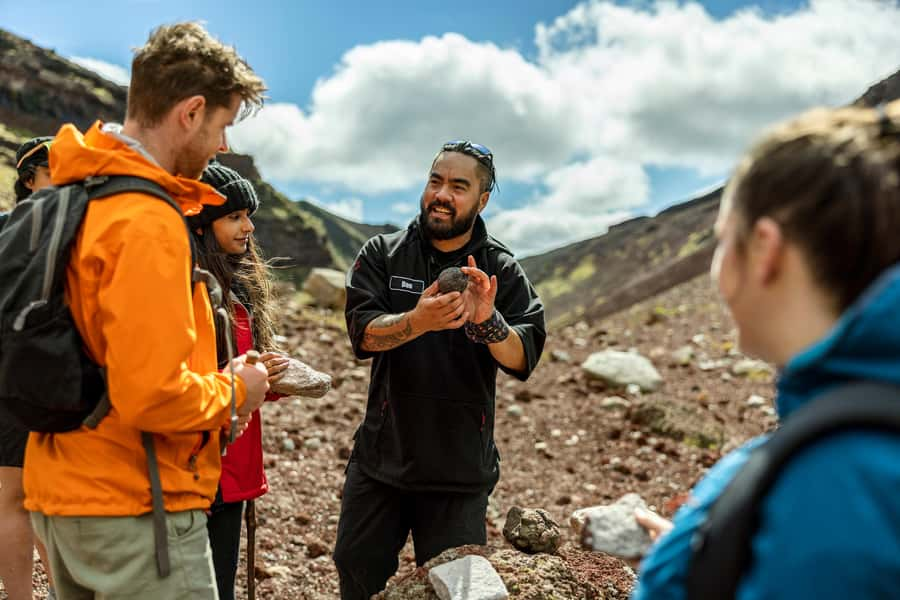
I would choose this outing if you want more than a scenic drive and you are comfortable getting dusty, windblown, and a little tired. It suits active families, hikers who want a guided route, visitors interested in Māori culture, and anyone seeking a volcanic experience with a clear sense of place.
It is especially useful if you have only part of a day free in Rotorua. Hotel transport keeps the planning simple, and the 4×4 ride means you can reach the mountain’s upper areas without spending hours on an approach trail.
I would hesitate if you want a flat walk, dislike loose ground, have low fitness, or need guaranteed views. The word walk undersells the physical side, and low cloud can reduce the scenery. The descent into the crater also deserves careful thought if steep slopes make you uncomfortable.
Cancellation is free up to 24 hours before the activity, and you can reserve now and pay later. Those terms help if your Rotorua schedule or weather plans are still shifting.
Should you book it?
Book this Mount Tarawera experience if you want a lively half-day with a real volcanic setting, strong cultural context, and guides who encourage rather than rush you. The 4×4 ride, karakia, summit panorama, and scree descent give it more variety than a standard hike.
Before paying $118, be honest about your knees, balance, and weather priorities. Pack a windbreaker even on a sunny morning, expect a proper trek rather than an easy stroll, and confirm how the crater descent will work. If you accept those conditions, this is one of Rotorua’s more distinctive active outings.
FAQ
How long does the Mount Tarawera experience last?
The activity lasts 270 minutes, or about four and a half hours. The guided crater walk itself is listed as 90 minutes.
Is hotel pickup included?
Yes. Hotel pickup and drop-off are included from selected Rotorua accommodation points. You need to provide your accommodation details when booking and wait roadside or outside the chosen pickup point.
What languages are available?
The live guide service is available in English and Japanese.
How much does the tour cost?
The listed price is $118 per person.
Is the 4×4 ride included?
Yes. Transport from Rotorua to the mountain base and the off-road 4×4 ride up Mount Tarawera are included.
Is the crater run compulsory?
The scree run is described as optional. However, the descent into the crater itself may be required as part of the route, so ask the guide about the exact descent method on the day.
How fit do I need to be?
You need a moderate level of fitness. The route includes steep inclines and descents, loose scree, and some sections where you may use your hands on rock. It is not recommended for people with a low level of fitness.
Can children join the tour?
Yes. The activity is suitable for children aged seven and older.
What should I bring?
Bring comfortable shoes, a windbreaker, comfortable clothing, water, and snacks. Food and drinks are not included, but you may bring your own.
Just added in Rotorua
- Thrilling Riverbug Adventure on the Rangitāiki River★ 5.0 · 4 reviews
- Te Puia: Tuku Iho Trail with Cultural Show★ 5.0 · 5 reviews
- Te Puia: Te Pō Indigenous Combo – Tour, Dinner + Haka★ 4.4 · 52 reviews
- Te Puia: Te Rā Guided Day Tour + Haka Cultural Performance★ 4.7 · 128 reviews
- Tauranga: Wai-o-Tapu with Redwood Forest Walk or Forest Spa★ 5.0 · 4 reviews
- Taupo: Orakei Korako Geothermal Park and Cave Entry Ticket★ 4.6 · 158 reviews
- Rotorua: White Island, Mount Tarawera & Waimangu Volcanic …★ 4.4 · 5 reviews
- Rotorua: Wai Ariki Hot Springs & Spa 1hr Restorative Bathing★ 4.8 · 16 reviews
Walking Tours, compared.
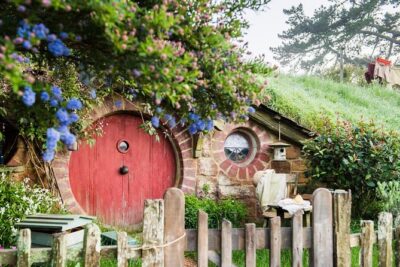
Hobbiton™ Movie Set Walking Tour from Shires Rest
Read our review →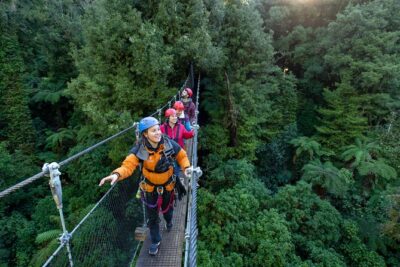
Rotorua’s Ultimate Zipline: 6 ziplines, 400 m Tandem, Cliff Walk
Read our review →
Waitomo Caves: Ruakuri Glowworm Cave Guided Walking Tour
Read our review →
Full-Day Milford Sound Tour with Cruise and Walks from Te Anau
Read our review →
Abel Tasman: Sea Shuttle Cruise and Walking Tour Combo
Read our review →
Browse the lists this tour appears in