
Reviewed · TOURS IN ROTORUA
Rotorua: The Buried Village of Te Wairoa
The Buried Village of Te Wairoa gives you a rare chance to walk through the remains of a settlement destroyed in a single volcanic night. On June 10, 1886, Mount Tarawera erupted, burying Te Wairoa and wiping out the famous Pink and White Terraces. The museum and excavated buildings make that disaster feel personal rather than distant.
I like the clear sequence: start in the museum, then walk the archaeological site with the story fresh in your mind. I also like the waterfall trail, where native bush and Te Wairoa Falls add beauty to a place shaped by destruction. The main consideration is that the waterfall route includes steep steps, and the museum can feel chilly, so bring comfortable shoes and an extra layer.
Key points to know before you go
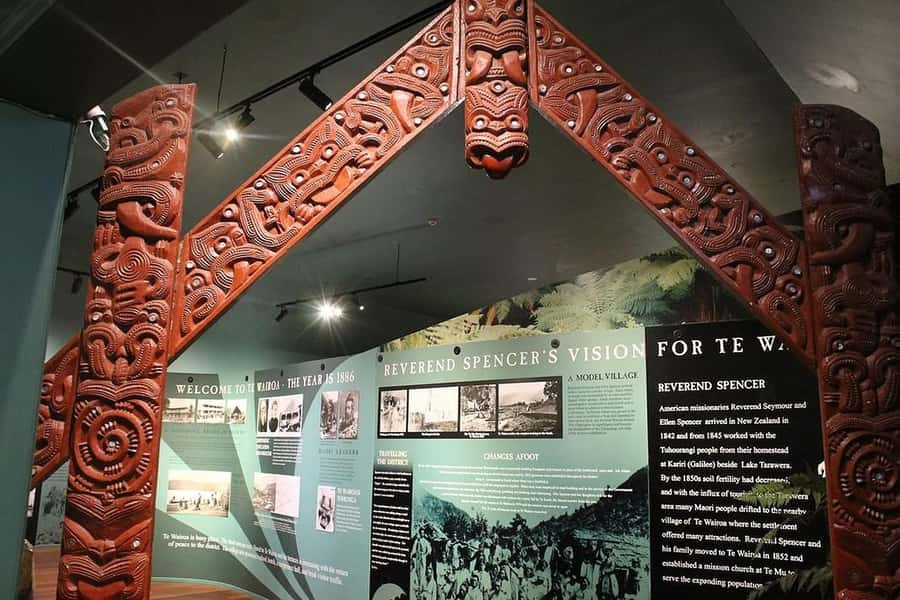
- Begin with the museum: Excavated household objects and displays explain what Te Wairoa was like before the eruption.
- Walk through a real archaeological site: The remains include a former Māori and missionary settlement, with signs and maps along the route.
- Choose your level of guidance: Use the English audio guide, follow the signs, or join scheduled talks and living-history presentations.
- Allow time for the falls: Te Wairoa Falls is reached by a short but sometimes steep walk, with the best views at the bottom.
- Plan a café stop: Smith & Co serves scones, Devonshire tea, pies, hot drinks, and other light refreshments.
- Good for families: A clue scavenger hunt, Victorian clothing, and an antique-style photo opportunity give children more to do than simply read plaques.
Why Te Wairoa matters near Rotorua
Rotorua is famous for bubbling mud, steaming vents, and geothermal parks. Te Wairoa offers a different view of the region: here, the ground did not simply steam or rumble. It exploded, buried a village, killed residents and visitors, and changed the surrounding area forever.
The eruption also destroyed the Pink and White Terraces, once one of New Zealand’s great natural attractions. At Te Wairoa, you learn about that loss alongside the story of the people who lived in the settlement. The site had Māori residents, missionaries, and a growing European presence, making it more than a collection of old ruins.
I find the setting especially effective because nature has returned. Trees, streams, and forest now surround the buried remains. That contrast can feel unsettling in the best way: you are looking at a quiet, green place while learning about a night of ash, fire, noise, and confusion.
The Buried Village is about a 15-minute drive from Rotorua at 1180 Tarawera Road. It works well as a half-day outing, though the admission is valid for one day if you want to take your time.
Other trips people book in Rotorua:
- Rotorua Canopy Tours: 2.5Hour Native Forest Zipline Adventure
★ 5.0 · 4,563 reviews - Mitai Maori Village: Cultural Experience and Dinner Buffet
★ 4.7 · 3,575 reviews - Rotorua: Wai-O-Tapu Geothermal Park Entry Ticket
★ 4.6 · 2,601 reviews
Start in the Museum of Te Wairoa
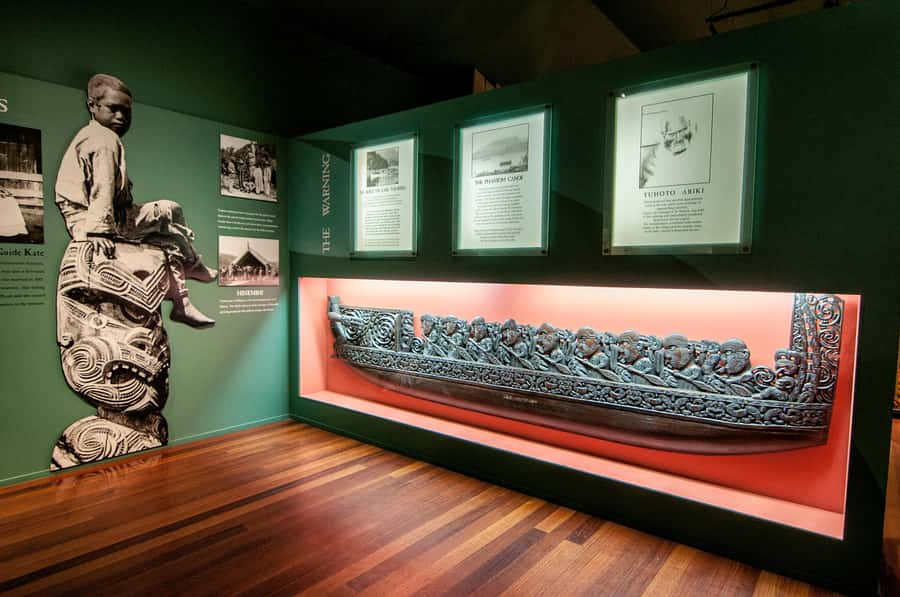
Begin indoors. The award-winning Museum of Te Wairoa gives you the basic map of the settlement and introduces the people who lived there before 1886. This first stop matters because the outdoor remains can otherwise look like scattered stones and foundations.
Inside, you will see an extensive collection of objects excavated from the buried village. Household items, building materials, and personal belongings help explain daily life in the 1800s. These small objects often say more than a broad account of the eruption. A damaged item or half-buried possession shows how abruptly ordinary life stopped.
The displays also explain the night of the eruption and the hardship that followed. You get context for the Māori and missionary community, rather than seeing the site as an empty ruin with a dramatic story attached.
The museum can be cool, even on a pleasant day. I would bring a light jacket, especially in winter. Give yourself enough time here before heading outside. Rushing through the museum makes the later walk less meaningful.
An English audio guide is included. You can also use the marked route and written signs at your own pace. Scheduled talks and living-history presentations add another layer when available. English, German, and Māori are offered among the host or greeter languages, while the included audio guide is in English.
Walk through the buried settlement
After the museum, follow the archaeological path through Te Wairoa. The route is designed to be manageable, with maps and signs helping you understand what you are seeing. Some signs could use clearer explanations, so the museum introduction or an audio tour is useful.
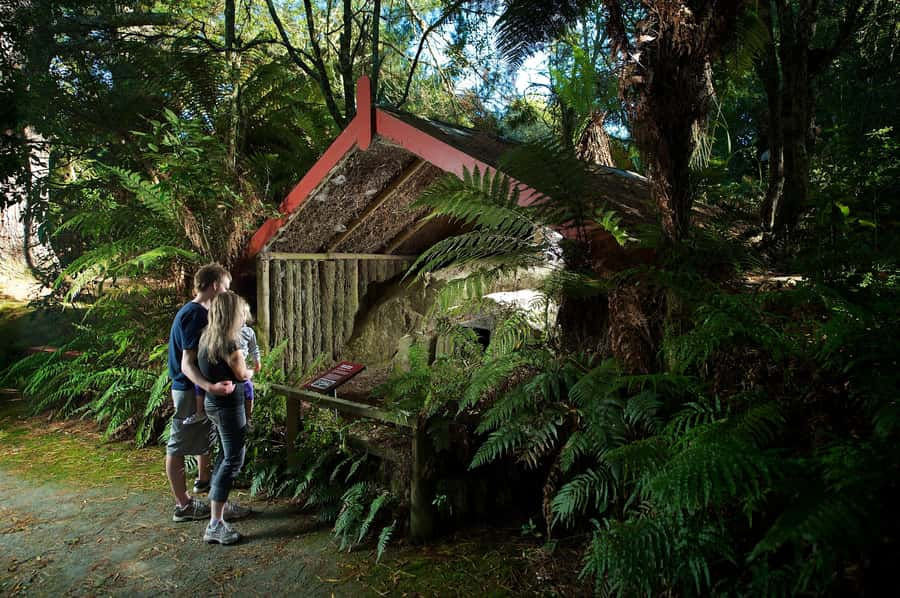
The remains do not form a fully rebuilt village. That is part of the point. You are seeing foundations, excavated areas, and surviving traces, with the landscape filling in what time and the eruption removed. The effect is quieter than a reconstructed historic village, but also more honest.
Look for the way the ruins sit in relation to the path and surrounding bush. The walk brings home how much material was buried and later excavated. You are not simply visiting a museum about an eruption. You are walking over the place where the settlement stood.
A guide can make a big difference here. A guide identified as Marie was described as a third-generation guide connected with Sophia, giving the interpretation a strong family link to the site. If a guided talk is running during your visit, it is worth joining before continuing alone. The stories help connect the buildings and objects to real people.
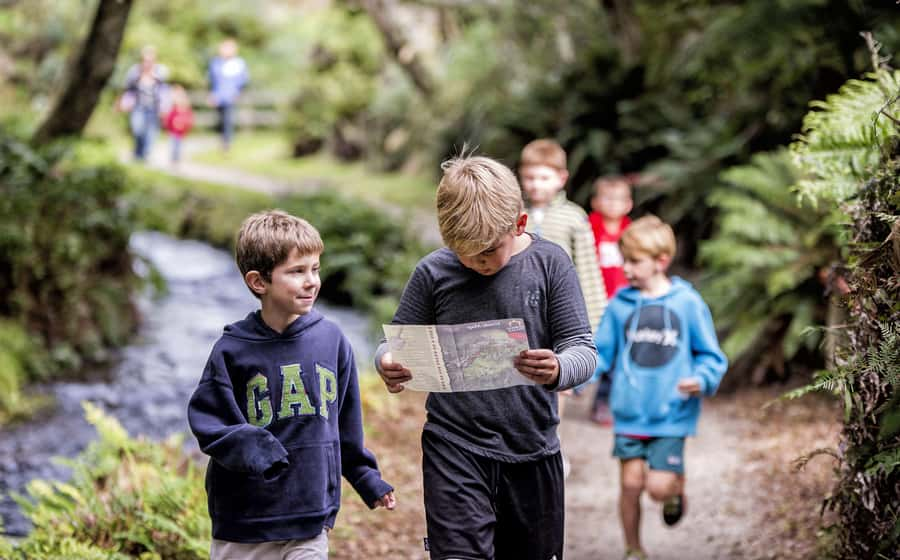
For families, a clue scavenger hunt can turn the museum and grounds into a more active visit. It gives children a reason to look closely at the displays and signs without making the whole outing feel like a school lesson. You can also dress in Victorian-style clothing near the café and take an antique-style photo.
The waterfall trail is the scenic payoff
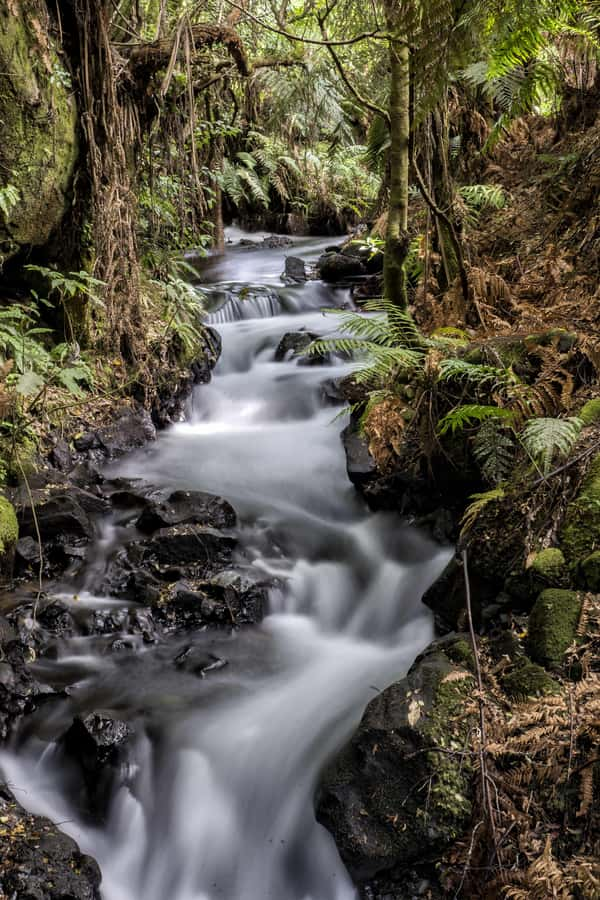
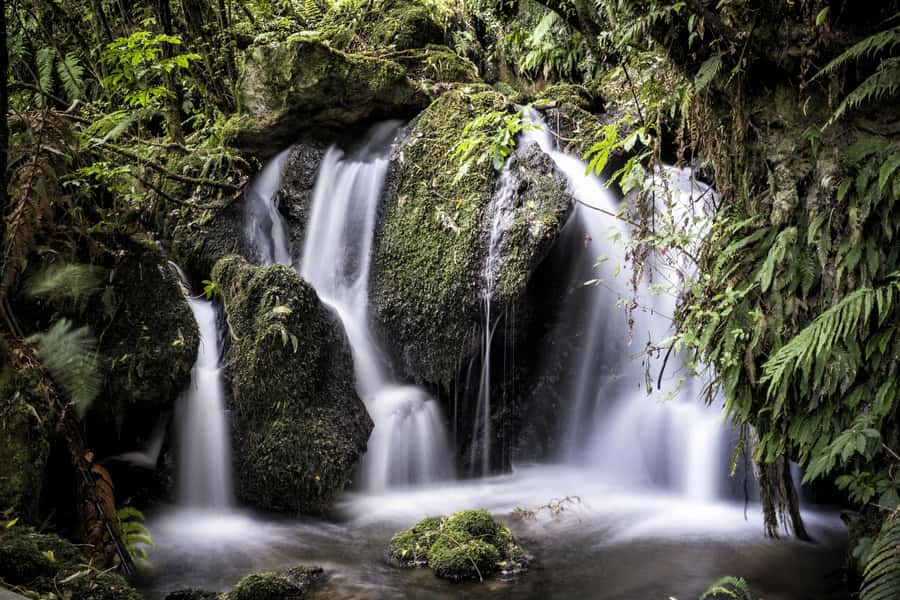
The Te Wairoa Trail leads through native vegetation to Te Wairoa Falls. This is the part many people remember most, and I understand why. After walking through ruins and hearing about the eruption, you enter a forested setting where the land has recovered.
The waterfall can be especially impressive after rain. Water levels change, so its force and spray may vary, but the route gives you a close view. At the bottom, you can stand in the mist, which makes the stop feel more direct than a distant lookout.
The walk is not long, but the stairs are steep in places. One estimate puts the walk at about 10 to 15 minutes, though your pace and the trail conditions will affect that. Wear proper walking shoes. The return climb is the part to consider if you have limited stamina.
The site itself is wheelchair accessible, but the waterfall section has steps and should be treated as a separate physical challenge. If you prefer not to tackle the stairs, you can still get plenty from the museum and archaeological walk.
I would save the falls for a time when you are not rushing to leave. The viewpoint and mist are the reward, and it is easy to undercut that reward by treating the trail as a quick add-on.
Same base, a different kind of day:
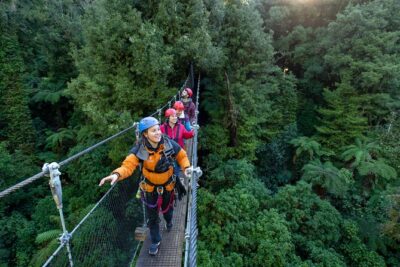
- Rotorua’s Ultimate Zipline: 6 ziplines, 400 m Tandem, Cliff Walk
★ 5.0 · 2,557 reviews - Rotorua Rafting: Kaituna River White Water Rafting & Free Sauna
★ 5.0 · 1,952 reviews - Cultural Experience & Seasonal Māori Cuisine at Te Pā Tū
★ 5.0 · 1,546 reviews - Mitai Maori Village Cultural Experience in Rotorua
★ 4.5 · 1,294 reviews
Food, photos, and a slower finish
Smith & Co, the onsite café, gives you an easy place to pause after the walk. Food is not included in the entry price, but you can buy scones with cream and jam, Devonshire tea, pastry pies, hot drinks, and other refreshments.
That menu suits the setting. A hot drink and something simple to eat make the visit feel less like a quick stop between Rotorua attractions. If the museum felt cold or the waterfall trail left you damp, the café is a practical break.
The Victorian dress-up option adds a playful finish. It will appeal most to families and anyone who enjoys old-fashioned photographs. You do not need to treat it as a major part of the visit, but it gives children and mixed-age groups another activity after the serious history.
The gift shop sells souvenirs and mementos connected with the site. I would browse at the end, once you have seen the museum and grounds. That way, you have some idea what the objects and images represent instead of buying a generic Rotorua souvenir.
How long should you allow?
The minimum useful visit is about 90 minutes. That covers the museum, archaeological site, and at least part of the waterfall walk. I would allow two to three hours if you want to read the displays, listen to the audio guide, join a talk, walk all the way to the falls, and stop at the café.
A quick visit can work if you are fitting Te Wairoa between other Rotorua plans. Still, the site rewards a steady pace. The museum gives the story, the ruins give it a physical setting, and the falls show the area today. Skipping one of those parts weakens the whole visit.
The activity is listed as a one-day entry, so you are not tied to a short timed session. Check the available starting times when booking, especially if you hope to join a scheduled presentation.
Is the $14 entry good value?
At $14 per person, the admission is good value if you use the full site. You are paying for the museum, archaeological grounds, and waterfall trail in one visit, not just a small exhibit.
The value depends on your interest. If you only want a dramatic waterfall, Rotorua has other scenic choices. If you only want a museum, Te Wairoa may feel more spread out than an indoor attraction. But the combination gives you a fuller outing for the price.
You can also add value by using the included audio guide or joining a talk rather than walking quickly through the site. Food, drinks, and any optional extras are separate, so budget for those if you want the café or additional experiences such as a VR presentation. Several visitors have found the VR option worth the small extra cost, but it is not part of the basic admission described here.
There is no hotel pickup or drop-off included. You will need to reach the site at 1180 Tarawera Road yourself unless you arrange separate transport. That short drive from Rotorua makes it easy to combine with other attractions, but you should allow time for the return trip.
Who will enjoy this visit most?
I would recommend Te Wairoa to anyone who likes history with a strong sense of place. You are not just reading about the 1886 eruption. You are seeing the remains of the settlement and walking the land around it.
It is also a good family choice. The scavenger hunt, costume corner, waterfall, and café add variety, so children are not expected to spend the entire visit reading display panels. Solo visitors can follow the audio guide at their own pace, while couples and older families may prefer the slower archaeological walk.
The site suits people who want a gentler outing than a full-day adventure. You need comfortable shoes, but you do not need specialist equipment. The one exception is the waterfall route, where steep steps may challenge anyone with mobility or balance concerns.
This is less suitable if you dislike museums, signs, or quiet historical sites. The village remains are not a theme park reconstruction. Much of the reward comes from paying attention to small details and letting the story build gradually.
Practical tips for a better visit
- Start indoors so you understand the ruins before walking outside.
- Wear comfortable shoes for the archaeological route and waterfall steps.
- Bring a light layer because the museum may feel chilly.
- Allow extra time after heavy rain, when the waterfall can be at its most impressive.
- Ask about scheduled talks or living-history presentations when you arrive.
- Use the audio guide if you want more explanation than the plaques provide.
- Consider the scavenger hunt if you are visiting with children.
- Save the café for after the waterfall walk.
- Check the route before committing to the stairs if you have mobility concerns.
- Keep your schedule flexible enough for at least 90 minutes, preferably longer.
Should you book the Buried Village of Te Wairoa?
Book it if you want a Rotorua outing that joins Māori and European settlement history, volcanic disaster, archaeology, forest, and a waterfall. The museum provides the facts, the excavated village adds emotional weight, and the falls keep the visit from feeling like a purely indoor history lesson.
I would be less eager to book it for a rushed 45-minute stop or if your only goal is seeing a waterfall. Give Te Wairoa time to work as a complete visit. At $14, it is an easy recommendation for families, history lovers, and anyone who wants to understand what Mount Tarawera changed.
Free cancellation is available up to 24 hours before the visit, and you can reserve now and pay later. That flexibility helps if Rotorua weather is uncertain, especially since the waterfall trail is a major part of the experience.
FAQ
How far is the Buried Village from Rotorua?
The site is about a 15-minute drive from Rotorua.
What is included in the admission?
Admission includes entry to the Buried Village of Te Wairoa, the Museum of Te Wairoa, and the Te Wairoa Trail and waterfalls.
How long should I spend at the site?
Allow at least 1.5 hours to see the museum, archaeological remains, and waterfall trail. Two to three hours gives you more time for talks, the café, and the gift shop.
Is the waterfall walk difficult?
The waterfall route includes steep steps. The walk is estimated at about 10 to 15 minutes, and the view at the bottom is reached after the descent.
Is the Buried Village wheelchair accessible?
The site is wheelchair accessible. The waterfall section includes steep steps, so that part may not suit every visitor.
Is an audio guide included?
Yes. An English audio guide is included with the visit.
What languages are available?
Host or greeter support is listed in English, German, and Māori. The included audio guide is in English.
Are food and drinks included?
No. Food and drinks are available to buy at Smith & Co, the onsite café.
Is hotel pickup included?
No. Hotel pickup and drop-off are not included. The meeting point is the Buried Village at 1180 Tarawera Road, Rotorua 3076.
Can I cancel the booking?
You can cancel up to 24 hours in advance for a full refund. Reserve now and pay later is also available.
Just added in Rotorua
- Thrilling Riverbug Adventure on the Rangitāiki River★ 5.0 · 4 reviews
- Te Puia: Tuku Iho Trail with Cultural Show★ 5.0 · 5 reviews
- Te Puia: Te Pō Indigenous Combo – Tour, Dinner + Haka★ 4.4 · 52 reviews
- Te Puia: Te Rā Guided Day Tour + Haka Cultural Performance★ 4.7 · 128 reviews
- Tauranga: Wai-o-Tapu with Redwood Forest Walk or Forest Spa★ 5.0 · 4 reviews
- Taupo: Orakei Korako Geothermal Park and Cave Entry Ticket★ 4.6 · 158 reviews
- Rotorua: White Island, Mount Tarawera & Waimangu Volcanic …★ 4.4 · 5 reviews
- Rotorua: Wai Ariki Hot Springs & Spa 1hr Restorative Bathing★ 4.8 · 16 reviews
Tours in Rotorua, compared.
Rotorua Canopy Tours: 2.5Hour Native Forest Zipline Adventure
Read our review →
Mitai Maori Village: Cultural Experience and Dinner Buffet
Read our review →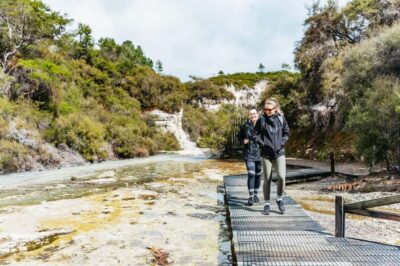
Rotorua’s Ultimate Zipline: 6 ziplines, 400 m Tandem, Cliff Walk
Read our review →
Rotorua Rafting: Kaituna River White Water Rafting & Free Sauna
Read our review →
Cultural Experience & Seasonal Māori Cuisine at Te Pā Tū
Read our review →
Mitai Maori Village Cultural Experience in Rotorua
Read our review →
Rafting Rotorua: Kaituna River White Water Experience
Read our review →Browse the lists this tour appears in