
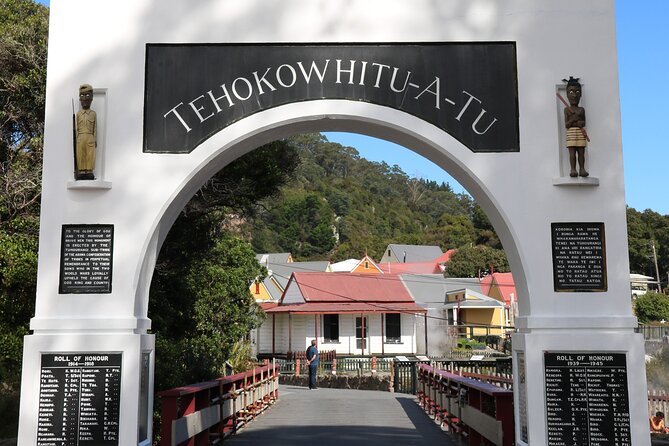
Reviewed · MAORI CULTURAL EXPERIENCES
Whakarewarewa Village Guided Tour
Whakarewarewa is not a staged village built for show. It is the home of the Tūhourangi Ngāti Wāhiao people, where daily life has long been shaped by boiling mud, hot springs, and geysers. A Māori guide leads you through the community, explaining how people have used this unusual geothermal setting and why guiding has been part of village life for more than two hundred years.
I like two things right away: the local guides make the story personal, and the geothermal features are woven into the visit rather than treated as scenery alone. You may hear family stories, learn about village customs, and taste corn cooked in a hot pool. The main consideration is that the tour lasts about one hour, so it gives you a strong introduction rather than a long cultural program.
Key points
- A working Māori community: Visit the home of Tūhourangi Ngāti Wāhiao, not a recreated settlement.
- Pohutu Geyser viewing: See Rotorua’s famous geothermal activity from two viewing platforms.
- Local storytelling: Guides with close ties to the village, including Philip, Daniel, and Kylie, have led engaging tours.
- Geothermal cooking: Try a piece of corn cooked in the village’s largest hot pool.
- Small group size: The tour is limited to a maximum of 20 people.
- One-hour format: A practical choice if your Rotorua schedule is tight, though longer programs may offer more culture.
Why Whakarewarewa feels different from a standard Rotorua attraction
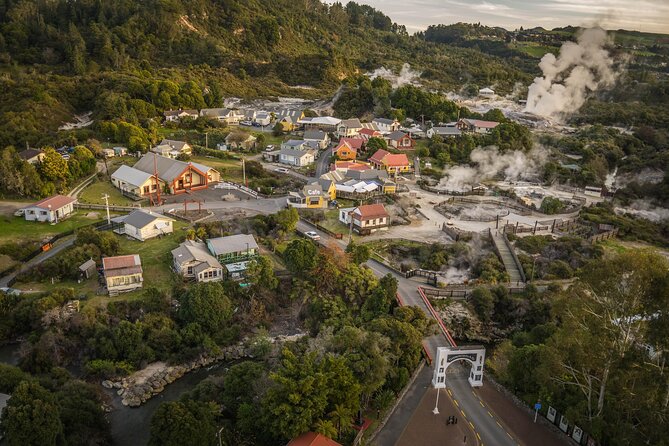
Rotorua has plenty of geothermal sights, but Whakarewarewa adds a human story to the steam and sulfur. You are not simply looking at a mud pool and taking a photograph. You are walking through a community whose traditions and routines developed around the ground beneath it.
That distinction matters. The village is home to Tūhourangi Ngāti Wāhiao, and its guiding tradition reaches back more than two hundred years. Māori people here helped establish tourism in the area and guided early visitors through the geothermal country.
Your guide explains how the village operates as a community, how Māori traditions have continued, and how modern life fits into an old way of living. The best moments come when the explanation connects directly to something in front of you: a hot pool, a cooking method, a carved object, or a story about village life.
The tour has a warm, family-friendly feel. It is educational without requiring specialist knowledge, and most people can take part. The group limit of 20 helps keep the walk manageable, although the quality of the experience still depends partly on your guide and the questions you ask.
Other Maori cultural experiences around Rotorua:
- Mitai Maori Village: Cultural Experience and Dinner Buffet
★ 4.7 · 3,575 reviews - Cultural Experience & Seasonal Māori Cuisine at Te Pā Tū
★ 5.0 · 1,546 reviews - Mitai Maori Village Cultural Experience in Rotorua
★ 4.5 · 1,294 reviews
Walking through the living village
The visit begins at 17 Tryon Street in Whakarewarewa, Rotorua. From there, your guide takes the group around the village on foot. Wear comfortable shoes, since you will be walking between geothermal features and community sites rather than remaining in one building.
The pace is fairly steady. I suggest staying with the guide during the main walk, then taking any extra time afterward to look more closely at the places that caught your attention. This is especially useful if your guide is sharing a lot of information as the group moves along.
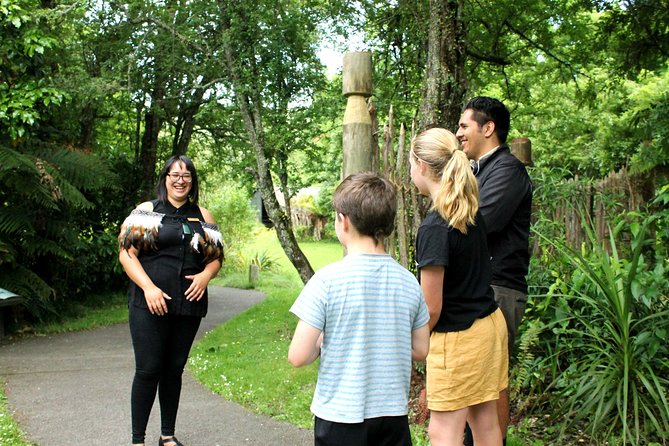
You may learn about the history of the village, the Māori language, family life, and the way the community has adapted to its geothermal surroundings. Several guides have been praised for bringing personal experience into the tour. Philip was described as a strong source of local information who answered many questions. Daniel was noted for his energy and engaging manner, while Kylie was praised for her warmth and passion for Māori culture.
Those names do not guarantee who will lead your tour, but they give you a sense of the guiding style available. A guide who grew up in the village, or has close family ties there, can explain the place in a way that a general sightseeing guide cannot.
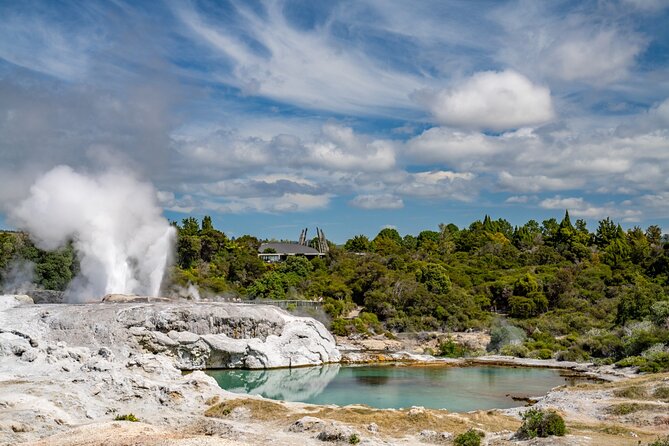
Boiling mud, hot springs, and Pohutu Geyser
The geothermal features are a major part of the walk. You will see boiling mud pools, hot springs, and other signs of the heat beneath Rotorua. These sights are striking, but the guide helps you understand their practical role as well.
The village’s geothermal water is not just a natural spectacle. It has been used for cooking and has shaped the way people live. That is why the corn tasting is more than a novelty. You are trying a simple food prepared with the same natural resource that makes the village unusual.
Pohutu Geyser is viewed from two platforms designed to give you a safe look at the famous eruption area. The tour does not promise a particular eruption time, so you should treat the geyser as part of the geothermal setting rather than assume you will see a dramatic blast during your exact visit.
The hot pools and mud areas may appeal most to visitors who want Rotorua’s volcanic character without spending a full day at a large thermal park. If you already plan to visit several geothermal attractions, the village adds something different: the connection between the natural features and Māori community life.
A fair criticism is that the geothermal sights can take up much of the hour. If your main goal is a detailed account of Māori customs, genealogy, or history, you may find the introduction too short. One guide can be excellent, yet the route itself still has limited time for long discussion.
The corn cooked in the village hot pool
The included corn tasting is one of the small details that makes this tour memorable. You are offered a piece of corn cooked in the village’s largest hot pool, allowing you to taste food prepared through geothermal heat.
This is not a full meal, so do not book the tour expecting a hangi lunch or an extended food program. Think of it as a brief taste that shows how the hot water becomes part of ordinary life.
I like this feature because it turns an explanation into something you can understand with your senses. You see the hot pool, hear how it is used, and then taste the result. For children, it can also make the cultural and geological information easier to remember.
The corn is served during the guided visit, so keep the timing in mind if you are planning lunch around the tour. The experience lasts about one hour, and it ends back at the village meeting point.
A few more things to do in Rotorua worth a look
- Rotorua: Hell’s Gate Outdoor Mud Spa & Guided Walk
★ 4.7 · 1,140 reviews - Rotorua Duck Boat Guided City and Lakes Tour
★ 5.0 · 604 reviews - Te Puia: Te Rā Guided Day Tour
★ 4.6 · 396 reviews - Te Puia: Te Rā Guided Experience
★ 4.5 · 332 reviews
Culture, history, and the limits of a one-hour visit
The tour offers a useful introduction to Māori culture, but it is not an all-day cultural course. You will hear about village history, traditions, language, and community life. You may also hear traditional singing or chants, but a full cultural performance is not listed as part of this one-hour tour.
Some visitors have wanted more history about the people who lived and still live in the village. Others felt the walk focused more on hot pools than on cultural detail. That difference usually comes down to what you hope to get from the visit.
If you want a compact introduction to Māori life in Rotorua, the tour works well. If you want a performance, a longer presentation, or more time with cultural demonstrations, ask about additional programs at the village. Performances have been associated with set times such as 11 a.m., noon, and 1 p.m., but they may cost extra and are not part of the basic guided walk.
Timing can affect what you see around the village. A later tour may leave little time for the shop, since it may close after the walk. If browsing local items matters to you, allow time before the tour rather than assuming the shop will remain open afterward.
What the guides add to the experience
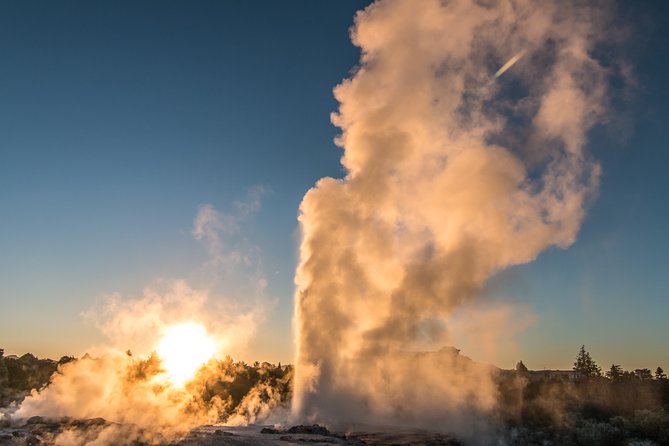
The strongest part of Whakarewarewa is the guiding. A good guide gives the geothermal features meaning and helps you understand the village as a home, not just a visitor stop.
Several guides have been described as proud of their heritage, funny, patient, and willing to answer questions. One guide was a fifth-generation Māori member of the village. Another had grown up there and combined local knowledge with singing and personal stories. A guide described as the chief’s daughter brought a clear sense of family connection to the visit.
These details matter because the tour is delivered on foot and in a small group. You are close enough to ask questions, and a lively guide can keep the hour moving without making it feel like a lecture.
At the same time, the personal style of a guide can vary. Most of the feedback has been strongly positive, but one account found the guide’s political and historical commentary uncomfortable. This is a reminder that cultural interpretation may include difficult subjects, especially colonization, religion, and Māori rights. If you prefer a strictly neutral sightseeing talk, be aware that the tour may address history from a Māori point of view.
That perspective is part of the value for many people. You are not receiving a generic account stripped of context. You are hearing how the village understands its past and present from people connected to it.
Price, group size, and practical value
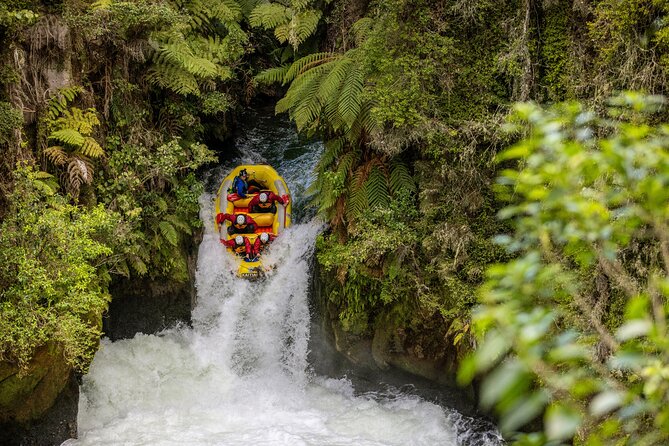
At $34.13 per person, the tour sits at a reasonable price for a one-hour guided visit in Rotorua. You are paying for admission, a local guide, access to the village, geothermal viewing, and the corn tasting.
The value is strongest if you have limited time. You can prebook a time slot, arrive at the village, and get a focused introduction without committing to a half-day program. The maximum group size is 20, which is more personal than a large coach tour and gives you a better chance to hear the guide.
The value is weaker if you are looking for a full Māori performance, a long meal, or several hours of hands-on activities. Those may be available through other programs at the village, but they are not included in this basic one-hour experience.
The tour is near public transportation, and it begins and ends at the same location on Tryon Street. Confirmation is provided when you book. Most people can participate, though the walking means comfortable footwear is a sensible choice.
Rotorua weather can change quickly, and the activity requires good weather. If poor conditions lead to cancellation, you are offered another date or a full refund. For your own plans, leave a little flexibility if this is an important part of your day.
Who should book the Whakarewarewa guided tour

I would recommend this visit to you if you want three things in one short outing: Māori culture, geothermal scenery, and a guide with local ties. It suits families, first-time visitors to Rotorua, and anyone who wants more context than a self-guided walk can provide.
It also works well as a first stop before visiting other geothermal areas. The guide gives you a frame for understanding why Rotorua matters to Māori communities and how natural heat can be used in daily life.
You may want a longer program instead if your main interest is performance, food, carving, or a detailed cultural presentation. The one-hour route is informative, but it cannot cover every part of Māori history and contemporary life.
Plan to arrive ready to walk, keep with the group, and save questions for your guide. If you have extra time, look around the village afterward, but check the opening hours of the shop and café, particularly if you choose a late afternoon tour.
Should you book it?
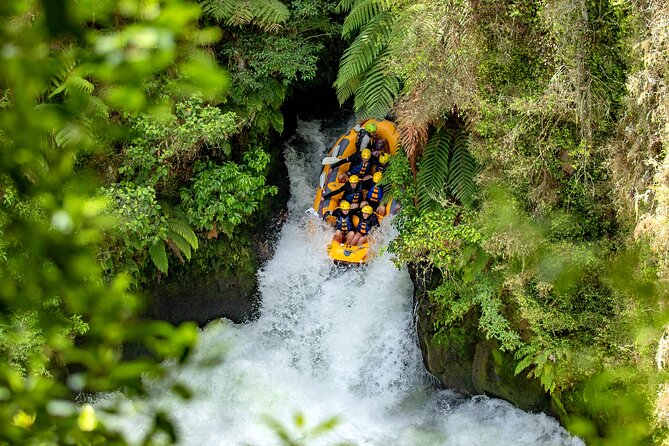
Yes, if you want a short and personal introduction to a living Māori village rather than a stand-alone geothermal viewing area. The local guiding, the chance to see Pohutu Geyser, and the corn cooked in a hot pool give the hour a clear sense of place.
Book it with realistic expectations. This is not a full-day cultural program, and the basic ticket does not promise a complete performance. But at $34.13, it offers a useful look at Whakarewarewa, especially when your Rotorua schedule is tight and you want the hot pools to come with a human story.
FAQ
How long does the Whakarewarewa Village Guided Tour last?
The guided tour lasts approximately one hour.
Where does the tour begin?
It begins at Whakarewarewa, The Living Māori Village, 17 Tryon Street, Whakarewarewa, Rotorua 3010, New Zealand.
Where does the tour finish?
The activity ends back at the meeting point at 17 Tryon Street.
What can I see during the tour?
You can see boiling mud pools, hot springs, and Pohutu Geyser from two viewing platforms. The tour also introduces Māori traditions and village life.
Is food included?
You have an opportunity to try a piece of corn cooked in the village’s largest hot pool.
Is a cultural performance included?
A performance is not listed as part of the one-hour guided tour. Traditional singing or chants may be associated with other programs, which may cost extra.
How many people can join the tour?
The activity has a maximum group size of 20 people.
Is the tour suitable for most people?
Most visitors can participate. The tour includes walking, so comfortable shoes are recommended.
Can I cancel for a refund?
You can cancel at least 24 hours before the experience start time for a full refund. Cancellations or changes made less than 24 hours before the start time are not refunded or accepted. If poor weather causes the operator to cancel, you are offered another date or a full refund.
Just added in Rotorua
- 15-Minute Crater Lakes Flight by Floatplane from Rotorua★ 4.5 · 11 reviews
- Whaka Geothermal Trails Self-Guided Tour★ 3.5 · 44 reviews
- Rotorua: Scenic Flight over Mt Tarawera & Waimangu Valley★ 4.9 · 25 reviews
- Mt Tarawera Helicopter Tour with Volcano Landing★ 5.0 · 40 reviews
- Mt. Tarawera Volcano Scenic Floatplane Tour from Rotorua★ 5.0 · 42 reviews
- Rotorua Highlights Inc. Te Puia & Secret Spot Hot Tubs Day Tour★ 4.5 · 129 reviews
- Lake Rotoiti Evening Kayak Tour including Hot Springs, Glowworm Caves and BBQ Dinner★ 5.0 · 60 reviews
- Mountain Jade Highlights Tour★ 5.0 · 31 reviews
Maori Cultural Experiences, compared.
Mitai Maori Village: Cultural Experience and Dinner Buffet
Read our review →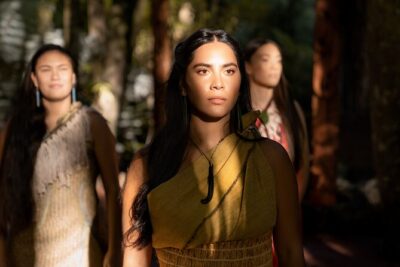
Cultural Experience & Seasonal Māori Cuisine at Te Pā Tū
Read our review →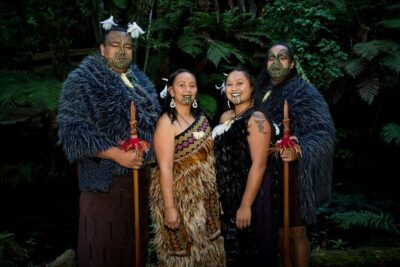
Mitai Maori Village Cultural Experience in Rotorua
Read our review →
Lake Taupo: Classical Sailing to the Māori Rock Carvings
Read our review →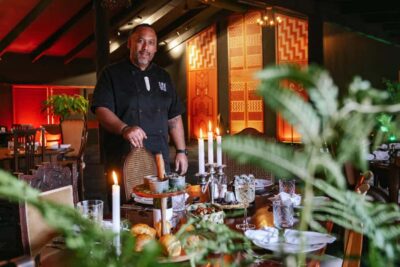
Te Pa Tu Māori Cultural Experience with Dinner
Read our review →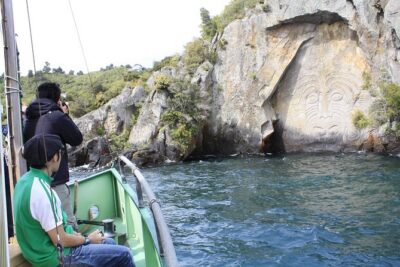
Lake Taupō Māori Rock Carvings Scenic Cruise aboard Ernest Kemp
Read our review →
Waitomo Caves & Rotorua – Te Puia Small-Group Tour from Auckland
Read our review →
Lake Taupo: Maori Rock Carvings 10.30 AM 1.5-Hour Cruise
Read our review →Browse the lists this tour appears in