
Reviewed · TOURS IN ROTORUA
Tarawera and Lakes 2-Hour Duck Eco Tour
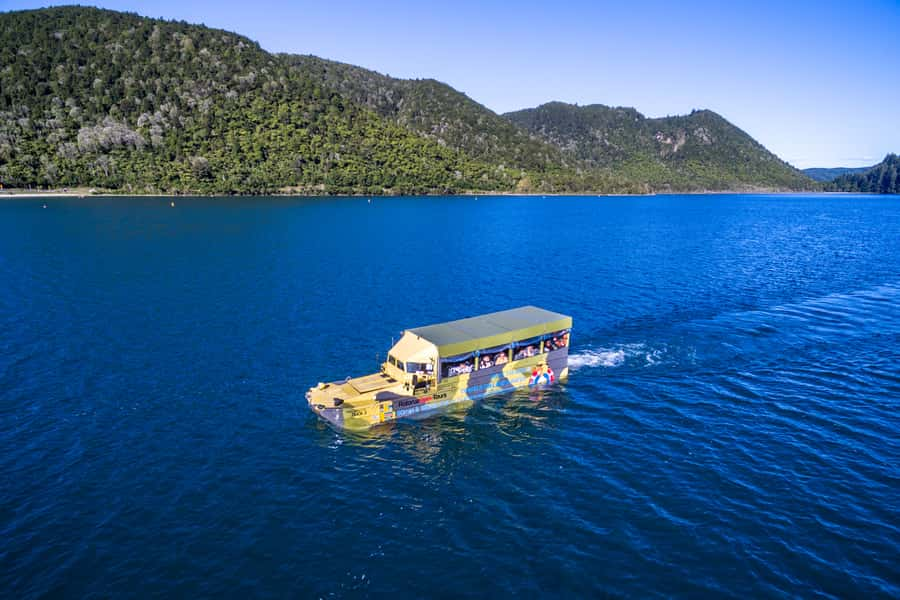
The unusual part comes first: you ride a genuine WWII amphibious Duck from Rotorua’s streets into three lakes without leaving your seat. It is part road trip, part boat ride, and part local history lesson, with the vehicle splashing into Lake Okareka, Lake Tarawera, and Tikitapu, also called the Blue Lake.
I like the way the tour joins volcanic scenery with Māori stories, rather than treating the lakes as pretty postcard stops. I also like the guides’ lively approach. Esther, Ollie, Shelley, Marcus, and others have been praised for mixing facts with jokes and keeping the ride moving.
The main drawback is weather and timing. Open windows can make the Duck cold, and rain may limit the views. One passenger also found the commentary too long, while another arrived late because the tour ran behind schedule. Allow some flexibility around the two-hour estimate.
Key points to know
- A real 1942 amphibious vehicle: The Duck drives on public roads, then rolls straight into the water.
- Four lakes in two hours: You visit Okareka, Tarawera, Rotokakahi, and Tikitapu, with water entries at three of them.
- Mt Tarawera is the visual star: The volcanic domes form the backdrop on the way to and from Lake Tarawera.
- History comes with humor: Commentary covers the 1886 eruption, Māori migration, geothermal activity, and local ecology.
- Prepare for cool air: Open sides can feel cold, though clear roll-down panels and blankets are provided.
- A strong family option: The ride combines motion, scenery, stories, and the simple fun of making a splash.
Why the Rotorua Duck is more than a novelty ride
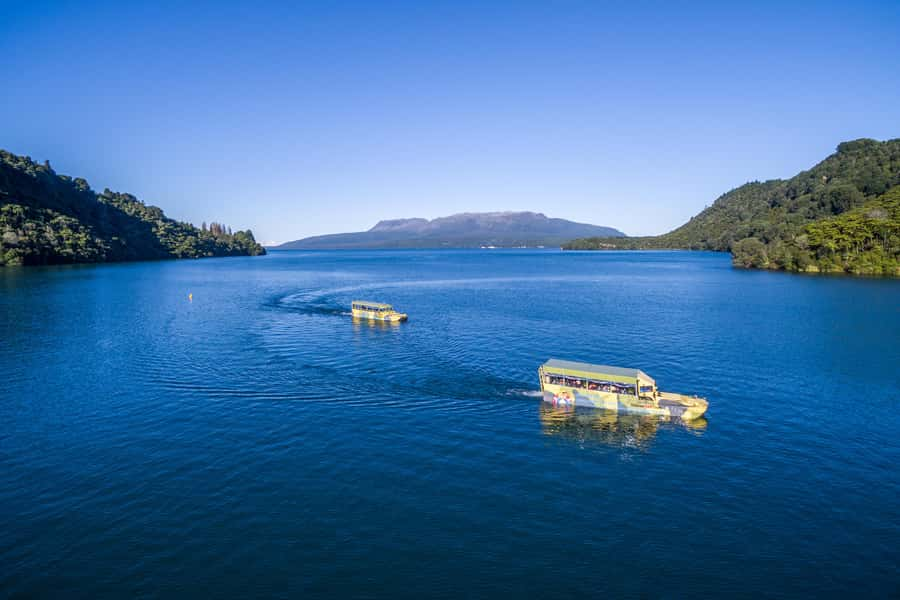
Rotorua has no shortage of lake cruises, geothermal walks, and Māori cultural experiences. This tour earns its place by combining several of those themes in one compact outing. You see the lakes from the road, then from the water, while your guide explains how volcanoes, people, and water shaped the area.
The Duck itself is the hook. It is not a modern sightseeing bus with a short boat transfer. This is a genuine amphibious landing craft, made in 1942, and the vehicle changes character as you travel. On land, you are riding through Rotorua and its outer lake district. At the shoreline, the same machine rolls into the water and keeps going.
That transition is the moment most likely to stay with you. You do not need to change vehicles or climb onto a separate boat. The Duck simply splashes forward while you remain in your seat. It is a small piece of living transport history, and it gives the tour a playful edge before the guide even begins the next story.
The commentary adds more weight than the vehicle alone could provide. You hear about Māori migration to New Zealand, geothermal activity, volcanic events, ecology, and the 1886 eruption of Mt Tarawera. The tone is intended to be friendly and funny, not a formal lecture.
That style works well for families and mixed-age groups. It also means the experience may not suit you if you want a silent, slow cruise with long stretches of quiet. The guide is a central part of the outing, and the quality of the ride depends partly on how much you enjoy jokes and spoken commentary.
A few more things to do in Rotorua worth a look
- Milford Sound: 2-Hour Small Boat Scenic Cruise
★ 4.8 · 2,561 reviews - 2-Hour Milford Sound Scenic Cruise
★ 5.0 · 1,520 reviews - Whitianga: 2-Hour Cathedral Cove and Volcanic Coast Cruise
★ 4.8 · 816 reviews
Leaving Rotorua for Lake Okareka
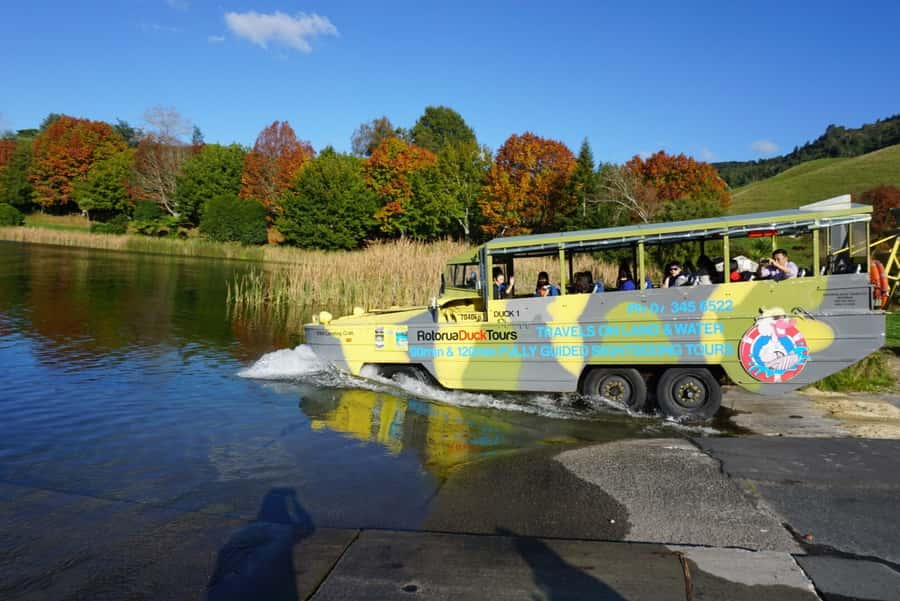
The tour begins at 1241 Fenton Street in central Rotorua. There is no hotel pick-up or drop-off, so you need to make your own way to the meeting point and arrive on time. From town, the Duck heads into the lakes district, leaving behind the sulphurous smell associated with Rotorua.
Lake Okareka provides the first water entry. This is a sheltered lake, which makes it a sensible place to begin the road-to-water change. You get the basic thrill of the Duck splashing down without starting on a rough or exposed stretch of water.
I would pay attention to how the ride feels here. The first splash is not just a photo opportunity. It shows you what makes an amphibious Duck different from an ordinary coach or boat. You remain seated as the vehicle moves from road travel to water travel, and the change happens as part of the normal route.
The Okareka portion is also a useful introduction to the district’s appearance. The lakes are close to Rotorua but feel separate from the city, with wooded shores and volcanic features shaping the views. Since the entire tour lasts two hours, do not expect a long stop on the shore. This is a moving sightseeing trip, not a series of extended walks.
Mt Tarawera and the road to the main lake
After Lake Okareka, the Duck continues through the lake district with Mt Tarawera as the major visual reference. The mountain is known for its volcanic domes, and the route gives you several chances to see them from land before reaching Lake Tarawera itself.
The scenery matters because it gives the later stories a physical setting. When the guide discusses volcanic activity, you are not hearing about an abstract event in a classroom. The volcanic forms are directly in front of you, and the shape of the region helps explain why the 1886 eruption remains such an important part of Rotorua’s past.
The guide also places the area within a wider Māori and environmental story. Commentary includes Māori migration to New Zealand and the way people relate to the lakes and volcanic country. The tour does not present the district as scenery alone. It connects the water, mountains, settlement, and cultural meaning.
Several guides have been singled out for different strengths. Esther is remembered for keeping people entertained while driving, Ollie for a friendly and well-informed presentation, and Shelley for her humor. Marcus has also been praised for an informative and funny commentary. Names can vary by departure, but the format remains guide-led in English.
The big splash at Lake Tarawera
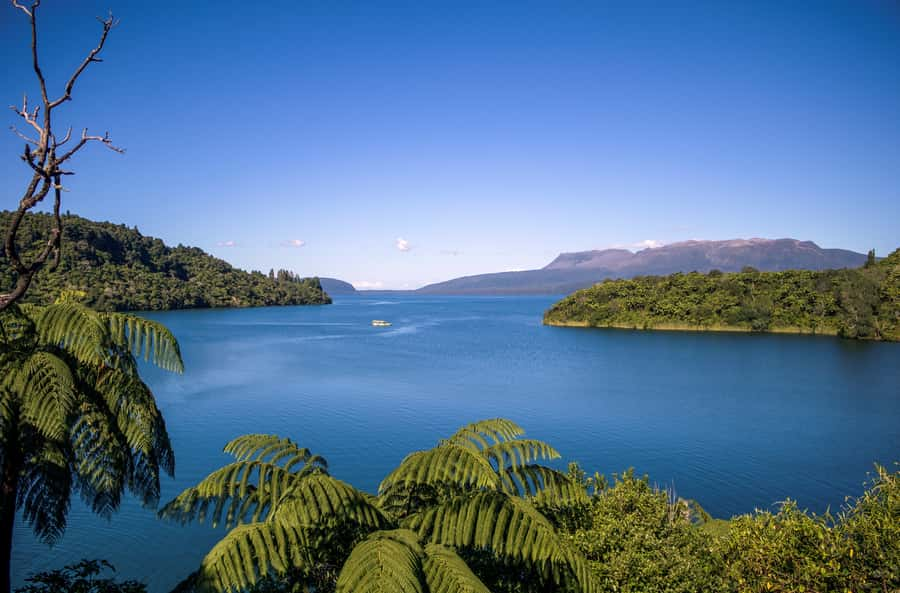
Lake Tarawera is the centerpiece of the ride. Here, the Duck enters the water with Mt Tarawera’s volcanic domes behind it. The change in scale is noticeable: the earlier lake entry introduces the idea, while Tarawera provides the grander setting.
You will want to keep your eyes outside as the Duck moves across the lake. The open windows give you clear views, but they also let in wind. On a cold day, the ride can feel brisk even if the weather looks fine. Blankets are available on colder days, and clear roll-down sides can keep rain out, but warm clothing is still the sensible choice.
The water portion is not a high-speed thrill ride. Its appeal comes from the unusual vehicle, the mountain views, and the odd feeling of taking a road-going machine onto a lake. If you expect a fast boat trip, you may find the pace modest. If you enjoy unusual transport and scenic context, the slower movement gives you time to look around.
The 1886 eruption is one of the key subjects covered here. The guide explains the event as part of the area’s volcanic story, alongside local history and Māori perspectives. The result is more useful than a quick date and disaster fact. You get a sense of why Mt Tarawera and the surrounding lakes are so important to Rotorua.
Same base, a different kind of day:
- Rotorua Canopy Tours: 2.5Hour Native Forest Zipline Adventure
★ 5.0 · 4,563 reviews - Mitai Maori Village: Cultural Experience and Dinner Buffet
★ 4.7 · 3,575 reviews - Rotorua: Wai-O-Tapu Geothermal Park Entry Ticket
★ 4.6 · 2,601 reviews - Rotorua’s Ultimate Zipline: 6 ziplines, 400 m Tandem, Cliff Walk
★ 5.0 · 2,557 reviews
Seeing Rotokakahi, the sacred Green Lake
On the return route, you pass Lake Rotokakahi, commonly called the Green Lake. This is the sacred lake in the tour’s route, and it is viewed rather than used for a water entry.
That difference is important. The tour visits four lakes, but the Duck splashes down on three: Okareka, Tarawera, and Tikitapu. Rotokakahi is included as part of the road journey, allowing the guide to explain its cultural importance while you look across the water from land.
The route also gives you a useful contrast between the lakes. They are not presented as four interchangeable bodies of water. Each has its own name, appearance, and place in the area’s story. The commentary helps turn a scenic drive into a lesson in how geography and culture overlap.
This portion may feel less dramatic than the splashdowns. You stay on the road, and there may be less obvious action for children who are waiting for another water entry. Still, the pause in the physical excitement gives the cultural material room to register. I would treat it as one of the more meaningful parts of the trip, even if it is not the loudest.
The final water entry at Tikitapu, the Blue Lake
The last splashdown takes place at Tikitapu, known as the Blue Lake. By this stage, you know how the Duck moves from road to water, so the final entry is less of a surprise and more of a satisfying repeat of the tour’s central trick.
Tikitapu gives the journey a different visual finish from Lake Tarawera. The tour does not ask you to choose between a historic vehicle ride and a lake excursion. You get a short taste of both, with the Blue Lake serving as the last water setting before the return to Rotorua.
The vehicle’s open sides remain useful here. They provide a clear view of the lake and surrounding country, but you should keep your warm layer close. The tour operates in all weather, and rain does not automatically cancel the outing. Clear roll-down sides help keep you dry, though wet weather can still make the experience less comfortable and reduce the quality of the views.
A few practical details help. Wear comfortable shoes, bring a warm layer, and do not plan a tight appointment immediately after the tour. One passenger wanted to get back on time for later plans, and another account describes traffic delays caused by the slow-moving Duck. The official duration is two hours, but a little spare time is wise.
What the guides add to the ride
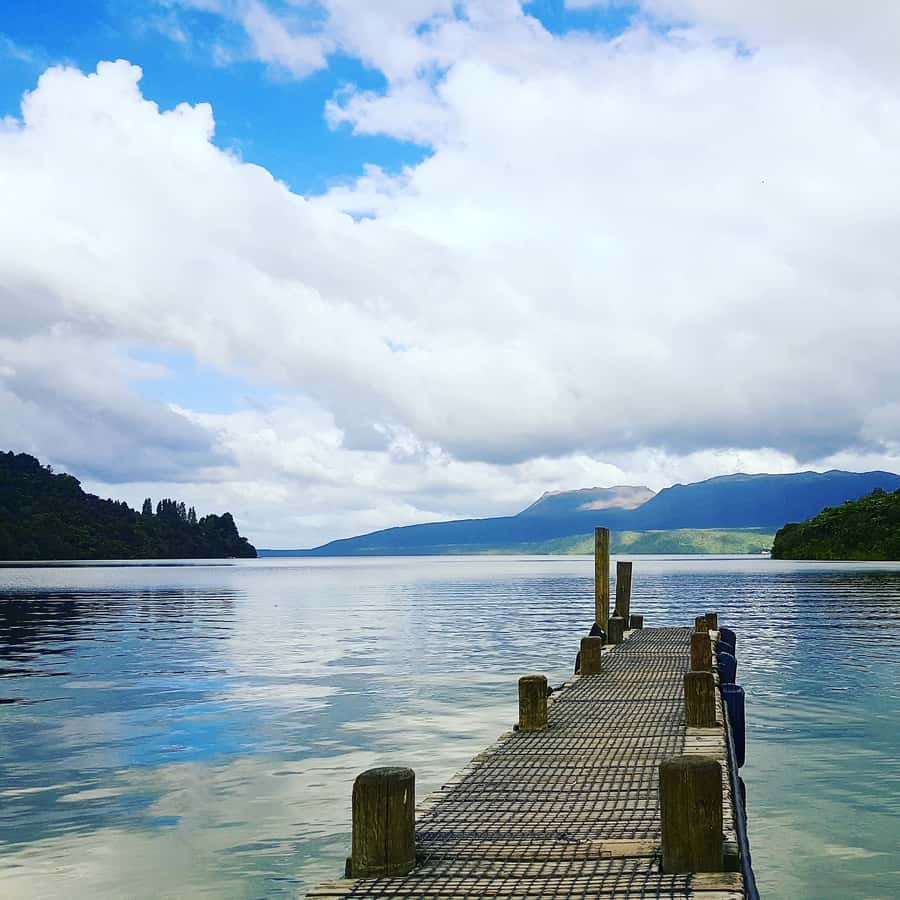
The vehicle gets attention, but the guide decides whether the two hours feel engaging or tiring. The best version of this experience combines clear explanations with a light touch. That is why guides such as Esther, Ollie, Shelley, and Marcus have made such a strong impression on past departures.
You can expect commentary on:
- The 1886 Mt Tarawera eruption
- Māori migration to New Zealand
- Rotorua’s geothermal activity
- Local ecology
- The cultural meaning of the lakes
- The volcanic forms around Mt Tarawera
The humor is part of the package. One guide was praised for jokes that kept the ride lively, while another passenger found the comedic delivery tiring. That is a fair warning: the tour is designed to entertain as well as inform, and the balance may not suit every personality.
The included duck quacker adds to the playful mood. It is a small detail, but it tells you what sort of outing this is. You are not signing up for a solemn museum visit. You are joining a moving group experience where the vehicle, the guide, and the scenery all share the stage.
Is $65 good value for two hours?
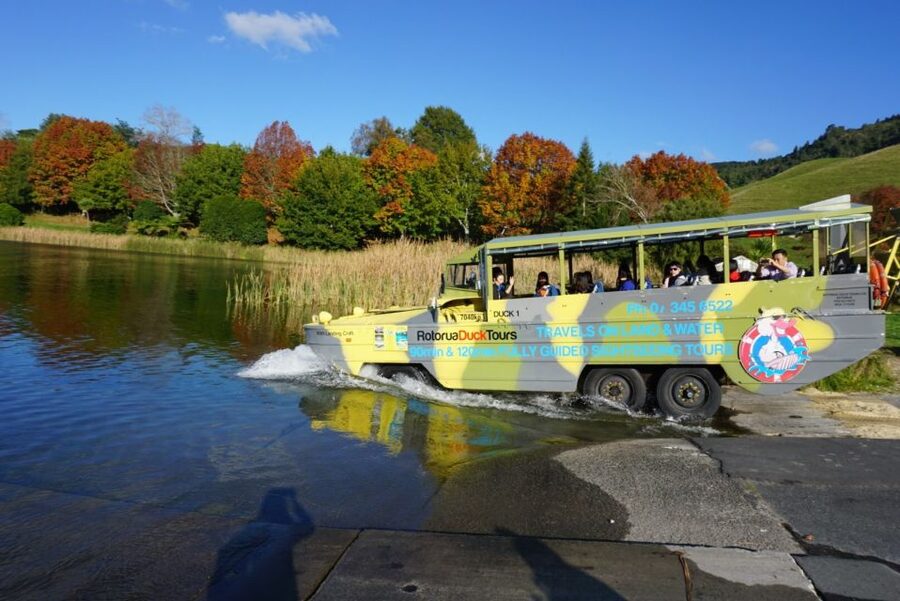
At $65 per person, the tour is not the cheapest way to look at Rotorua’s lakes. Its value comes from the combination of transport, water access, local commentary, and the rare chance to ride in an authentic WWII amphibious craft.
If you booked separate activities to cover a road trip, a lake ride, and a history talk, you would likely spend more time and money. This tour compresses those elements into one outing from central Rotorua. That makes it useful when your schedule is short or when you want a family activity that does not require a long walk.
The price is less compelling if you mainly want a quiet boat trip or a close-up volcanic hike. You are paying for the unusual vehicle and the guide-led format, not for a long period on one lake. The ride moves between places rather than giving you an extended stay at any single viewpoint.
I see the strongest value for families, first-time visitors to Rotorua, and anyone interested in transport history. The Duck gives children a clear reason to pay attention, while the stories give adults more than a simple amusement ride. The experience also works well as an introduction to the lakes district before choosing a longer lake or hiking activity.
Weather, comfort, and who should book
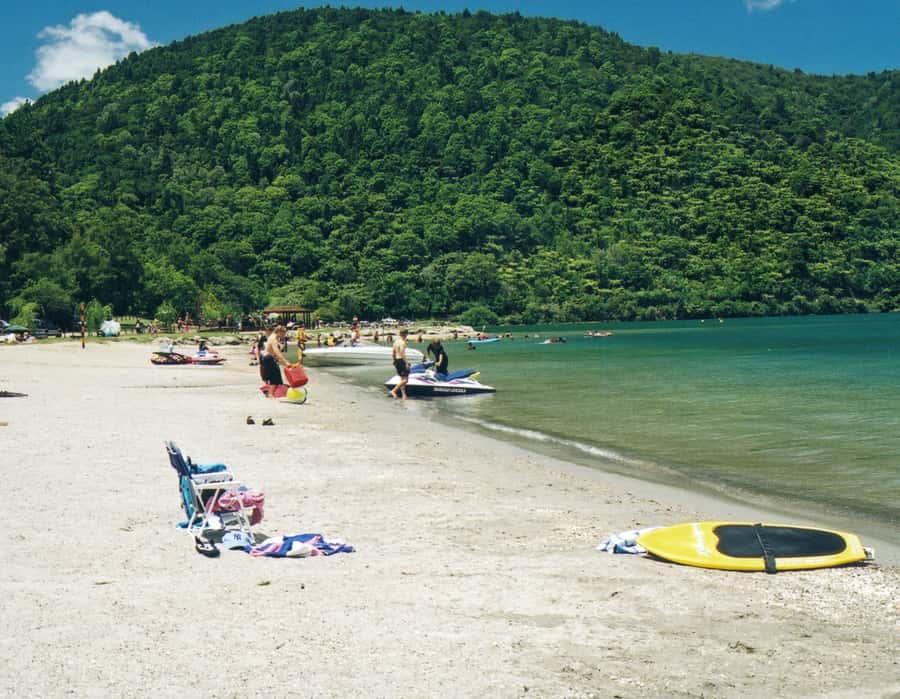
The tour runs in all weather. On wet days, clear roll-down sides help keep the interior dry, but the ride may feel colder and the scenery less sharp. On bright days, the open windows make it easier to see the lakes and volcanic domes, though wind remains a factor.
Dress warmly, especially in colder seasons or if you tend to feel chilled on moving vehicles. Comfortable shoes are recommended. Blankets are supplied on colder days, but you should not rely on them as your only warm layer.
I would recommend the tour if you want:
- A family-friendly activity with plenty of movement
- A short introduction to four Rotorua lakes
- Local stories alongside volcanic scenery
- An unusual ride in a genuine historic vehicle
- A guided outing rather than a self-drive route
I would think twice if you need precise timing, dislike group commentary, or want a quiet and lengthy time on the water. The Duck is slow-moving, the guide talks throughout much of the ride, and poor weather can affect comfort. The experience also operates from a fixed meeting point, with no hotel transfer included.
Should you book the Tarawera and Lakes Duck Tour?
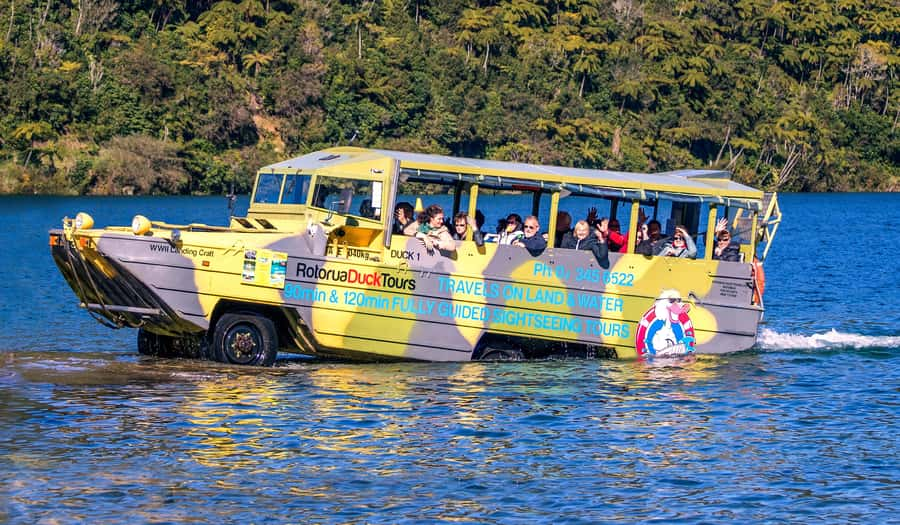
Book it if the idea of rolling a 1942 amphibious Duck into a lake makes you smile. The vehicle is genuinely unusual, and the route gives you a useful first look at Okareka, Tarawera, Rotokakahi, and Tikitapu in only two hours.
The best reason to go is the mix of things you would not normally get together: Mt Tarawera’s volcanic domes, a splash into Lake Tarawera, stories about Māori migration and the eruption, and a guide who keeps the ride lively. Bring warm clothes, allow a little extra time, and treat the tour as an entertaining introduction to Rotorua rather than a full-day exploration of each lake.
FAQ
Where does the Duck tour begin?
The meeting point is 1241 Fenton Street, Rotorua, New Zealand.
How long does the tour last?
The tour lasts two hours.
How much does the tour cost?
The listed price is $65 per person.
Which lakes does the tour visit?
You visit Lake Okareka, Lake Tarawera, Lake Rotokakahi, also called the Green Lake, and Tikitapu, also called the Blue Lake.
How many lakes does the Duck enter?
The Duck splashes down on three lakes: Lake Okareka, Lake Tarawera, and Tikitapu.
Is the vehicle a real historic Duck?
Yes. The tour uses a genuine WWII amphibious landing craft made in 1942.
What language is the tour conducted in?
The live tour guide and commentary are in English.
What should I wear?
Wear comfortable shoes and dress warmly on cold days. The Duck has open windows, so wind can make the ride feel cold. Blankets are provided on colder days, and clear roll-down sides help during rain.
Does the tour operate in bad weather?
Yes. Duck tours operate in all weather. Clear roll-down sides help keep you dry on rainy days.
Is hotel pick-up included?
No. Hotel pick-up and drop-off are not included. You need to reach the meeting point yourself and arrive on time.
Just added in Rotorua
- Thrilling Riverbug Adventure on the Rangitāiki River★ 5.0 · 4 reviews
- Te Puia: Tuku Iho Trail with Cultural Show★ 5.0 · 5 reviews
- Te Puia: Te Pō Indigenous Combo – Tour, Dinner + Haka★ 4.4 · 52 reviews
- Te Puia: Te Rā Guided Day Tour + Haka Cultural Performance★ 4.7 · 128 reviews
- Tauranga: Wai-o-Tapu with Redwood Forest Walk or Forest Spa★ 5.0 · 4 reviews
- Taupo: Orakei Korako Geothermal Park and Cave Entry Ticket★ 4.6 · 158 reviews
- Rotorua: White Island, Mount Tarawera & Waimangu Volcanic …★ 4.4 · 5 reviews
- Rotorua: Wai Ariki Hot Springs & Spa 1hr Restorative Bathing★ 4.8 · 16 reviews
Tours in Rotorua, compared.
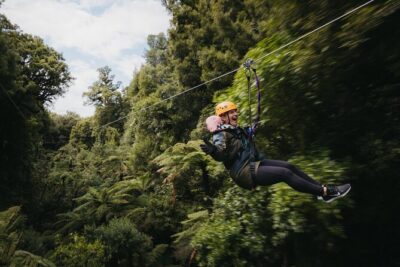
Rotorua Canopy Tours: 2.5Hour Native Forest Zipline Adventure
Read our review →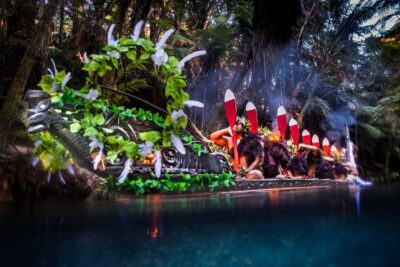
Mitai Maori Village: Cultural Experience and Dinner Buffet
Read our review →
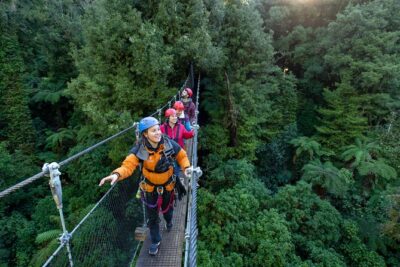
Rotorua’s Ultimate Zipline: 6 ziplines, 400 m Tandem, Cliff Walk
Read our review →
Rotorua Rafting: Kaituna River White Water Rafting & Free Sauna
Read our review →
Cultural Experience & Seasonal Māori Cuisine at Te Pā Tū
Read our review →
Mitai Maori Village Cultural Experience in Rotorua
Read our review →
Rafting Rotorua: Kaituna River White Water Experience
Read our review →Browse the lists this tour appears in